When the Time Comes

Span, Paula. When the Time Comes: Families with Aging Parents Share Their Struggles and Solutions. Springboard Press, 2009.

When this book first came in the mail my mother was visiting. She has just celebrated her 60th birthday. Savvy, independent, strong in body and mind I didn’t really think this book applied to her. Needless to say I was surprised when she thought I requested this particular book to review on purpose, because of her. It became an awkward moment because when I scanned the selections for the month I can’t say I specifically chose the book because of her. It is more accurate to say I didn’t pass over the choice because of her. Does that make sense?

At any rate, I found Span’s book When the Time Comes incredibly useful in some respects and (predictably) not so helpful in others. I enjoyed all of the stories about the trials, tribulations and triumphs of caring for elderly parents. It put aging into perspective. Not all parents will age the same way, physically or mentally. Not all parents will welcome the solutions their children have to offer. Not all solutions will work for all types of aging. The variables are endless but Span does a wonderful job trying to tell a different story for each scenario. It was wonderful to have examples to remind the reader, “you are not alone.” I found myself comparing the stories on the page with situations I know in real life and nodding in agreement all the while. On the negative side, the title of this book is misleading. It implies this is a book about aging, and this is not a book for someone who has parents years, possibly decades, away from needing elderly care. By the time my mother deems it necessary to have outside help some of the resources Span lists in her book might not be available to me. Websites disappear, organizations change. While this is definitely a book to prepare children for the aging of their parents, it is not recommended for planning too far in advance. However, should my mother have a stroke or serious accident I could pick up When the Time Comes and start using it immediately.
Diaries of Jane Somers

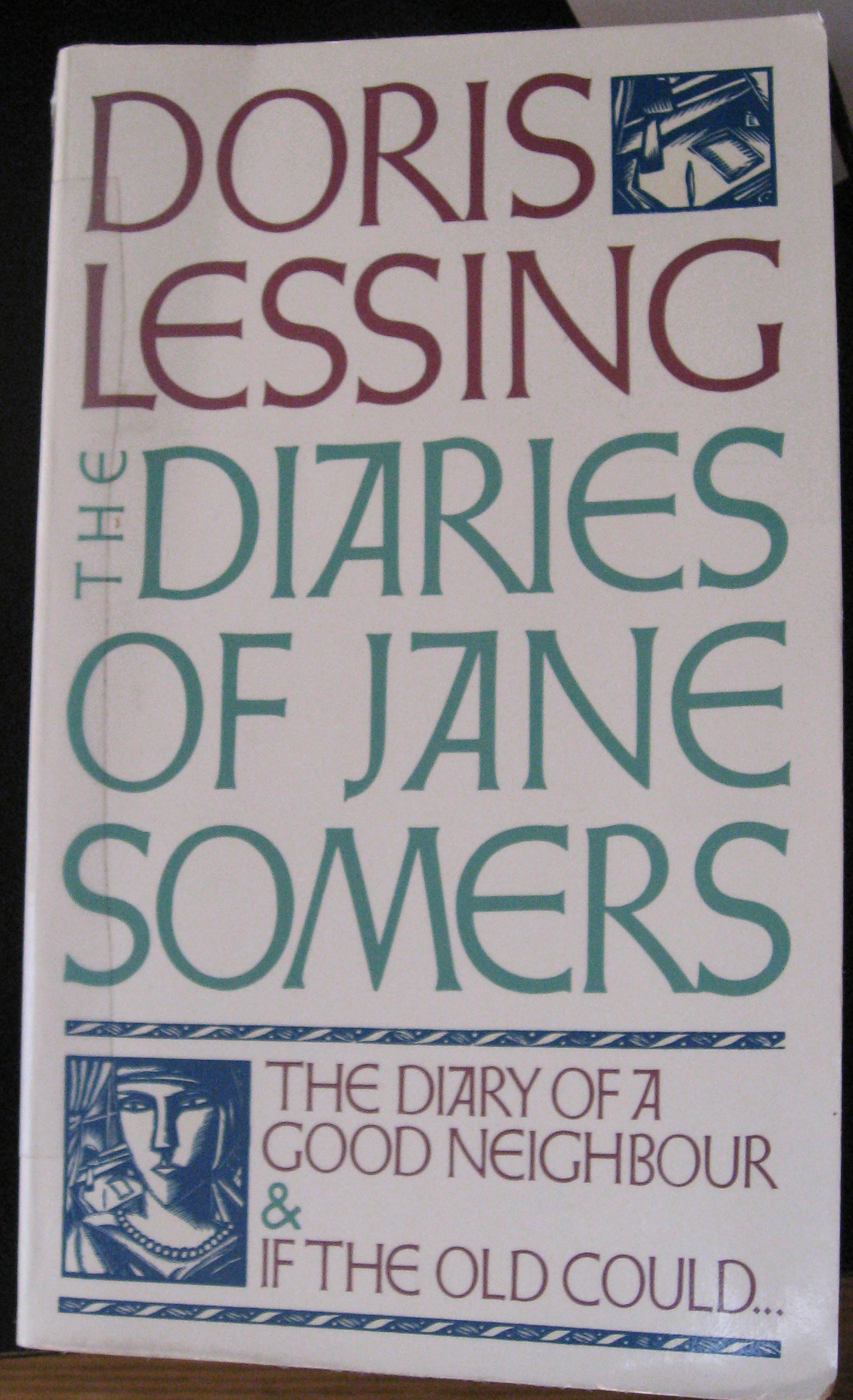
Lessing, Doris. The Diaries of Jane Somers: The Diary of a Good Neighbour and If the Old Could… New York: Vintage, 1984.

Here’s what I find fascinating about Doris Lessing – she wanted to publish something pseudonymously. She chose the name Jane Somers, wrote in a completely different voice and then submitted  The Diaries of a Good Neighbour. Her own publishers turned her down. One publisher (who accepted the Somers work) was reminded of Doris Lessing! Can you imagine writing with such personal style that its recognizable without an author name attached? Even after you try to hide your true voice? That, to me, is real fame in the world of writing!

The Diaries of Jane Somers is comprised of two emotional, very telling, sad novels, The Diary of a Good Neighbour and If the Old Could…. In The Diary of a Good Neighbour Jane befriends an elderly woman. What I find fascinating about this story is Jane herself. She is middle-aged, has no children, and is a highly successful, fashionable editor of a woman’s magazine. She comes across as unfeeling and snobbish. She barely mourns the loss of her husband to cancer, is decidedly cold about the death of her mother by the same disease, and is completely disconnected from her sister. With no real friends of her own she even shuns her elderly neighbor desperate for companionship. Oddly enough, Jane meets Maudie, a dirty, ferociously proud woman in her 90’s and instantly feels a connection. The Diary of a Good Neighbour not only details the two women and their remarkable friendship but voices what it means to be vulnerable, to have shame, and, to grow old in a society that prides itself on youthful appearances, vitality and independence.
If the Old Could…is a continuation of Jane’s story. Told several years after the death of Maudie (sorry, but you knew she couldn’t live forever, right?) Jane falls in love with a married man. This time her selflessness is poured into helping her nieces as well as finding what it means to truly hurt over another person.

Favorite lines: “She was literally inarticulate with anger” (p 59). This scene is like a chapter out of my own life. Not that my sister and I have ever had the conversation tied to this statement, but I could picture us having it.
“…I don’t know what children are, and I’m not entitled to say a word, because of my selfish childishness…” (p 62).
“Meanwhile I rage with sorrow” (79). Isn’t this just great? Some people imagine sorrow being this quiet, slow-moving, thick and heavy emotion yet Lessing turns it into this live-wire, powerfully explosive, loud and in your face emotion with one word, rage.

BookLust Twist: From Book Lust in the chapter “Aging” (p 17). Very appropriate.