
Kingsolver, Barbara. Demon Copperhead. Harper Collins, 2022.
Reason read: Kisa gave me this book for my birthday.
Be forewarned. The language of Demon Copperhead is sandpaper rough. There is no romantic words to describe the life of Damon, aka Demon Copperhead. His life is harsh, cruel, and ugly. Like a horrible tasting medicine or a poison akin to chemotherapy, I had to sip the chapters in small increments. Big gulps of heartbreak in paragraph form would surely kill me. And believe me, there were many moments where my eyes couldn’t take in the sentences of pain. Demon is a child with a life from hell, yet completely believable and all too common. Born to a mother addicted to drugs, bounced around from place to place, he finally ends up with a grandmother who changes his life. She doesn’t approve of men living in her house, but she knows someone who will not only take him in, but make him a star. A football star, that is. Bad luck seems to follow Demon wherever he goes. If his life isn’t transient and temporary, it is translucent and tenuous. There is never a moment when I can breathe easy for a boy in the poverty stricken, opioid laden rural south.
I am not proud of the way I minced gingerly through the early chapters of Demon Copperhead as if I were on a sharp rock beach in baby-tender bare feet. But, like a hard won marathon, I would gladly read it again and again.
Lines I loved, “It can thrill a person senseless” (p 129). “The moral of his story was how you never know the size of hurt that’s in people’s hearts, or what they’re liable to do about it, given the chance” (p -).
Book trivia: Demon Copperhead is dedicated to the survivors and is an Oprah Book. Updated to add: and it just won a Pulitzer!
Author fact: Social media has changed the way of the world. Thanks to Instagram, I was able to follow Kingsolver’s writing journey including publication, press, and book tour. It felt a little voyeuristic to pull back the curtain on a process that traditionally is hidden from the public eye, but I am grateful my favorite author chose to be so transparent with her craft.
Playlist: “Amazing Grace”, Avril Lavigne, “Beautiful Mess”, Beastie Boys, Bee Gees, Britney Spears, Brooks and Dunn, Carrie Underwood, Christina Aguilera’s “Dirrty”, Destiny’s Child, Dolly Parton, Eddie Rabbit, “Electric Slide”, Elvis, Eminem, Garth Brooks, “I Have Joy Like a Fountain in My Soul”, Ice-Cube, “It’s Gonna Be Me”, Jay-Z, Ja Rule’s “Always on Time”, Jay-Z, Kathy Mattea, LeAnn Rimes’s “Can’t Fight the Moonlight”, Loretta Lynn, “Macarena”, Mariah Carey, Michael Jackson, Nas, P!nk, Prince, Reba McIntyre, Rosanne Cash, Scarface, Snoop Dogg, Shania Twain’s “You’re Still the One”, “Song Cry”, Spice Girls, “This Little Light of Mine”, “Thong Song”, Tommy Cochran’s “Life Happened”, Tupac, and Willie Nelson.
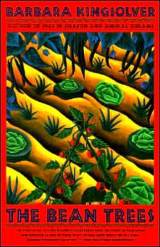 Kingsolver, Barbara. The Bean Trees.New York: HarperPerennial, 1989.
  ~*LunaSea*~