Three Roads to the Alamo

Davis, C. William, Three Roads to the Alamo: The Lives and Fortunes of David Crockett, James Bowie, and William Barret Travis. New York: HarperPerennial, 1999.

When I first picked up Three Roads I thought to myself there is no way I want to carry this thing around with me. It’s nearly 800 pages long, and despite the pages being super thin, it’s a heavy book. However, when I quickly calculated that in order to finish Three Roads by the end of March (the month Texas became a state), I would need to read over 40 pages a day I decided carry it around, I would! 
When I read the reviews for Davis’s book one word always seemed to pop up: exhaustive. Exhaustive research, exhaustive detail, exhaustive portraits, exhaustive this, exhaustive that. It’s true. There is so much detail given to not only the personalities and lives of Crockett, Bowie, and Travis, but to the culture and landscape of both politics and era as well. It’s as if the reader is witness to the pioneering growth of Louisiana, Texas and Virginia by default. History, politics and geography all rolled into one book.
Because not much is known about Crockett, Bowie and Travis each has become a legend beyond compare. Using as much information as he was able to research (exhaustively) Davis does a great job trying to dispel rumor and myth surrounding each man, admitting that these are men of folklorish proportions, but not much of it can be substantiated.
Confession: knowing there was no way I was going to finish this in time I skipped to the last chapter of the book. It is, of course, the end of Crockett, Bowie and Travis. Davis paints a tragic picture of what their last days must have been like in Alamo, Texas. The one image that kept playing in my mind was the uncertainty of their fates. When their families did not hear from them they could only speculate and worry. Word travelled slowly in those days. A telegram dispatched two weeks earlier can give loved ones the impression you are still alive despite the fact you died the next day.

BookLust Twist: From Book Lust in the chapter “Texas: Lone Star State of Mind” (p 233).

HUGE woops. This was supposed to be published last month!

Imagine Me & You

Imagine Me And You
Mernit, Billy. Imagine Me & You: A Novel. New York: Shaye Areheart , 2008.

This is March’s LibraryThing early review book but, receiving it late, I just finished it. It’s bright and funny and witty. I loved it. I hated it. Simply put, Imagine Me and You is about a screen writer named Jordan who, because he is in danger of losing his wife Isabella, creates imaginative and sometimes halarious schemes to win her back. It illustrates how communication when confused with emotions (and language barriers) can be misconstrued. Misunderstandings make mountains out of molehills.
While I had issues with shallow character development, one of my biggest problems with Imagine Me and You  was the Dickens-like gimmick of placing a ghostlike “Christmas Carol” character in Jordan’s path. His “muse” Naomi tries to steer Jordan in the right direction beyond writing –  even going so far as to show Jordan what his estranged wife is doing without him. One minute Naomi and Jordan are in California, the next, Italy – watching Isabella moon over a photo she just happens to pull out. Of course Jordan wants to speak to her, but as Naomi warns, “she can’t hear you”…of course she can’t.  
The ending is predicatable. Jordan himself gives it away. It’s no mistake his story mirrors the screenplay he has been writing throughout the story. But, the real saving grace of Imagine Me & You is how the story is written. Setting up each chapter to follow the script of a romantic comedy lends a playful foreshadowing to the plot.

Oven Bird

Robert Frost II
Frost, Robert. “The Oven Bird.” You Come Too: Favorite Poems for Young Readers. New York: Holt, Rinehart & Winston, 1959. 50.

I am definitely unsure of an oven bird. I don’t think I’ve ever seen one, nor heard one. I can’t even imagine one. But, I do know I love Robert Frost’s poetry – whether it be for children (as this one is) or for adults. What I keep coming back to about this particular poem is the circulation of the seasons. The flowers that bloom, and the bird that sings. It’s delightful. No favorite lines. It’s too short.

BookLust Twist: From More Book Lust in the chapter “Poetry Pleasers” (p 188).

Blind Heron

Tate, James. “The Blind Heron.” Shroud of the Gnome. New Jersey: Ecco Press, 1997. 11.

From just the title of Tate’s book I knew I would be in for a treat. I love 20th century poetry, especially when it has a sense of humor, a sense of the playful. Before I even got to “The Blind Heron” I read the table of contents and had a good laugh over some of the other poems: “Where Babies Come From” (made me think of that birds and bees talk – ahem!), “Restless Leg Syndrome”, “Shut Up and Eat Your Toad”, and “Sodomy in Shakespeare’s Sonnets”…I’ll have to blog about those at another time.
But, I will say this – Remember that scene in the movie ‘Tommy Boy’ when Tommy is trying to sleep at a motel. Richard keeps knocking on the door with different suggestive suggestions until finally, Tommy bolts out of bed yelling, “what kind of place is this?”? Well, that’s me with this collection of poetry. After seeing a poem called “In His Hut Sat Baba Jaga, Hag Faced” all I could ask was “what kind of poetry is this?!” The only answer: fun!

“Blind Heron” is clever and impish. Kiki is missing her cockatiel. Kiki is called a liar yet you, as the reader, are not really sure if that’s the truth. It’s more probable that you are only suppose to think of Kiki as a nontruth telling person because the poem concludes rather suddenly. Everything you thought you knew has been changed based on a confession.

BookLust Twist: From More Book Lust in the chapter “Poetry Pleasers” (p 189).

Provide, Provide

Frost, Robert. “Provide, Provide.” The Oxford Book Of American Poetry. Ed. David Lehman. Oxford: Oxford University Press, 2006. 234.

I couldn’t tell if Frost was trying to be funny here, if he was being what they call Tongue in Cheek, or if he really was serious in “Provide, Provide.” The first time I read it I thought it was one of those BeAllYouCanBe poems. Die great if you can help it. Seriously. But, the second time I read it I realized there is a sly sense of humor to this poem, a sort of sarcasm that if you can’t be great, lie about it. Don’t die a nobody. The line “Make the whole stock exchange your own!” sends me smiling every single time. I’m thinking of my Bull Lynch uncle and all his greatness in the arena. 
But, this part cinched it for me & are my favorite lines, at the end (of course):
“Better to go down dignified
With boughten friendship at your side
Than none at all. Provide, Provide!”

BookLust Twist: More Book Lust  in the chapter “Poetry Pleasers” (p 188).

Incident

Cullen, Countee. “Incident.” On These I Stand: An Anthology of the Best Poems of Countee Cullen. New York: Harper & Brothers, 1927.

Don’t let the shortness of this poem fool you. It packs a punch. “Incident” can be defined as one of those defining moments I blogged about earlier – where one instance stays with you, shapes you, defines you. Written in the first person, “Incident” is about an eight year old boy visiting Baltimore. Even though he spends some considerable time there the only thing he can recall is being called “nigger” by another young boy. There is so much below the surface of this poem. The hurt seethes.
Incidentally, this poem comes from an anthology of poems personally picked by Mr. Cullen. He dedicates this particular one to Eric Walrond, a Harlem Renaissance writer. This is the second Countee Cullen poem on my list.

BookLust Twist: From More Book Lust in the chapter “Poetry Pleasers” (p 188).


The Mercy

The Mercy
Levine, Philip. “The Mercy.” The Mercy. New York: Alfred A. Knopf, 1999.

Why is it that I can see some poems as mini movies? “The Mercy” paints a picture of Levine’s mother and her immigration to New York. It’s simple and short, but loaded with imagery. I can see the boat, waiting off-shore (quarantined until all illness had passed), or the sailor who teaches the eight year old girl how to say “orange” as she enjoys the juice-laden fruit.
There is respect and love woven into the words. Levine’s entire book of poetry is dedicated to his mother and the cover of the book depicts immigrants waiting to come ashore. Who knows? Maybe his mother is in the picture? I do not know.

BookLust Twist:From More Book Lust in the chapter, “Poetry Pleasers” (p 189).

Apologizing to Dogs

Apologizing To Dogs
Coomer, Joe. Apologizing to Dogs. New York: Scribner, 1999.

LibraryThing Review: The first thing I thought when I started to read this book is odd, odd, odd. For one, the first character you meet is a man named “Bone.” He’s not called Bone because he’s super skinny. Nothing obvious like that. He’s called Bone because he sucks on a chicken bone all the time. How bizarre.
The whole story just gets weirder and weirder. Elderly Effie sits out on her porch and spies on the neighborhood. She keeps a journal of everything her paranoid self sees. Her neighbors come and go around her, all of them quirky, too. I found the development of each character too shallow to muster up any real feelings for them. In fact, there are so many characters and their development so shallow I had trouble keeping them straight. In all, there are over 18 different characters and each get barely a paragraph at one time. If anyone, I liked Carl the best. In an effort to impress a woman he builds a boat…from inside his house – using the insides of his house. And. And, I liked Himself, the dog. Himself is the star of the story, but you wouldn’t know right away.

Here are a couple of funny/good quotes:
“‘You know what’s wrong with you, Mrs. Haygood? You’ve got opticum rectitus, a growth connecting the optic nerve to the rectum, producing a continual sh!tty outlook,’ Mr. Haygood said. He was oiling a gear on a blue tin tank” (p 34). 
“10:57 Strong marijuana odor from That Big Indian’s. I think one of his bathtubs is creeping over my property line” (p 37). Obviously, this is from Effie’s journal. She’s the funniest one in the book. Her paranoia is great.

BookLust Twist: From Book Lust in the chapter “Great Dogs in Fiction” (p 105). Himself is a great dog but he was barely in it.

Kermit is My CoPilot

After the run with KermitSometimes I think I appreciate my friends more than I tell them. I love them more I let on. That I know. Today I went shopping with such a friend. She’s the one who loads my arms up with the “try this on” stuff because, as she puts it, “it just might work.” She’s right about most everything. I never did tell her that the fur coat pinched my pits, but she’s right – it was funky. I could have spent all afternoon trying on the suggestions of a friend. I didn’t have one fat moment.
I tell you this because she convinced me I needed Kermit. Kermit, Aerosmith and a sexy dress with sunset colors. But, the bigger news is later that day I ran with Kermit. 5.34 miles in an hour. Yup. One freaking hour. I ran to random and found myself laughing at the more ridiculous moments of the week. One hour is a long time to think about sh!t on a treadmill, especially when you settle in and run at the same pace. With Kermit’s help I came to several conclusions. The best being this: My friend is right. No one, I repeat, no one tells me how to conduct my marriage. No one tells me what is or isn’t appropriate. I’ll let my husband be the judge of what he would or wouldn’t appreciate. I was stupid to be upset. I was stupid to care what someone else thought. Especially that kind of someone.

So, to my friend. Thank you for kicking my mental butt.

14 days until Darfur.

Clouds Above The Sea

Storm II
Levine, Philip. “Clouds Above the Sea.” The Mercy. New York: Random House, 2000.

There is a melancholy air to this poem. Levine is simply describing his parents side by side, watching a storm roll in. He gives more decription to his mother, wanting to give her gifts to compensate for child bearing. She sounds as if she is taken for granted and Levine is just figuring that out. He sounds as if he is imaging the scene long after his parents’ passing. There is a tinge of regret in the language that cannot be ignored.

BookLust Twist: From More Book Lust in the chapter “Poetry Pleasers” (p 189).

The Road From Coorain

Road from Coorain
Conway, Jill Kerr. The Road From Coorain. New York: Vintage Books, 1989.

First and foremost for the record: Jill Kerr Conway was the very first woman president of Smith College. Just had to get that out there since we’re in the area and I thought that was a pretty interesting fact.
According to several different travel websites, April is the start of the best season to visit Australia. Taking that as my cue I decided Road From Coorain would be my very first April book.
My LibraryThing Review:
Jill Conway’s memoir is about her unusual childhood in Australia. Raised until she was 11 on a sheep farm in Coorain, Australia, Conway grows up without other children for companionship. All she knows are her family, (her only playmates being her older brothers), the hard work associated with raising sheep, and the cruelty of mother nature when she doesn’t bring the rains. She doesn’t have social graces, competitive edges or the typical angsts associated with coming-of age girls. Things like sports, fashion and friendships are lost on her when she finally reaches the big city of Sydney. I can certainly relate to all of it coming from an island life that lacked much of the same things.
One of my favorite parts of the book was when Jill goes back to Coorain to help with shearing season. She’s teetering on the edge of adulthood so she sees everything with a different eye and intellect. Comparing her life as it was she notices her mother’s gardens are all dead and gone. The house doesn’t have the luster of cleanliness. It’s decidedly more rundown than she remembered. She allows that the farm is no place for a young person. I see this moment as pivotal in Conway’s life. It helps her reach for loftier goals and makes her examine her own future.
My only disappointment? I wished Conway included pictures. I know, I know. Not all memoirs need mementos like photographs, but she described her personal landscape in such a way that I wanted more. Her house, her sheep, her family. I realize Conway painted adequate pictures of all of it, but it would have been nice to have more.
Favorite quotes:
“Had she known how to tell directions she would have walked her way to human voices” (p 25).
“Being Australian, we exchanged no deep confidences” (p 142).
“I was angry at myself for being so upset by receiving the treatment I ought to have expected anyway” (p 194).

BookLust Twist: From Book Lust in the chapter called “Girls Growing Up” (p 101).

Yet Do I Marvel

On These I Stand
Cullen, Countee. “Yet Do I Marvel.” On These I Stand: An Anthology of the Best Poems of Countee Cullen. New York: Harper & Brothers, 1927.

This is Cullen’s first poem of On These I Stand and if order was of important to him, Cullen made a wise decision. The imagery in this first poem is so powerful! How many of us have looked at the atrocities of this world and wondered, if there really is a God, why he would allow such horrible things to happen? Cullen does the same thing – only he takes his “religion” to a whole new level citing the less than savory Greek gods of mythology, evil doer Tantalus & forever doomed Sisyphus. And yet. Yet, Cullen concedes the god he knows must be good to allow him, a black man, to sing with poetry.  

BookLust Twist: From More Book Lust in the chapter “Poetry Pleasers” (p 188).

Ginger Pye

Ginger Pye
Estes, Eleanor. Ginger Pye. New York: Harcourt, 1951.

Written in 1951 this book has classic charm. It’s written for kids – gradeschool age – but not a bad read for adults either. It’s the story of Jared Pye (Jerry) and his dog, Ginger. It opens with Jerry needing to earn a dollar to buy a puppy. His sister Rachel helps him and before long they have the smartest puppy on the block. It’s not long before Ginger’s talents as the smartest puppy are notice by some unsavory types and he disappears. Of course, being a book for kids it all ends well, but I won’t spoil it for you.
What I loved about the book was the complexity of the story. Ginger disappears in chapter 7 and the mystery remains unsolved until the last chapter of the book. Ginger is missing for six months. In a child’s mind that is a long time. Seven chapters are filled with how the children search and seach for Ginger, but it’s also about how they carry on without him. There are interesting things that happen outside of the main plot.
I didn’t find any quotes that really grabbed me, but I did promise myself to look up mite boxes to see what they really looked like.

BookLust Twist: From More Book Lust in two different chapters: “Best for Boys and Girls (p 21) and “Libraries and Librarians” (p 138). In this last chapter Ginger Pye is mentioned as an aside. Pearl is really drawing attention to Estes’s other book, The Moffats.

Run Not Done

DSCN0001
I could kiss my kisa for being so so so there. I was driving us home and without warning I blurted out how hurt my heart was. Broken, I said. He was patient, logical…comforting…as best as he could be. He offered advice I couldn’t take. “Call” he said simply. No. NoWayNoHow I countered. I can’t. I want to disappear. Really truly. Remove myself as if I never happened. Ever. I’m doing that slowly, carefully, despite Kisa’s “don’t do that.” I can’t help it. Can’t. Help. Despite being angry I am caught. Confused. Embarrassed.
So, I ran. For the first time this week. I know, I know. It’s Thursday. When you have two jobs and a need to catch up it’s hard to catch the run. It becomes less important. Sadly. So, tonight while dinner was cooking, I got on the tread…as an abbreviated 20 minute run – intervals. 12 minute mile (slow end) 6 minute mile (faster side). I found myself sobbing during the pounding parts. Everything hurt. Rob Thomas tells me there’s no getting back to good. Great. My “cool down” was 10 minute mile and it felt ridiculously slow despite not being able to breathe. This run is simply not done.

Dear You: I heard your music and could only think of swamps and being stuck. Damn him and his mind change! Hang in there.

17 days until Darfur.

Accidental Recovery ~ for Nick

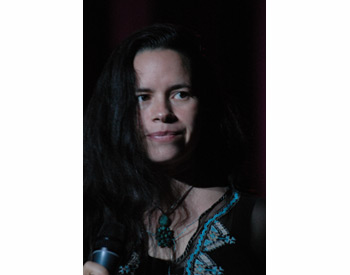
I was researching a poem for April’s poetry month when I came across one I can recite by heart, thanks to Natalie. She sang it during the Hiro shows as one of those ad libs, patter moments: Thought I would share because it’s so darn cute. Imagine a yawn at the end…

The Sleepy Giant

My age is three hundred and seveny-two,
And I think, with the deepest regret.
How I used to pick up and voraciously shew
The dear little boys whom I met.

I’ve eaten them raw, in their holiday suits;
I’ve eaten them curried with rice;
I’ve eaten them baked, in their jackets and boots,
And found them exceedingly nice.

But now that my jaws are too weak for such fare,
I think it exceedingly rude
To do such a thing, when I’m quite well aware
Little boys do not like being chewed. *insert giggle here*
[Little boys do not like being chewed.]

And so I contentedly live upon eels,
And tryto do nothing amiss,
And I pass all the time I can spare from my meals
In innocent slumber  – like this.
[In innocent slumber like this…]

Carryl, Charles E. “The Sleepy Giant.” The New Oxford Book of Children’s Verse. Ed. Neil Philip. Oxford UP, 1996. 95-96.