Great Expectations

Dickens, Charles. Great Expectations. New York: Oxford University Press, 1998.

Believe it or not, I had never read this before. Not in high school, not in college, not in fun. Go figure. It’s a classic which translated (back in the day) into the assumption of being boring. It was written in 1861 which translated into practically a foreign language (ekerval?). All that translated into me being narrow minded. Great Expectations is wonderful. It opens with Pip (our young main character) encountering an escaped convict in a field. The convict threatens bodily harm if Pip can’t produce some food and, of course, a file. Why was Pip targeted? His brother-in-law is a blacksmith. Of course he is going to have instruments strong enough to tackle something like…leg irons. So, it starts out pretty exciting and not at all unrealizable.

Here are some of my (early) favorite quotes from Pip’s life with his sister and her husband, Joe:
“She concluded by throwing me – I often served as a connubial missle- at Joe, who, glad to get hold of me on any terms, passed me onto the chimney and quietly fenced me up there with his great leg” (p 7).
“My sister having much to do, was going to church vicariously; that is to say, Joe and I were going” (p 20). While Pip’s sister is seen as cruel I cannot help but find humor in both these passages.
After Pip decides to become a gentleman he makes an observation that struck me: “So, throughout life, our worst weaknesses and meannesses are usually committed for the sake of the people whom we most despise” (p 206). Estrella, his love interest, has another observation akin to Pip’s: “I’ll tell you what real love is…It is blind devotion, unquestioning self-humiliation, utter submission, trust and belief against yourself and against the whole world, giving up your whole heart and soul to the smiter…! (p 227).

The LibraryThing review:
“A classic from Charles Dickens. All of the characters are so well developed that the reader cannot help but drawn into their individual plots. From Pip, the blacksmith apprentice turned gentleman in the making (and the hero of our story) to Miss Havisham, a wealthy woman locked away in self-induced seclusion. “

BookLust Twist: From Book Lust and the chapter “A Dickens of a Tale” (p 72). It’s funny that Pearl laments about Dickens having to be a high school mandatory read that students had to “choke down” because many of the reviews I have read recently about Great Expectations mention having to read it in this manner.

March Is…

DSCN0143
March is my month of hope. Hope for an early spring. Hope for brighter days. From childhood I remember a felt banner my mother had hanging on our chimney. It said something like “hope perches in the soul and sings and never stops at all. ~Emily Dickinson” Obviously abreviated from the longer poem…But, of course, when I think of the word Hope I think of one of my all time favorite movies, Shawshank Redemption. Morgan narrates the ending, talking about hope for his friend and ultimately, the whole point of the movie, hope for himself (something he didn’t have but needed to find within himself).
But, anyway, I digress. I’m here to talk about March’s list of books and the hope of finishing the list for this month.
March is:

  • The month Ohio became a state (reading The Bluest Eye by Toni Morrison)
  • The month Florida became a state (reading Carter Clay by Elizabeth Evans)
  • The month Nebraska became a state (reading Dalva by Jim Harrison)
  • Russell Banks’ birthday (reading Continental Drift)

I have been chosen for one LibraryThing Early Review book:

  • Wrack & Ruin by Don Lee

February Was…

IMG_0032
I can’t believe I’m writing the February Was blog already! Where did the month go? Here’s the rundown on how reading part of the month went:

For LibraryThing:

  • The Jerusalem Diet by Judith Besserman
  • Dancing to Almendra by Mayra Montero
  • The Translator by Daoud Hari

For BookLust:

  • American Century by Harold Evans (finished)
  • His Excellency by Joseph Ellis (finished)
  • Defiant Hero by Suzanne Brockmann (finished)
  • Baby Sister for Frances by Russell Hobart (finished)
  • Great Expectations by Charles Dickens (finished)
  • Bright Young Things by (not read – didn’t get it in time. Save for next February)
  • Bridget Jones’s Diary by (added thanks to a friend)

For myself:

  • Sole Sisters by (gift from a friend)

So, a total of ten books. I have to say Great Expectations was probably my favorite of the Lust books while The Translator was my favorite Early Review book.

Baby Sister for Frances

BabySisterForFrancisHoban, Russell. A Baby Sister for Frances. New York: Scholastic, 1992.

Who doesn’t remember this one from their childhood? Originally published in 1964 this was a standard in my young life. I don’t remember if my parents bought this for me in preparation for my sister’s arrival, but I was certainly old enough to be skeptical (and more than a little jealous) of the little bundle everyone kept cooing over. This book would have made sense for that reason alone.

LibraryThing Review:
This is childrens’ book classic. Told from the point of view of a badger, Frances is jealous of her new baby sister, Gloria. Gloria seems to be distracting enough that mama badger is forgetting to do the laundry and shop for groceries. As a result, Frances feels neglected and needs to be noticed. Accepting a new sibling can be hard on anyone, even badgers.

There must be hundreds of self help books out there, all tackling the tricky question of sibling rivalry and what to do when a new baby comes along. All parents need to do is read A Baby Sister for Frances and they’ll be reminded of how the older child often feels diminished, neglected. Hoban hit that one on the head. How Frances “runs away” is hilarious. I know I did the same thing – only I think I didn’t run away long enough to be missed!
My favorite part is when Frances “calls” her parents from under the dining room table then comes “home” singing a rhyme. Very cute.

BookLust Twist: From More Book Lust and the chapter “Russell Hoban: Too Good To Miss” (p 113).

Translator

IMG_0486Hari, Daoud. The Translator: a Tribesman’s Memoir of Darfur. New York: Random House, 2008. (expected publish date 3/18/08)

This is the third Early Review book I received within a month. It’s the final reason why I put the BookLust challenge on hold for February. All in all, I’ve reviewed a total of nine books for the ER program with a 10th on the way.

Anyway, back to the review book. Written so, so, so beautifully I could have quoted a passage that moved me on every single page. Here is a sampling of powerful and compelling quotes: I could write a blog about each one!
“You have to be stronger than your fears to get anything done in this world” (p 11). This reminds me of my good friend RT.
“It is hard to know where grace comes from” (p 26).
Ahmed’s arm on my shoulder was the gentleness of home” (p 48).
The best way to bury your pain is to help others and lose yourself in that” (p 63).
“You have to find a way to laugh a little bit each day despite everything, or your heart will simply run out of the joy that makes it go” (p 89).
“Poverty generously provides every man with a colorful past” (p 144).
“But what, not counting family, is more important that friendship?” (p 170)

There was humor in the words, as well:
“He looked the way British look when they are upset by some unnecessary inconvenience” (p 7)…and this is while our author hero has a gun to his head!
“to not get killed is a very good thing” (p 9). So now you know he got out of the aforementioned dilemma!
“These are the cruel commanders? It looks as though they eat all their prisoners” (p 148). This being said while overweight Sudanese generals make their way over to where Hari is being held prisoner! The LibraryThing review:

Despite the humor and lyrical language quoted above there is real pain in Hari’s story. This is not a CNN stale report or an 12 line article hidden on the back pages of the New York Times. This is a real, first-hand, in your face account of the atrocities happening in Darfur. Hari, working as a translator for the English speaking press, knows it all too well. After escaping the massacres he does only what a true hero and humanitarian would do, he goes back to Darfur to help journalists spread the word to the rest of the world. How he is able to recount vivid horrors of his community, his people, his family with such grace and compassion is beyond me. Even when he is captured and tortured there is a calm to his recounting. Thanks to Daoud Hari the world is learning…and trying to help.

This was probably the most influential Early Review book I have ever read. It has prompted me to register to run a 5K in Albany, New York this spring. In the words of David Bowie, “do whatever you can, however small.”

His Excellency

IMG_0571Ellis, Joseph J. His Excellency: George Washington. New York: Afred A Knopf, 2004.

In honor of Presidents’ Day and Washington’s birthday. The LT review: Ellis writes in an easy, flowing style. Almost conversational in tone, Washington’s life comes alive as the pages turn. While not a great deal of evidence of Washington’s personal life has survived, Ellis does a fantastic job filling in the gaps with Washington’s military career and political rise to power. The text is supplemented by a few pages of photographs – mostly portraits Washington had commissioned of himself.

A few of my favorite quotes that make Washington seem less historical and more human. First, a  description of Washington as a 20-something year old man: “He was the epitome of the man’s man: physically strong, mentally enigmatic, emotionally restrained” (p 12).
A commnet on Washington’s unique military order: “…when a ranger…is killed in action, continue his salary for 28 days to pay for his coffin” (p 26).

BookLust Twist: From More Book Lust in the chapter “Founding Fathers” (p 91). Last month I read about Benjamin Franklin from the same chapter. Note to self: Self, don’t read anything from that chapter in March!

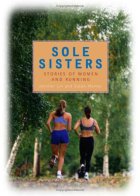
Sole Sisters (for Sarah)

0740757113_01__sx140_sclzzzzzzz_.jpgLin, Jennifer and Susan Warner. Sole Sisters: Stories of Women and Running. Kansas City: Andrews McMeel, 2006.

Here’s what I wrote on LibraryThing:
This is a book of inspirational stories about women running together, women running for recovery, women running for themselves. From personal goals of fighting cancer to group goals of running as a centipede in a marathon, every story comes together with humor and poignancy. There is the woman running to celebrate health and the one who runs to honor loss. Every woman has a reason for running and this book illustrates that point.

Yes, there is definitely going to be a definite split between LT blogs and what I put here. I think I explained that one well enough already.

My favorite lines:
“If I wanted to take orders from a man I would have married one” (p 12).
“She walks with a slight hitch, but she still lifts weights and runs 35 miles a week, just for herself” (p 14). Are you doing the math, people? That would be 5 miles a DAY, or 8.5 miles every other.
“The event was apologetically girly” (p 25). Never apologize for what you are.
“I ran to keep my heart beating” (p 59).
If you take that first step, do everything in your power to also take that last step” (p 92).

I read this because of Sarah. Thanks to her, it was the first gentle nudge towards getting back to running. I needed the nudge. I hope she doesn’t mind that I left it for another friend – to inspire & motivate.

Defiant Hero

IMG_0573
Brockman, Suzanne. The Defiant Hero. New York, Ivy Books, 2001.

I am not a big fan of romance novels. I’m just not into the language they all seem to require. While the plot of The Defiant Hero is riveting, I am more than a little bored by how good looking the three pivotal couples are. The women are all drop dead gorgeous, “impossibly beautiful” with amazing legs, eyes, breasts, you name it… while the men are chiseled, rugged, handsome, can cry on command, etc, etc. These people are so achingly beautiful and yet…there is something keeping every couple apart. They either hate one another, or are suspicious of each other, or something.
Okay, first the plot (The LibraryThing version): Meg is a translator for a European embassy. Her daughter and grandmother get kidnapped by an “Extremist” group. Meg’s love interest is Navy SEAL Lieutenant John. He’s called in by the FBI to help Meg. She specifically asks for him. Alyssa and Sam are the second couple – Alyssa is FBI and Sam is Navy SEAL – both involved with getting Meg because she has become a kidnapper herself. The third couple is Meg’s grandmother and her past. She reminisces about her first husband while being held captive by the “Extremists.” Got all that? In between the macho FBI/kidnapping violence there is a good amount of romance novel sex – the pantie ripping, throbbing kind.
My favorite quotes:
“Unfortunately, though, penises came attached to men. And therein lay one of her biggest problems” (p 9).
“He was gazing at her as if she were a gourmet delicacy the chef had just presented” (p 218).
“He was supposed to spend the night cuffed to a woman he craved more than oxygen” (p 260).

BookLust Twist: From Book Lust and the chapter ” Romance Novels: Our Love is Here to Stay” (p 203). Obviously chosen in honor of Valentine’s Day. Wanna know something else that’s cheesy? I waited until 2/14 to crack it open, too. It was a fast and fun read!

Bridget Jones

IMG_0570Fielding, Helen. Bridget Jones’ Diary. New York: Penguin, 1996.

When I first learned this chick-lit was on my list I didn’t know whether to groan or grin. But, after pages and pages of stuffy political biographies I knew I’d need a fluffy change. I just didn’t expect it to be so funny! Luckily, my good friend let me borrow it…Here’s the LibraryThing Review:
Bridget Jones is a likable 30-something Londoner. A little on the plump side (so she thinks) and more than a little single (so everyone keeps pointing out), her year long diary takes the reader on a journey through her attempts at weight loss and dating. While her weight gain is more that her ultimate loss and her initial love interest cheats on her, Bridget triumphs with humor and a naivete that is undeniably charming. Obsessive and narcisstist characteristics aside, Bridget could be any woman’s best friend. A delightful (quick) read.

My favorite lines:
“I know what her secret is: she’s discovered power” (p 58).
“Love the friends, better than extended Turkish family in weird headscarves any day” (p 74).
“There’s nothing worse than people telling you you look tired. They might as well have done with it and say you look like five kinds of shit” (p 92).
“By 11:30 Sharon was in full and splendid auto-rant” (p 108).

The only disappointment was a discrepancy with dates. On Wednesday, March 15 Bridget writes “only two weeks to go until birthday” yet, on Tuesday, March 21 she claims it’s her birthday. Two weeks from the 15th is the 29th or at least the 28th. Even if she is counting work weeks it would have been the 25th. Not sure what to think of that. Then there is the time she spends doing something. How is it possible to spend 230 minutes inspecting your face for wrinkles? I’ve done the math. That’s nearly 4 hours – unless London has more minutes to an hour than we do…(ps~ I’m being a snob here. Of course I know Bridget isn’t spending that much time on one activity…)
Another weirdness is that Bridget makes reference to Goldie Hawn and Susan Sarandon a lot. I couldn’t figure out what the reference was all about considering The Banger Sisters didn’t come out until 2002. I’m thinking she meant Thelma and Louise but in that case she didn’t mean Goldie Hawn, but rather Geena Davis. Whatever.

BookLust Twist: From Nancy Pearl’s Book Lust in the chapter called, you guessed it, “Chick-Lit” (p 53).

Reviewer Rotten-ly

I shouldn’t care what strangers say about me.
I should say that again.
I should not care what strangers say about me!
Yet, I do.
There. I said it.
I care. I definitely do.

Here’s why: I was cruising around my LibraryThing page, noticed a little “thumbs up” icon on certain reviews & got curious. What did that little icon mean and had it ever been applied to a review of mine? Hmmm….This is where I should have remembered the little saying about curiosity killing the cat because while searching my own reviews for that “thumbs up” icon I came across a review that had “tagged” as not a review. It was like a big, fat warning to all the professional reviewers out there, a flashing sign that read: “hey guys, don’t waste your time reading this horseshit. It’s not a real review.” Okay, so no one actually said that…but, that’s what it felt like. Not a review. Defenses up, demeaning name-calling at the ready: jerks…snobs! Who did they think they were? Then, I went back and read the post in question…Whomever tagged it was right. In the traditional sense it’s definitely NOT a review. See for yourself. Yet, the tag still stung. It’s like being called out as a fraud; no Great Oz. I have been tempted to go back and write a real review, something academically sterile and boring to compensate. I feel guilty because here I am, in the Early Review program and I break all the rules for writing a traditional review: You are supposed to review the plot: one, keeping first person voice out of it, and two, you’re not supposed to quote text. Two things I do all the time.
There is a disclaimer on my site that states I don’t review books in the traditional manner, but rather as proof that I took the time to read something for the BookLust Challenge. So, what now? Maybe I should write a traditional review for LibraryThing and leave my quoting and blathering for this site only???? I’m still pondering that….and sort of practicing that. LT gets the straight up this-is-the-book and WP gets ThisIsWhatTheBookMeantToMe. More work? Yes, but it will be worth it to not be so reveiwer rotten.

By the way …the “thumbs up” icon that got me in trouble in the first place? It was an was-this-review-helpful? indicator… Go figure.

American Century

IMG_0397

Evans, Harold. The American Century. New York: Alfred A. Knopf, 1998.

Weighing in at over 700 pages, American Century is nothing short of gorgeous. Bold black and white photos stand out on nearly every page, while satiric comics adorn the others. I have always loved the Brown Brothers photo of the construction workers on the Woolworth Building and was pleasantly surprised to see its inclusion on page xvii. 

I liked learning that President Cleveland bought the “dirt” on an opponent and upon receiving the envelope burned it, unopened, on the spot. He also suffered from cancer of the mouth and had an entire artificial jaw.

“You feel small in the presence of dead men, and you don’t ask silly questions” (p 332).
Here’s the LibraryThing version of my review:
“Any history buff should have this sitting on his or her shelf (and have a shelf sturdy enough to support this 700+ book). Chock full of intriguing cartoons and mesmerizing photographs, American Century covers every aspect of U.S. history from 1889 to the mid 1990s. Well written with commentaries and first hand accounts, history comes alive. The people, the politics, the power, the pitiful downfalls. The 20th century is laid out and every historical moment of worth is described and detailed.”

BookLust Twist: From Book Lust and the chapter “American History: Fiction” (p 21). I have to explain that this isn’t fiction. Pearl referenced The American Century while talking about Ken Baker’s novels. Ken Baker helped Harold Evans with The American Century.

Dancing to “Almendra”

image0001
Montero, Mayra; translated by Edith Grossman. Dancing to “Almendra” : A Novel. New York: Picador, 2005.

Can I say the cover alone got me? I’m not a big fan of hippos and there, on the cover is a dead hippo. Brilliant. Or, as someone else told me recently, “hippos are jerks.” But, that is either here nor there as far as the plot of Dancing to “Almendra” is concerned.

Here is the benign review I put on LibraryThing:This is a convoluted tale about a young reporter looking to make it big in pre-Castro Cuba’s world of journalism. Characters are drawn as tragic, eccentric, needy and sometimes self-absorbed.
At the center is Joaquin Porrata, the weak-willed entertainment reporter, sent to cover the death of a hippo at the zoo. He finds himself entangled in a much darker plot. There is the mafia (to which the death of the hippo is directly related), eccentric circus performers with leprosy and amputations, a zoo keeper with too many nicknames who chops up horses as food for the zoo carnivores, prostitution, violence, and even a murder that hits closer to home than Joaquin bargained for.
On the other side of the story is Yolanda (she also has other names). As the one-armed, former assistant to a magician with leprosy, her story is just as tragic. While Joaquin and Yolanda’s stories do not mesh well with the plot, the telling of both sides enhances the story of their romance.
Because I read a translation of Dancing to Almendra I cannot be sure Mayra Montero’s language is all her own. While the voice moves masterfully between Joaquin and Yolanda, direct translations could be lost in description.

Not too exciting but I’m paranoid I’m not a team player. More on that later.

Favorite (weird) line: “with a voice like hysterical glass” (p 4). What, exactly, does that mean?

Jerusalem Diet

Besserman, Judith and Emily Budick. The Jerusalem Diet: Guided Imagery and Personal Path to Weight Control. Jerusalem: Green Publishing, 2007.

The very first thing I liked about this book was the statement that it is not a conventional “diet” book. Yay for that! It’s a book about making choices. Sometimes, in the world of nutrition and eating better, it is better to not think in terms of dieting; instead think in terms of getting healthier. Period.
The second thing I liked about this book is the disclaimer about gender. Right in the introduction the subject of why women are ‘targeted’ is addressed. The authors are quick to point out that while men have benefited from their methods, the conversation of this book is directed toward women because a woman’s reasons for dieting differ from a man’s.
Other points made in The Jerusalem Diet seemed to be common sense. A lot of conversation covers emotional eating and how food takes the place of other wants and desires. This is something any dieter has definitely heard before. The recommendation to start a food diary seems commonplace as well. Doesn’t Weight Watchers encourage the same awareness of dietary intake?
The main focus of The Jerusalem Diet is the use of imagery, or guided visualization. Throughout the book there are 43 different imagery exercises to be practiced during both the dieting and maintaining stage of weight loss. The exercises are conveniently indexed in the back as well. There is a pleasant mix of “lecture” and storytelling between exercises. Besserman and Budick share the experiences of their patients, which results in personalizing the “how to-ness” of the rest of the book.
One final addition to the book is a list of soup recipes designed to promote weight loss. It isn’t clear why the program is called the Jerusalem Diet other than the fact Besserman practices in Jerusalem and Budick teaches at the Hebrew University of Jerusalem.

*Disclaimer: while reading The Jerusalem Diet for review I also practiced what it preached to see how effective it was in helping me with my dietary concerns. Stay tuned because I’m still working on it!

February Is…

heartWhen you think of the month of February what do you think of? I think of Valentine’s Day and how much I hate the Hallmark Holiday. I think of how I survived another year being me…and how I can’t wait to be me for another year. I think of National History month, National Friendship month, National Theater Month, National Science month, and the birthdays of Jonathan Letham, Ross Thomas, Russell Hoban, and Ian Banks. Lots and lots of reading for the month of February. Unfortunately, all of this will have to be put on hold while I read other things. LibraryThing has me tied up with:

  • The Jerusalem Diet: Guided Imagery and the Personal Path to Weight Control by Judith Besserman and Emily Budick
  • Dancing to “Almendra”: A Novel by Mayra Montero
  • and a third book coming soon.

Here’s where I’ll try after I am done with those:

  • American Century – by Harord Evans
  • Defiant Hero – by Suzanne Brockmann
  • His Excellency – by Joseph Ellis
  • Bright Young Things – by Amanda Vail

I just found out that American Century is over 700 pages long and is a nemesis subject of mine: history. Ugh. So, I anticipate I won’t get to any of the others this February. Maybe next year!

January Was…

january.jpg

January was a pretty good month for reading, given the fact I was sick for the first two weeks! I was able to get through all the books on my ‘January Is’ list…as well as some extras. Here’s the total tally:

  • Always Outnumbered, Always Outgunned by Walter Mosley – finished!
  • Beyond the Black Stump by Nevil Shute – finished!
  • The Dollmaker by Harriett Arnow – finished (thanks to NYC)!
  • The Americanization of Benjamin Franklin by Gordon Wood – Finished!
  • Everyday Zen: Love and Work by Charlotte Joko Beck – Finished!
  • Alburquerque by Rudolfo Anaya – Finished!

and the extras:

  • The Funnies by J. Robert Lennon (was actually a reread)
  • Thousand Acres by Jane Smiley (started on a whim and couldn’t put it down)
  • Book Lover’s Cookbook by Janet Jensen (as a Christmas present)
  • A Civil Action by Jonathan Harr (something I had laying around…but didn’t finish. Not yet, at least!)

Out of all the reads I think Thousand Acres and Alburquerque were my favorites. Both had a lot of locational culture, if that makes sense. I learned a lot about farming from Acres and more than a lot about food, traditions, history and the people of Alburquerque.