Last Lecture

Pausch, Randy. The Last Lecture. New York: Hyperion, 2008

This was not on any Book Lust or More Book Lust list. That isn’t to say that it shouldn’t be. Indeed, if Nancy Pearl ever sets up to write a third volume of Lust, I would hope she would include The Last Lecture. When I first heard of it I was reminded of Tuesdays with Morrie by Mitch Albom To crudely sum up Tuesdays, Mitch’s college professor, Morrie Schwartz was dying of Lou Gerhig’s disease. Upon hearing this, Mitch set out to rekindle his Tuesday meetings with Morrie. What came of those meetings was a great book and a heart warming movie.

Imagine Morrie writing his own book. He knows he is dying and is desperate to leave the world with a gift; the gift of inspiration. This is how I think Randy Pausch saw The Last Lecture. Dying of terminal cancer and given only months to live, Randy saw an opportunity to leave his words of wisdom on the minds of former students and colleagues at Carnegie Mellon. His message “Really Achieving Your Childhood Dreams” went beyond academia – it went much deeper than that. It was his meaning of life and he wanted to share these thoughts with family and friends as well. The lecture, delivered in September 2007 was peppered with outrageous stories, touching photographs and a wry sense of humor about his illness. It was a huge success. It led to the book The Last Lecture (which became a national best seller)

Favorite quotes: “There’s a formality on academia that can’t be ignored, even if a man is busy with other things, like trying not to die” (p 4). So, right off the bat you know Randy Pausch views his cancer as something “to deal with” and not get bogged down by. This, to me, set the tone for the entire book.
“Open the encyclopedia. Open the dictionary. Open your mind” (p 22). While the previous quote may have set the tone for the book, this quote summed up who Randy Pausch was from the time he was a child until he last breath. He was a man who never wanted to stop learning. That comes across very clearly throughout The Last Lecture.

I strongly urge you to pick up the book, check out the website, even watch the dvd of the actual lecture. It may change how you view your world around you…it may even change your life.

Far Side of Paradise

Mizener, Arthur. The Far Side of Paradise: a Biography of F. Scott Fitzgerald. Boston: Houghton Mifflin, 1951.

This was my third nonfiction read for the month of September. I don’t know what got me on this reality kick (as opposed to fiction). But, I’m glad I did. Far Side of Paradise was a very interesting read.

Originally written in 1941, Mizener takes great care to weave an analysis of F. Scott Fitzgerald’s work into the details of his life. The result is a well balanced biography, bringing “Scott” as he is referred to throughout the book, alive on many different levels. Mizener put a great deal of research into writing Far Side but his style is not dry, nor overly academic. The entire biography is peppered with humor and an easy conversational style. “Meanwhile he [Fitzgerald] had begun to write and had become St. Paul Academy’s star debater (no one had found means to shut him up)” (p 18) is just an example of the humor embedded in Mizener’s biography. The only thing I really found missing were pictures. I would have enjoyed seeing the styles of the 1920s and 30s. The stories of the parties the Fitzgeralds used to have are hysterical.

Another favorite line (a quote from Zelda, Fitzgerald’s own wife): “‘It seems to me that on one page I recognize a portion of an old diary of mine which mysteriously disappeared shortly after my marriage, and also scraps of letters which…sound to me vaguely familiar. In fact, Mr Fitzgerald – I believe that is how he spells his name – seems to believe that plagiarism begins at home” (p 125).

BookLust Twist: From More Book Lust in the chapter, “Literary Lives: The Americans” (p 145). Pearl calls Mizener’s biography of Fitzgerald “one of the best” and while I haven’t read that many, I definitely agree this was a great book.

Nowhere city


Lurie, Alison. The Nowhere City. New York: Coward-McCain, 1966.

I just literally put this book down minutes ago. All during the reading I stressed aboult what to say about it. It’s not that I hated it. It’s really enjoyable – a short, fun read. What I didn’t care for were the main characters.

New Englanders Paul and Katherine move to Los Angeles so that Paul can write the history of a rather large (and secretive) corporation. Paul has been hired by them (as a historian) to write this book for them, yet there are all sorts of confidentiality issues. Katherine hates LA. From the moment she arrives her sinuses have been acting up and she hates everything and nearly everyone around her…including her husband. Paul is the polar opposite and in his exuberance for the city and culture, finds himself involved with a local bohemian artist/waitress. Soon, Paul’s new life spins out of control while Katherine has a more gradual, precise metamorphosis. It’s no surprise that in the end it’s Katherine who loves L.A. and Paul who can’t wait to leave. It is hard to drum up sympathy for either character. Right from the start Katherine comes across as overly whiny and Paul is eager to have his first Californication affair. Of course there are movie stars and counter-culture characters that make the rest of the plot lively.

Favorite lines: “She had forgotten handbags, suitcases, packages, contracts, and every imaginable  and unimaginable piece of clothing, in every imaginable and unimaginable place. She had also, at one time or another, misplaced a pregnant police dog, a pink Edsel automobile, and two husbands” (p 24).

BookLust Twist: From More Book Lust in the chapter, “Marriage Blues” (p 161).

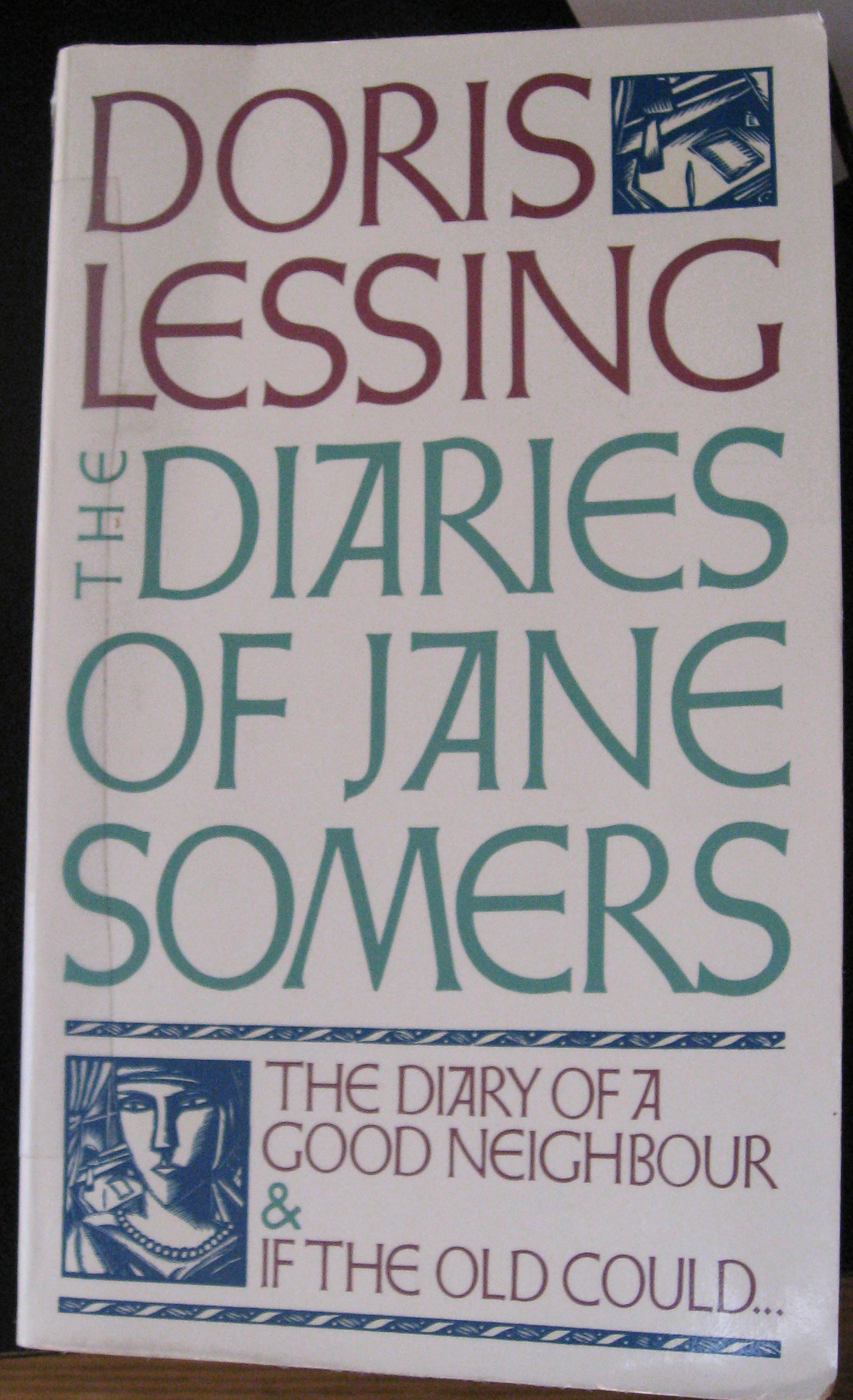
Diaries of Jane Somers

Lessing, Doris. The Diaries of Jane Somers: The Diary of a Good Neighbour and If the Old Could… New York: Vintage, 1984.

Here’s what I find fascinating about Doris Lessing – she wanted to publish something pseudonymously. She chose the name Jane Somers, wrote in a completely different voice and then submitted  The Diaries of a Good Neighbour. Her own publishers turned her down. One publisher (who accepted the Somers work) was reminded of Doris Lessing! Can you imagine writing with such personal style that its recognizable without an author name attached? Even after you try to hide your true voice? That, to me, is real fame in the world of writing!

The Diaries of Jane Somers is comprised of two emotional, very telling, sad novels, The Diary of a Good Neighbour and If the Old Could…. In The Diary of a Good Neighbour Jane befriends an elderly woman. What I find fascinating about this story is Jane herself. She is middle-aged, has no children, and is a highly successful, fashionable editor of a woman’s magazine. She comes across as unfeeling and snobbish. She barely mourns the loss of her husband to cancer, is decidedly cold about the death of her mother by the same disease, and is completely disconnected from her sister. With no real friends of her own she even shuns her elderly neighbor desperate for companionship. Oddly enough, Jane meets Maudie, a dirty, ferociously proud woman in her 90’s and instantly feels a connection. The Diary of a Good Neighbour not only details the two women and their remarkable friendship but voices what it means to be vulnerable, to have shame, and, to grow old in a society that prides itself on youthful appearances, vitality and independence.
If the Old Could…is a continuation of Jane’s story. Told several years after the death of Maudie (sorry, but you knew she couldn’t live forever, right?) Jane falls in love with a married man. This time her selflessness is poured into helping her nieces as well as finding what it means to truly hurt over another person.

Favorite lines: “She was literally inarticulate with anger” (p 59). This scene is like a chapter out of my own life. Not that my sister and I have ever had the conversation tied to this statement, but I could picture us having it.
“…I don’t know what children are, and I’m not entitled to say a word, because of my selfish childishness…” (p 62).
“Meanwhile I rage with sorrow” (79). Isn’t this just great? Some people imagine sorrow being this quiet, slow-moving, thick and heavy emotion yet Lessing turns it into this live-wire, powerfully explosive, loud and in your face emotion with one word, rage.

BookLust Twist: From Book Lust in the chapter “Aging” (p 17). Very appropriate.

Code Book

Singh, Simon. The Code Book: The Science of Secrecy from Ancient Egypt to Quantum Cryptography. New York: Anchor Books, 1999.

My first September book and I started it a little late. I think it got to me by September 8th.

Much like how Mark Kurlansky makes a subject like salt interesting, Simon Singh makes all things code fascinating. From the very beginning The Code Book was informative and interesting. Peppered with photographs and diagrams, The Code Bookrecounted the events in history where the ability to break a code (or not) meant life or death. Beginning with Queen Mary of Scot’s attempted plot to murder Queen Elizabeth on through the first and second World Wars. The only time I really got bogged down was, of course, when Singh would get a little too detailed with mathematical explanations of more difficult codes and ciphers.

Love love love this line (from the introduction): “The only people who are in a position to point out my errors are also those who are not at liberty to reveal them” (p xvii). Brilliant!
Another good line: “This was clearly a period of history that tolerated a certain lack of urgency” (p 5). This sentence doesn’t make such sense as is. What I need to explain is that during the period of 480 B.C. secret messages were written on the shaved scalps of messengers. To disguise the message there was a waiting period while the messenger’s hair grew back in. I wish I could have told my nephew this story! He would have loved the idea of being a spy (see below)!

Dancing with Wrench

BookLust Twist: More Book Lust in the chapter, “Codes and Ciphers” (p 50), and in the introduction as an off-hand mention (p xi).

World’s Fair

Doctorow, E.L. World’s Fair. New York: Fawcett Crest, 1985.

This is another challenge book that I read out of order. It was supposed to be on the July list. The only reason for this out-of-orderness was I didn’t plan very well. Technically, I have two Early Review books and four challenge books on the way but…you guessed it, none of them are here yet. I needed something to read over the weekend after finally, finally unpacking from the trip, while waiting for laundry (seven loads) to cycle and while Kisa was at a Patriots game. While this was a chore chocked weekend I needed to do my own thing, too. Nothing beats uninterrupted reading!

World’s Fair is the brilliant story of a boy named Edgar and his life in the 1930’s in New York City. Spanning Manhattan, the Bronx and Brooklyn, all senses come alive with Doctorow’s descriptive narrative. From the bustling, noisy market places to the quieter mom & pop shops; from the silent synagogues to the crowded beaches of Rockaway, New York is on display through the eyes of a child. Edgar is the youngest brother in a musical family. As he grows up, goes to school and becomes more aware of the world around him, politics and economics become less abstract and more of a reality in his day to day life. He sees his parents not getting along, his brother becoming more adult (and less fun), grandparents getting frailer, and finally, his own life becoming more complicated.

I thoroughly enjoyed World’s Fair. It was a clean, straightforward book with lots of vivid description and emotion. Most of the time Edgar tells the story, but intermittently his mother Rose, or brother Donald will step in for a chapter. Even an aunt has a moment in the story.

Favorite lines: “I am roused from sleep in one instant from glutinous sleep to grieving awareness” (p 4), “My mother ran our home and our lives with a kind of tactless administration that often left a child with bruised feelings, though an indelible understanding of right and wrong” (p 13), “this was her way, to express concern from opposite sides of the crisis” (p 27), and “I lived in the weather of my mother’s spirit,  and at these times, after these visits, the sky grew black” (p 96).

BookLust Twist: From Book Lust in the chapter “New York, New York” (p 170).

Devil in a Blue Dress

Mosley, Walter. Devil in a Blue Dress. New York: Pocket Books, 1990.

I have to admit I picked this book up by accident. I was vacationing and needed a quick book. Something to pick up while I waited for the pasta water came to a boil, or while the boys were still sleeping. I remembered this being part of the Challenge and decided to see if I could read it in less than 36 hours.

Devil in a Blue Dress is Walter Mosley’s first book and kicks off the Easy Rawlins series. Ezekiel “Easy” Rawlins is a black war WWII vet prone to violent flashbacks. In the beginning Devil in a Blue Dress he is fired from his defense plant job and doesn’t know how he’s going to pay the mortgage next month. By the second chapter Easy has been hired to locate a missing girlfriend, a devil in a blue dress, as they say. Throughout the next 200 pages Easy faces his share of violence, sex, racism and mystery but in the end, discovers a new found career – private investigations.

My favorite line: “He put up his hand as if he wanted me to bend down so he could whisper something but I didn’t think that anything he had to offer could improve my life” (p25). It’s that kind of sense of humor and sarcasm that carries Devil in a Blue Dress. You don’t realize that Mosley is telling you more than a story. He’s giving you a social commentary on what it meant to be a black man, riding the line of poverty in the 1940’s.

BookLust Twist: From More Book Lust in the chapter “Walter Mosley: Too Good To Miss” (p 169).

Emily Post

Claridge, Laura. Emily Post: Daughter of the Gilded Age, Mistress of American Manners. New York: Random House, 2008.

Let me start by saying I love biographies. When I requested Emily Post as a July bonus book from LibraryThing’s Early Review program I really didn’t think I had a chance of getting it. After all, this would be my 18th ER book if chosen. Crazy. But, there is was, on my doorstep, without fanfare on Friday. No notification, no nothing. Just a hit and run from Mr. UPS man.

Because it came so late and unannounced I couldn’t fit it into my August list. The July bonus book became a September review just like that.

Emily Post is a biography laden with details – chock full of history and background. Reading it was like wallowing in words, almost too many words. At times I got bogged down by the excessive descriptive narrative while other times it helped explain Emily’s reactions to the lap of luxury world around her. This biography is not limited to Emily’s life but extends, in detail, to the people around her. What is important to note is Claridge’s exhaustive research into not only the history of Emily’s era, but the political and cultural climate of her time thus drawing a complete and compelling picture of Emily Post beyond etiquette.

Postcards

Proulx, Annie E., Postcards. New York: Fourth Estate, 2004.

This was a hard book to read. Really dark and disconnected. I prefer books that have more flow to them. I haven’t read a lot of Proulx. I have to admit I don’t really even remember the title of the one I did read. How pathetic is that? I’m looking forward to the short stories because I think they will have less opportunity to be so disconnected and choppy.

I think what struck me about Postcards was how powerful the language was. While the plot was hard and gritty, the way it was told was strong and confident. Almost like someone yelling emphatically, if that makes sense. It’s the story of a farming family in New England. They are torn apart by the departure of the eldest son, Loyal. He has just killed his girlfriend and left her body under a pile of rocks in a nearby field. While the death was an accident, Loyal’s leaving and the slow disintegration of the farm was not. Tragedy follows the family wherever they go. The beauty of the saga is how each chapter is punctuated with a postcard. It’s these postcards that illustrate the changing times both for the nation and the family. Loyal often writes home, careful not to tell anyone where he really is. He continues to stay disconnected and this is apparent in what he shares with his family.

BookLust Twist: From More Book Lust in the chapter “It was a Dark and Stormy Novel” (p 128).

Heartbreaking Work

Eggers, Dave. A Heartbreaking Work of Staggering Genius. New York: Vintage Books, 2001.

I didn’t even have to touch this book to know it was going to be great. It landed on my desk upside down. the first words I read from the back cover were, “Yes lets and then can we leave and run in shallow warm water.” I was intrigued, to say the least!

It’s the story of Eggers as a young adult faced with having to take care of his younger brother after losing both his parents to cancer. It’s sad and funny. Witty and sarcastic. It took my much longer to read because I had to drink every little word. I read the Rules and Suggestions for Enjoyment of This Book, the Preface to this Edition, the Contents, Achknowledgments, even Mistakes We Knew We Were Making which contains notes, corrections, clarifications, apologies, and addenda. Too funny.

A few of my favorite lines:
“I have visions of my demise: When I know I have only so much time left – for example, if I do in fact have AIDS as I believe I probably do, if anyone does, it’s me, why not – when the time comes, I will just leave, say goodbye and leave, and then throw myself into a volcano” (p xiii)
“Beth and I take turns driving him to and fro, down the hill and up again and otherwise we lose weeks like buttons, like pencils” (p 55).
Then there’s this scene. I don’t know how to describe it other than to say I’ve been there: “I want to put the box somewhere else…The box which is not my mother cannot go in the trunk because she would be livid if I put her in the trunk. She would fucking kill me” (p 383). This is so, so, dare I say it? Heartbreaking.

BookLust Twist: Pearl really liked this book. It’s mentioned four different times between her two books Book Lust and More Book Lust. From Book Lust: in the chapter “Memoirs” (p 152), and “The Postmodern Condition” (p 191) and again in the preface on page xi. Then again in More Book Lust in the chapter “And The Award for Best Title Goes To…” ( p 12).

Dog Handling

Naylor, Clare. Dog Handling. New York: Ballentine Books, 2004.

When it comes to chick lit I think there has to be a trick to reading it. At least for me there are two tricks. Suspension of belief, first and foremost…and the ability to laugh out loud at some of the nonsense.

Dog Handling is the story (cute story!) of Liv Elliot, a soon-to-be married accountant in London’s Notting Hill district. When Liv’s fiance breaks off the engagement she flees to Australia to mend her not so broken heart. Australia brings new friendships, a new career opportunity, new men (of course), and a whole new way of dating them. Liv’s outlook on life changes once she learns the rules of “dog handling.”

Traditionally, I am not a big fan of mind games, overextended cliches and predictable sappy-happy endings and Dog Handling had all of the above. It took me sometime to stop making Bridget Jones comparisons and seeing Liv Elliot in her own bumbling, lovable, all’s well that ends well movie. Once I was able to get past all that I truly enjoyed the story. The characters were delightful and the plot, humorous. It was a great summer read.

Favorite lines: “After all, a foreign city is a foreign city, and until she knew the precise location of the nearest places to buy newspapers, tampons, and beer she wasn’t taking any chances” (p 40).
“Liv had been cutting split ends off her hair with a potato peeler” (p 232). What a great idea!

BookLust Twist: From Book Lust in the chapter “Chick Lit” (p 54). Where else?

All is Vanity

Schwarz, Christina. All is Vanity. New York: Doubleday, 2002.

This book cracked me up. It’s the story of a friendship between two women and how friendships can be taken advantage of. Margaret is a New York City woman (displaced from California) who gave up her teaching career to write a novel. She has subtle hubris (described as “cynical roilings” p138. ) that she tries to disguise to Letty and anyone else who listens to her (mainly her husband, Ted). Letty is Margaret’s childhood friend who became (Poor Letty!) a stay-at-home mom with four kids and a great kitchen in Los Angeles, California. They keep in touch via email and almost immediately I noticed that between the two friends, despite Margaret being the one trying to write a book, Letty is the better writer. I love Letty’s writing, but I think that’s the point. It’s only a matter of time before Margaret starts using Letty as the subject of her first book. When Letty’s life starts to spiral out of control Margaret does nothing to help thinking it helps her own fictional plot.

Funny line: “Also, as a preteen, I half believed I could do anything, as long as I set my mind to it, but was never actually willing to set my mind to anything that threatened to take up a good portion of the rest of my life” (p 12).

BookLust Twist: From Book Lust in the chapter “Women’s Friendships” (p 247). Pearl calls this book “delightful” and I would have to agree! It’s a really fun read!

Boy With Loaded Gun

Nordan, Lewis. Boy With Loaded Gun. Chapel Hill: Algonquin, 2000.

Lewis Nordan celebrates a birthday in August. I am pleased to have started off with his nonfiction/fiction memoir, Boy with Loaded Gunas my introduction to Nordan’s writing. I think it will bring insight to everything else I read of his. While this may or may not be a good thing, I am looking forward to it just the same.
Boy with Loaded Gunis heartbreaking and humorous at the same time. Pulling the reader down into sadness, lifting him or her back up with laughter. I found myself comparing the reading experience to that of a fast moving, slightly rickety, out of control rollercoaster. At times I didn’t know whether to laugh or cry. I didn’t know what was real or an exaggeration. But, I did know one thing, I loved every minute of it; page by page.
Nordan’s memoir begins with the chapter called “Voodoo” and Nordan’s inexplicable love for a voodoo practicing woman. It is at this time Nordan professes, “In these lonely backwaters and days of grief my memory begins” (p 7). We are then taken on a journey through Nordan’s young life while he struggles to love his step-father and escape the confines of small town Itta Bena, Mississippi. Later, it’s coming-of-age encounters with sex and marriage. Babies and buying houses. Alcohol and writing. Down and outs, ups and accomplishements. At times you want to love him. Other times you have to hate him. Just like real life. In other words, human.

Best quotes: “Two men got into an argument about whether a tree was willow or a weed. It was a small knife, and not a deep wound, so neither of the men went home, they just didn’t talk to each other for a while. Then they seemed to forget all about it, and before long they were talking about something else” (p 49).
“Eventually I tried to kill my father, of course” (p 69). Nordan does address the “of course” part of the statement, but it struck me as funny the first time I read it.
“I could scarcely tolerate standing in my own skin, let alone being strong” (p 188).

BookLust Twist: From Book Lust in the chapter “Lewis Nordan: Too Good To Miss” (p 172).

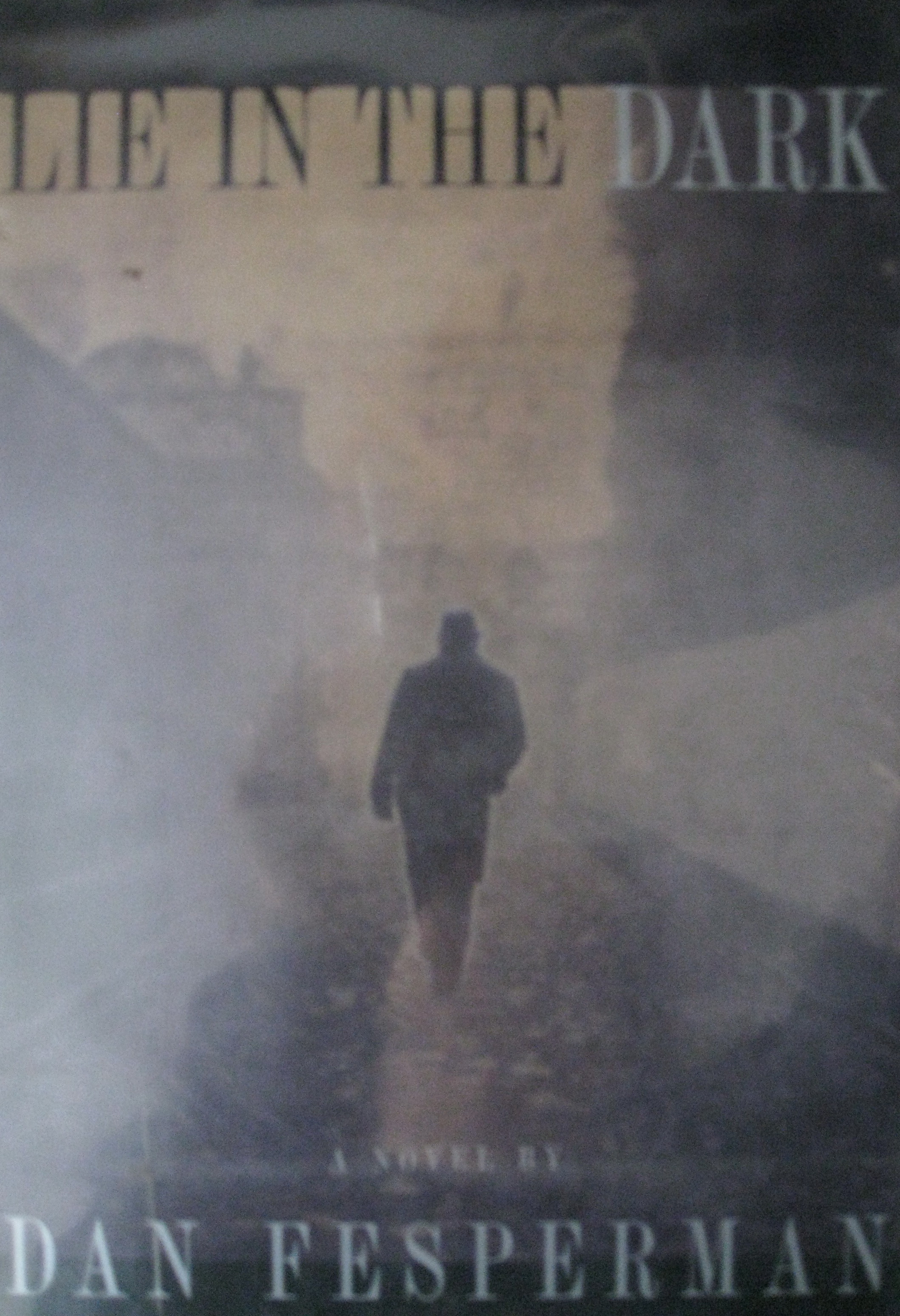
Lie in the Dark


Fesperman, Dan. Lie in the Dark. New York: Soho Press, 1999.

 I can remember this intense sadness when the civil war in Sarajevo broke out…the second time. It seemed like yesterday the Olympics were held there & it was a city of promise, of dreams come true.

Lie in the Dark is an interesting tale about life in war-torn Sarajevo and one police inspector’s fight to win his own private war. In the beginning of the conflict Vlado Petrics’s wife and infant daughter were allowed to escape to Germany. Vlado, as with all men of military serving age, stayed behind. He escaped being drafted into the military because of his employment as a policeman.
While investigating a murder Vlado is confronted with a much bigger scandal than he bargained for. Not knowing who to trust he works alone, unraveling the mystery while the civil war continues all around him. Woven into the plot are the harsh realities of what war can do to economics, politics, families, the landscape and the human spirit.

Right away I knew I would like this book. Fesperman does a great job describing the absurdity of investigating a murder in the middle of a war. As Fesperman says (p 2) “Vlado’s task was that of a plumber fixing leaky toilets in the middle of a flood.” It makes you realize that people will grasp and struggle for normalcy even if it doesn’t make sense.

Favorite lines: ” They never stopped retreating, ending up at the bottom of either a bottle or a grave” (p 5).
I found this next line profoundly sad: “It had taken the first few weeks of separation to rediscover her as lover, as something more than the wife and mother she’d become” (p 83).
“He felt himself beginning to deaden, to go numb and cold and dreary as he left the truth behind” (p 86).

BookLust Twist: From More Book Lust in the chapter “Crime is a Globetrotter” (p 59).

What We All Long For

Brand, Dionne. What We All Long For: a Novel. Toronto: First St. Martin (Griffin edition), 2008.

From the very beginning I thought this book looked interesting. Originally published in 2005 I had heard that it had even been used in university Lit classes. Upon knowing that tidbit I assumed a level of complication with the characters and a deeper depth of plot. Here is what I came away with: complicated characters that all want something (parallel to the title). Their relationships to one another go around and around – always circling one another – but really, going nowhere. This is where the plot came up short. That sense of longing hums along the fine lines of each relationship, and there is a common theme of boundaries but beyond those connections each character is lost. Tuyen is a lesbian in love with her straight best friend. Longing for someone she can’t have, sexual preference is Tuyen’s barrier. Carla is the biracial bike messenger Tuyen is in love with. Carla has a troubled brother. Longing to steer her brother straight, lack of money is Carla’s barrier to helping him. Oku is a music-loving college drop-out of Jamaican decent. His unrequited love for Jackie is his longing while her boyfriend is the barrier. Jackie longs for simplicity. Her barrier is being attracted to more than one man.

Oddly enough, the linear, uncomplicated character of the story (told in first person) is the one with the most depth and more intriguing story. Quy is the brother of Tuyen. He was separated from his parents in Vietnam as a very young child and has been lost to them ever since. His story is how her survived refugee camps in Thailand and how eventually, he made his way back to Tuyen and her family. Tuyen has never met this long-lost brother so when he reunites with his parents life changes for Tuyen.

The last character in What We All Long For is probably Brand’s most complex and mysterious: the city of Toronto itself. As the characters move in and out of its restaurants, nightclubs, streetcars, and alleys the city responds. It lives and breathes and entices just like its human counterparts.