Plague

Camus, Albert. The Plague. New York: Vintage Books, 1948.

I have to start off by saying I was shocked to discovery my library does not have a copy of The Plague in its collection. I don’t know why that surprises me, but it does. Maybe I will donate my copy?

In relation to timeline The Plague is simple. It covers the duration of a bubonic plague. The story begins with the death of rats. First, a few rats are found here and there until they are everywhere; dying by the thousands all across the Algerian city of Oran. Then, the plague increases in intensity and starts killing hundreds of people until finally, colder temperatures arrive and the plague is mercifully over. But, The Plague on a philosophical level is much deeper than the spread of a disease. Dr. Bernard Rieux is a doctor trying to save the community of Oran from the ravages of a plague. Even though Dr. Rieux patiently tries to care for everyone in the makeshift infirmaries most of his patients die. It appears to be a losing battle. Soon it is obvious the bigger question on Dr. Bernard Rieux’s mind concerns humanity. For him, the struggle between good and evil is all apparent. He observes how people react to the disease, are influenced by the disease, and are changed by the disease. In the end, the whole point of the didactic lesson for Dr. Rieux is that we all need someone. Rieux’s biggest discovery is that he is content to continue the crusade against any disease, any suffering, any pain or death.

BookLust Twist: From Book Lust in the chapter called, “100 Good Reads, Decade by Decade: 1940s” (p 177).

Confessional: Maybe this is my 21st century thinking, but I ridicule the idea of a man’s mother coming to keep house for him while his wife is ill. Can’t the man cook or clean for himself?
Dingley Falls

 Malone, Michael. Dingley Falls. New York: Harcourt, Brace & Jovanovich, 1980.

I chose Dingley Falls in honor of National Author’s Day being in November. Nothing more random than that.

Even if you didn’t know anything about Michael Malone you would swear his novel, Dingley Falls, is supposed to be a script, or at least the backdrop, to a titillating, slightly scandalous soap opera. The town of Dingley Falls, fictitiously located somewhere in Connecticut, is teeming with odd characters with even more bizarre stories to tell. It is as if the entire community has digested some mild altering hallucinogenic that causes everyone to come unglued. To give a few examples, mild-mannered Mrs. Abernathy suddenly ends up under a tree in the pouring rain having wild sex with a poet she has just met; post mistress Mrs. Haig is forced to retire because of a bad heart. It’s not the job that is stressing her out, it’s a snapping, snarling dog who chases her home five nights a week; Headmaster Mr. Saar has trouble controlling his sexual appetite and will wind up handcuffed to a bed in a seedy motel in New York City, naked and dead, if he isn’t careful. Mrs. Ransom tries masturbation for the very first time only to have some stranger catch her in the act.
The list of characters goes on and on, so much so that Malone needed to list his crazy community individual by individual at the start of his book.

When you discover Michael Malone has years and year of experience as the senior writer for One Life to Live then Dingley Falls begins to make sense. The heightened drama, the outrageous characters, the never-ending bizarre situations in Dingley Falls suddenly become par for the course…just a little more graphic with the sex scenes and violence, the things you can’t show as vividly on daytime television.

Favorite lines: “The elderly shut-in bought a new car every year – each racier than the last – as if she thought she could outdrag death if she only had the horsepower” (p 94). “‘Did you know that until I drink this cup of coffee, anything you know is knowing too much?'” (p 145). “He drank in order to pose count; not like Walter Saar, to get in touch with who he was, but to stay out of touch with who he might have been” (p 157).

BookLust Twist: In Book Lust and More Book Lust. This is a popular book in Pearl’s world. First, from Book Lust in the chapter called, “Southern Fiction” (p 222). From More Book Lust in the chapter called, “Michael Malone: Too Good To Miss” (p 160).

Invitation to Indian Cooking

Jaffrey, Madhur. An Invitation to Indian Cooking. New Jersey: Ecco Press, 1999.

I have to start off by saying I love Madhur Jaffrey’s cookbooks. I own several and all of them are well-organized and beautifully illustrated (or have gorgeous photographs).

An Invitation to Indian Cooking might have been a more accurate title had it included the subtitle Getting to Know Indian Cuisines and Ingredients because Jaffrey not only invites you into the world of Indian cuisine she also includes history lessons and ingredient explanations in addition to recipes. While her tone is conversational I found it to be a little didactic at times. Her claims that Americans, on the whole, don’t know what well-prepared rice tastes like is one such example. Another drawback to An Invitation to Indian Cooking is its out-of-date information. Basmati rice, Jaffrey recommends, is readily available at specialty stores. That may have been true in 1973 when her first cookbook was published, but I expected the reprint to have some updated information. I also find it hard to believe that out of 50 states only 12 have stores that carry authentic Indian ingredients.
But, having said all that, I love the recipes Jaffrey includes in her first cookbook. I like her attention to detail and her comparisons between American and Indian products. For example, Jaffrey points out that American chicken is more tender than chicken purchased in India, therefore traditional Indian cooking techniques would not work well on an American-raised bird.

“The chicken available in American markets is so tender that it begins to fall apart well before it can go through the several stages required in most Indian recipes” (p 86).

If you are ambitious enough to make several Indian recipes at the same time Jaffrey includes a series of different menus to try.

BookLust Twist: From More Book Lust  in the chapter called, “India: a Reader’s Itinerary” (p 125).

Caddie Woodlawn

Brink, Carol Ryrie. Caddie Woodlawn. New York: Scholastic, Inc. 1973.

Thanks to Phish and a midnight show I was able to read this in one night (my other November books hadn’t arrived yet). While Kisa listened to a live show from California I was nose-in-book for a few hours. This was cute and completely reminded me of the Little House on the Prairie series by Laura Ingalls Wilder.

Caddie Woodlawn is the quasi-true story about Caroline “Caddie” Woodlawn. I say quasi because Brink got her stories from her grandmother and she changed some of the details for the sake of the plot. Caddie is Brink’s grandmother (with a slight name change). As an impetuous, spunky tomboy, Caddie would rather run wild with her two oldest brothers rather than stay home and cook and sew with her more demure sisters. The whole book is about Caddie’s struggle to balance wanting to be a good girl while being a natural wild child.
The year is 1864 and the Civil War is raging to an end in the East while a different prejudice is infiltrating the midwest. The conflict between Native American Indians and the white man who invaded their territory is being fueled by ignorance, rumors and fear. Caddie is eleven years old and coming of age at a time when the country is doing the same thing.

Favorite line, “She whipped out her ruler, and laid it sharply across that section of Obediah’s person on which he was accustomed to sit” (p 68).

BookLust Twist: From Book Lust in the introduction (p x).

Just So Stories

Kipling, Rudyard. The Complete Just So Stories. New York: Viking, 2003.

It took me a very long time to find a version of Just So Stories  that had the exact stories I was looking for. My library has a book that it calls Just So Stories but isn’t the complete volume of all stories. It’s missing the two crucial stories I needed for the Book Lust Challenge, ” How the First Letter was Written” and “How the Alphabet was Made.” 

Despite being published in 1902 I am glad I found a 2003 republication. Isabelle Brent’s illustrations are wonderful! She took some liberties modernizing Taffy and her father who were supposed to be ancient tribal people, but her depictions of animals are accurate and her use of color is great.

I only read two stories from Just So Stories, “How the First Letter was Written” and “How the Alphabet was Made.” Both were incredibly fun to read, especially aloud. Kipling pokes fun at the stereotypes of parents and children with names like, “Lady-who-asks-a-very-many-questions” for the mother and “Small-person-with-out-any-manners-who-ought-to-be-spanked”  for the child. In both stories the theme is the need for better communication skills and are meant to be read together. The first letter makes up the alphabet later on and one story is a continuation of the other. Rumor has it that both “How the First Letter was Written” and “How the Alphabet was Made” started out as oral stories, told to Kipling’s daughter Josephine in 1900.

Favorite line: “We must make the best of  bad job” (p 70 from “How the First Letter was Written”).

BookLust Twist: From More Book Lust in the chapter called, “Alphabet Soup” (p 11).

November 09 is…

November is a bundle of nerves dressed as confidence. I am trying to be brave in the face of unknown in Indecision City. Thanksgiving looms large.

For books the list is short. Two of the chosen titles are monsters (each over 500 pages long):

  • Dingley Falls by Michael Malone (in honor of Malone’s birth month)
  • Empire Express by David Haward Bain ~ in honor of National Travel Month
  • Invitation to Indian Cooking by Madhur Jaffrey ~ in honor of November being the best time to visit India
  • Just So Stories by Rudyard Kipling ~ in honor of November being National Writing Month
  • Last Lion: Visions by William Manchester ~ in honor of Winston Spencer Churchill

I will be lucky if I get to Last Lion since Empire Express is over 900 pages long. The other book I’m hoping to get to if there is time is Last Best Place by various authors because the best time to visit Montana is November and I’ve always wanted to go.

For LibraryThing and the Early Review Program I am reading Ostrich Feathers by Miriam Romm. I was notified in early October I would be getting it but since the book actually didn’t arrive until October 24th I have decided to call it a November book.  I also got word I will be receiving a November book. I guess I will be very busy!

ps~ I just received word my all-time favorite author, Barbara Kingsolver, is coming out with a new novel. Holy freak me out! I simply cannot wait! YAY!

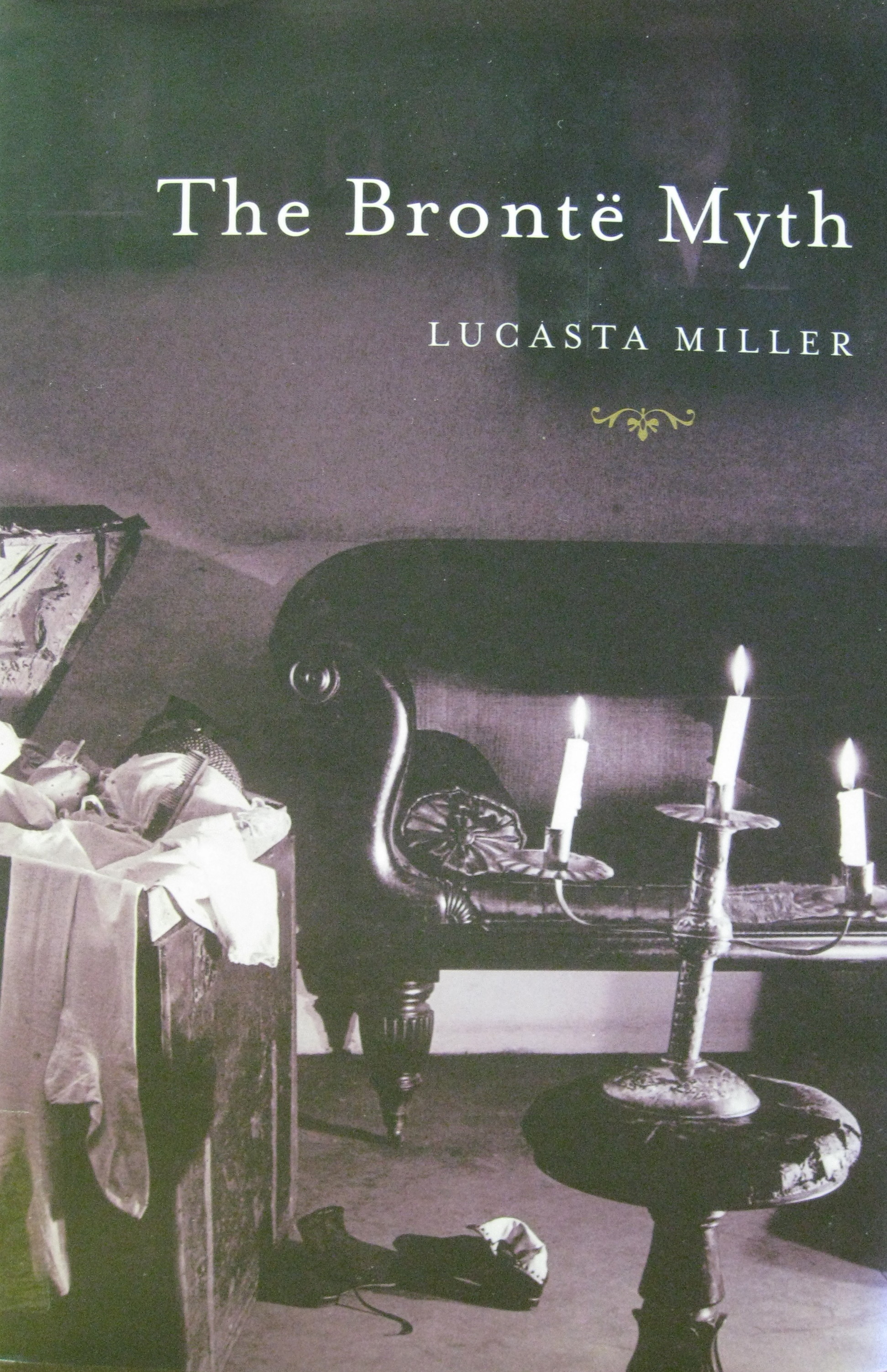
Bronte Myth

Bronte mythMiller, Lucasta. The Bronte Myth. New York: Alfred A. Knopf, 2004.

In honor of British Literature month I added The Bronte Myth to November’s reading list. From the very beginning I was intrigued about this book; Much like how the Bronte sisters themselves invited an aura of intrigue from the moment they emerged on the literary scene. When they first began writing they, like any other authors out there, wanted desperately to be taken seriously. In an era where women couldn’t so much as travel alone the three sisters took on androgynous pseudonyms to in an attempt to hide their gender. Only these pseudonyms attracted too much attention once the sisters started to publish. The more they tried to hide their identities the more reviewers, critics, and the general public started to speculate on who they really were, not as authors, but as members of their society. Following the speculation came accusations and wild rumors -created to fill in the gaps of each sister’s true personality. Lucasta Miller attempts to unravel the mystery and kill the myths that surrounds the Bronte women. While Miller does an extremely thorough job I found the reading to be both dense and dry as a result.

Passage that made me think: “…Gaskell’s belief that though Currer Bell might be morbid, Miss Bronte was the soul of feminine delicacy” (p 59).

BookLust Twist: From More Book Lust in the chapter, “Literary Lives: the Brits” (p 146).

ps~ sorry about the huge-ness of the pic. It’s just such a beautiful cover that I couldn’t bear to shrink it!

Best American Essays

Oates, Joyce Carol, ed. The Best American Essays of the Century. Boston: Houghton Mifflin, 2000.

As bloggers we cannot help but be reminded that November is National Novel Writing Month. It’s as if there a reminding hope that writing these one-three paragraph diatribes could somehow be transformed into something as concrete, or as interesting, as a full blown novel. I squirm with discomfort every time someone says I should write a book. While my stories are interesting…to a point, I don’t see a need to make them more than what they are: tiny bubbles of thought designed to pop (and ultimately, hopefully) go away when released.

Anyway. This isn’t about me and my nonability to write. This is about the complilation of essays from those who can.
Best American Essays of the Century wraps up the creme de la creme of essay writing from 1901 – 1997. Beginning with Mark Twain (“Corn-pone Opinions”) and ending with Saul Bellow (“Graven Images.”) As part of the Book Lust Challenge I read the following essays:

  • “Stickeen” by John Muir ~ “…for many of Nature’s finest lessons are to be found in her storms” (p 32).
  • “Corn-pone Opinions” by Mark Twain ~ “We are creatures of outside influence; as a rule we do not think, we only imitate” (p 1).
  • “A Law of Acceleration” by Henry Adams
  • “The Devil Baby at Hull-House” by Jane Adams
  • “The Crack-up” by F. Scott Fitzgerald ~ Life was something you dominated if you were any good” (p 139).
  • “The Ethics of Living Jim Crow: an Autobiographical Sketch” by Richard Wright
  • “Sex Ex Machina” by James Thurber ~ “Every person carries in his consciousness the old scar, or the fresh wound of some harrowing misadventure with a contraption of some sort” (p 157).
  • “Letters from a Birmingham Jail” by Martin Luther King, Jr.
  • “The Brown Wasps” by Loren Eisley
  • “A drugstore in Winter” by Cynthia Ozick

BookLust Twist: From Book Lust in the chapter called, “Essaying Essays” (p 80).

The Darling

Banks, Russell. The Darling. New York: Harper Collins, 2004.

I hate using words like “gripping” and “suspense-filled” to describe a book, but this time I can’t help it. The Darling was both of those things and much, much more. Once I started reading it I dropped every other book and concentrated on devouring the words of Russell Banks. While his plots are always over the top I like that hairy edge of reality and suspension of belief.

It’s a political thriller, a sweeping epic spanning the decades of one woman’s life, and a social commentary on Africa, racism and greed. It’s all of these things. Dawn Carrington is Hannah Musgrave who is also “Scout.” Dawn/Hannah/Scout is a woman with a past as complicated as her many names. Brought up by affluent, almost snobby parents as Hannah she is drawn to the underworld of political terrorism as Dawn. On the run after being indicted for a bombing gone bad, Dawn flees to Liberia and, by marrying a government official, becomes Missus Sundiata, her fourth recreation. Told from future to past and back again Dawn/Hannah takes you on her unapologetic journey through deceit, corruption, power and humanity.

Part of the reason why I liked The Darling so well is because it was written by a man. Russell Banks is able to capture the voice of a woman as a wife, mother, and an individual fiercely protective of her independence and individuality. Even if she doesn’t know who she really is. The first person voice is reminiscent of Barbara Kingsolver’s Taylor Greer or Margaret Atwood’s Handmaid.

Favorite lines:
“I was not a natural mother. Was not programmed like most women with a mother’s instincts and abilities…It’s as if I was, and still am, missing the gene” (p 171).
“But how I wished I were invisible. My white skin was a noise, loud and self-proclaiming” (p 177).
“I woke just before dawn with a boulder of rage lodged in the middle of my chest and a desire to break someone’s skull with it” (p 236) – that sounds like something I would say!
“That’s the real American Dream, don’t you think? That you can start over, shape-change, disappear and later reappear as someone else” (p 255).

Another section I had a love-hate relationship with was Hannah/Dawn’s father passing away from a stroke. The detail of his death was almost too painful to read, having watched my father slip away much in the same way.

BookLust Twist: From More Book Lust in the chapter “Men Channeling Women” (p 166).

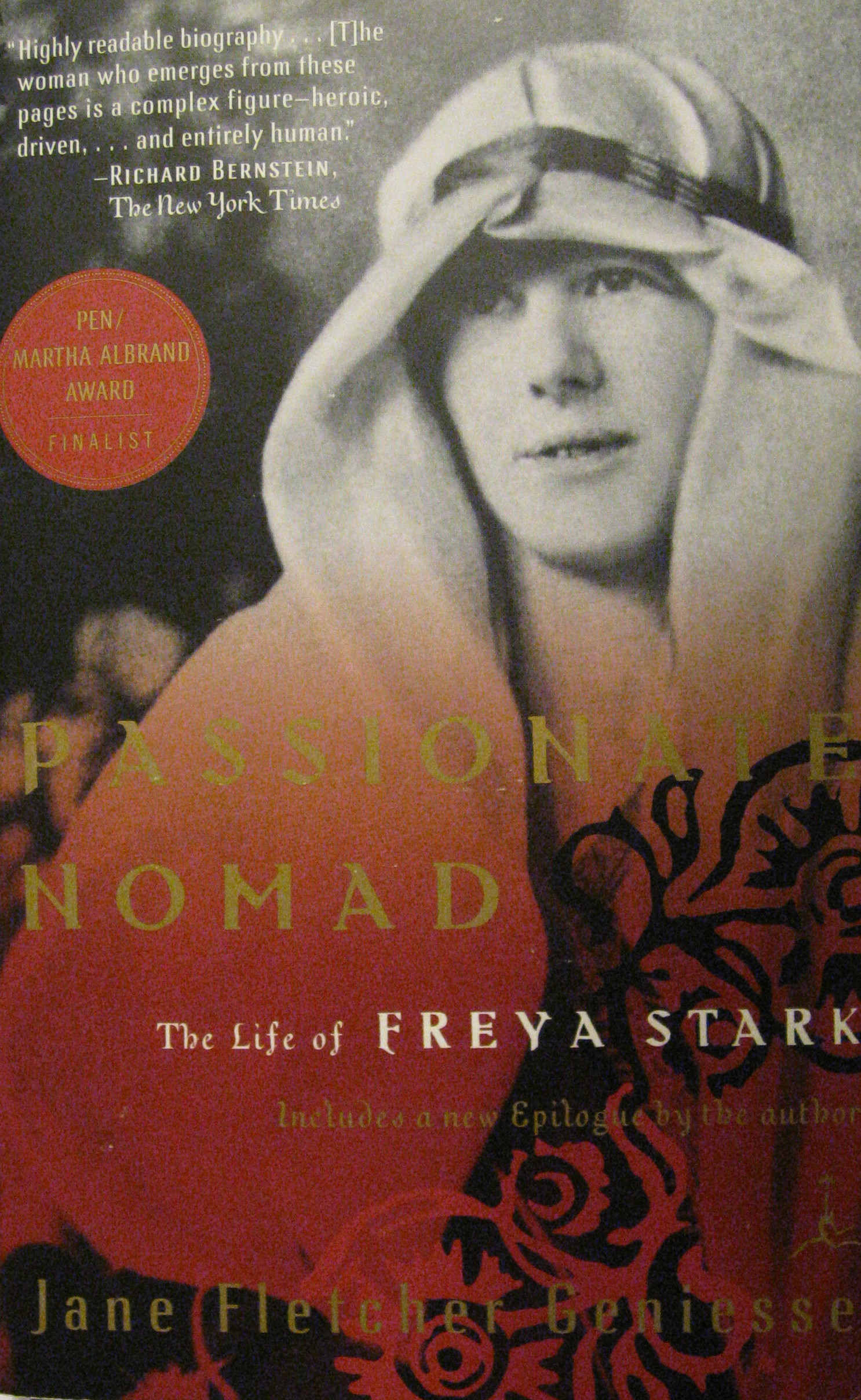
Passionate Nomad

img_4236Geniesse, Jane Fletcher. Passionate Nomad: The Life of Freya Stark. New York: Modern Library, 2001.

This has been hanging around the house for over a year now. I had no idea it was even on “the list” until now. Someone gave me a copy with the recommendation, “read it. It’s good. You’ll like it.” Okay. So, in honor of National Travel Month I put Freya on the list (as soon as I found out it was even on the list).

Freya Stark was an amazing woman. Not because she explored uncharted territories. Not because she dared to go where even the bravest of men hadn’t. Not because she had no regard for her own well being. Not even because she was an expert Arabist. She was an amazing woman because she dared, period. We hear about the glass ceiling and what women even today are tolerating. Freya faced all that and more.
Geniesse weaves a convincing autobiography of Freya Stark using letters to and from Freya, journals, interviews, but mostly from Freya’s own library of books written about her experiences. Freya was a prolific writer and so Geniesse had plenty of material to draw from. The final product is a fascinating account of one woman’s rise to recognition through exploration and encourage, especially during one of the most volatile times of our history – World War II.

A few favorite passages:
“One suspects that all her life Freya carried some degree of rage…” (p 23).
“A telegram from Freya requesting that a tin bath be shipped into the interior of Yemen was not unusual” (p 156). You go girl!
“Wherever she went to find solitude on this great, empty earth, from nowhere emerged some form of life, human or otherwise, to share the loneliness” (p 217).
“in the middle of the night she was awakened by the tinkling of a music box being played close to her ear” (p 250).

BookLust Twist: From Book Lust in the chapter, “Lady Travelers” (p 143). I am excited to think I will be reading some of Freya’s own works (eventually), – from this same chapter. Maybe next year.

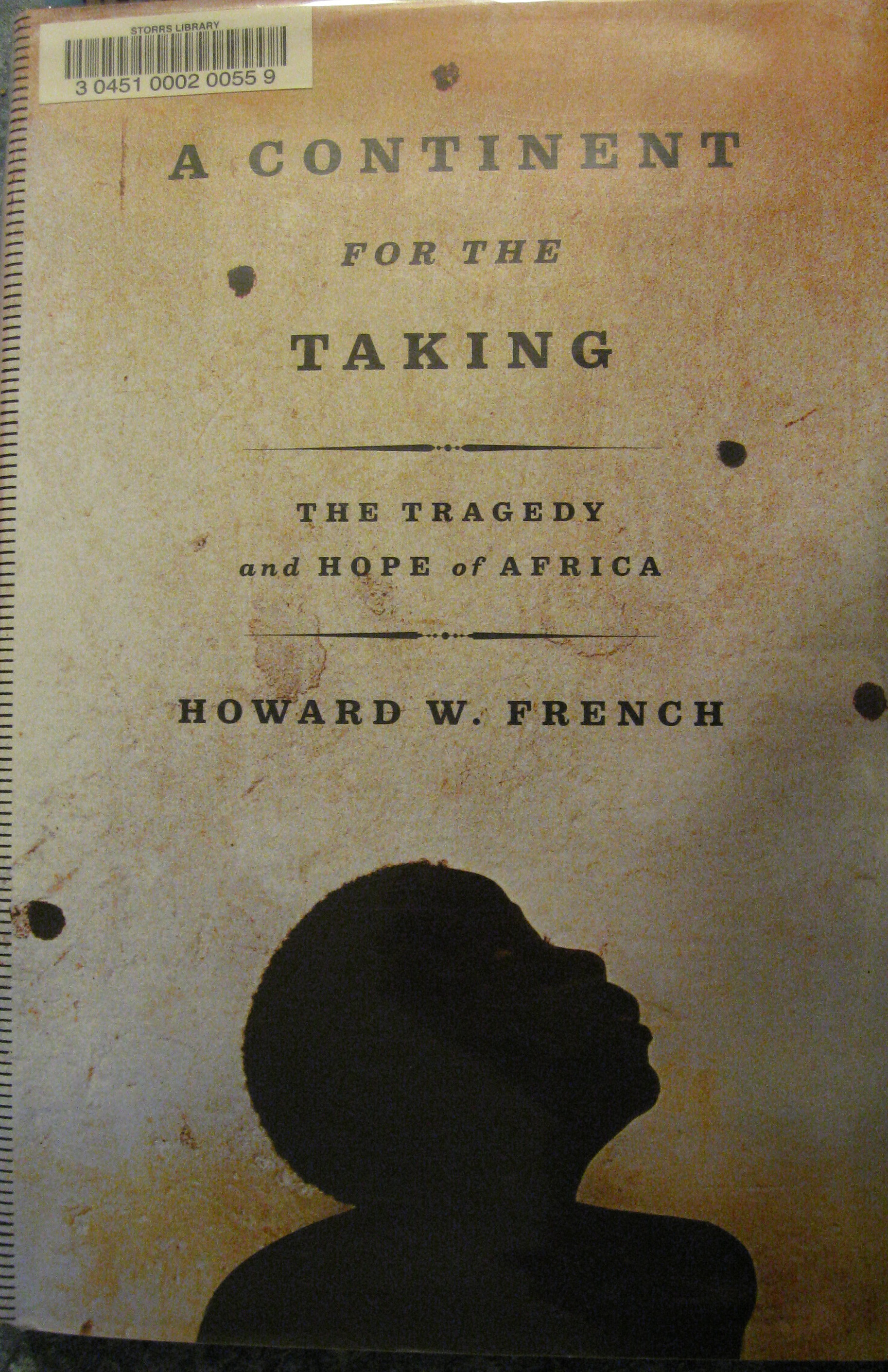
Continent for the Taking

img_4235French, Howard W. A Continent for the Taking: The Tragedy and Hope of Africa. New York: Alfred A Knopf, 2004.

Howard French’s portrayal of Africa is both professional and passionate. He is scholarly and sentimental. There is a deep knowledge about, and an undeniable kinship with, this continent yet French is able to objectively portray it all. He takes the reader through the events of horrific genocide as well as the equally deadly outbreaks of AIDS and Ebola diseases. French skillfully demonstrates how political infrastructures prove to be volatile and fragile yet Africa’s deep seeded cultural roots remain unfailing.

For me, this was a hard read. I simply couldn’t wrap my brain around the threat of senseless violence everyone, regardless of race, age, caste, or sex, had to endure. When these attacks rained down no one was safe. Survival depended on the ability to outwit, outrun, outhide the attacker.

Passages that struck:
“For Mariam, Africa would forever be home, the place where she returned to recharge” (p 5). Despite its unflinching violence, political unrest, and never-ending poverty there is an allure.
“The advantage of a good travel companion goes beyond plain company; his real value is in the kind of moral encouragement he provides…” (p 83).

BookLust Twist: From More Book Lust in the chapter called, “Africa: A Reader’s Itinerary” (p 4).

Bridge to Terabithia

Paterson, Katherine. Bridge to Terabithia. New York: Crowell, 1977.

I remember reading this in grade school. No, I take that back. Someone read it to me as “quiet time” in grade school. Then, the movie came out. When Kisa rented it I discovered I had been mispronouncing “terabithia” for years (tera-beeth-ia instead of tera-bith-ia). Not my fault since someone else read it that way.

One of the problems of seeing a movie and then reading the book is the danger of making comparisons to the visuals on the big screen. Because I couldn’t remember the plot from 32 years ago that’s what happened to me. I kept seeing the movie in my mind as I read the words. Either way, it’s a really cute story.

Jesse Aaron is a loner who lives inside his little world of solitude and art. His family is large and boisterous and often times, Jesse doesn’t feel understood by anyone, especially having three sisters. When Leslie Burke moves in next door Jesse is determined to ignore her, too. Soon he discovers they have more in common than he would like to admit. Leslie is creative, smart and a tomboy who can run faster than he can. Eventually they are inseparable friends. Jesse learns more than he bargains for by befriending Leslie.

What I found most compelling is that Paterson wrote this book for her son after he loses a friend to a lightning strike. On the dedication page she indicates her son insisted her name be included.

BookLust Twist: From More Book Lust in the chapter, “Best for Boys and Girls” (p 22). Note: Pearl indicates Bridge to Terabithia would be more suitable for girls, but I think it would be equaling interesting to boys.

November Is…

Giant
November is completely out of whack – already! I posted a review and then realized I hadn’t even listed out everything I plan to read. Woops! Truth be known, I hadn’t really decided what I wanted to read this month (hence the silly delay). But, this is what November is: November is when I wanted to turn on the heat. It actually came on 10/24 (at 56 degrees), but maybe now I’ll turn it up…to 60. This November marks the first time in my life I am not planning anything for the holidays (watch me cave and change my mind in the next two weeks). November is a marriage forever stuck at 22. November is (hopefully) a month of music. November is also the attempt to get a lot of reading done since it is National Novel Writing Month. Here’s the list:

  • Behind the Scenes at the Museum by Kate Atkinson (in honor of first novels) -already finished and reviewed!
  • A Continent for the Taking by Howard W. French (in honor of the best time to visit Africa).
  • The Darling by Russell Banks (in honor of Transgender month*, but, conveniently, also about Africa).
  • Passionate Nomad by Jane Geniesse (in honor of National Travel Month – or one of them, at least!).

and if there is time:

  • As I Live and Breathe: Notes of a Patient Doctor by Jamie Weisman (in honor of National Healing Month).
  • Battle Cry of Freedom: the Civil War Era by James M. McPherson (in honor of November being the month the Civil War ended).

And a few “goals” such as they were: getting my car fixed & getting life as I know it back on track. Period.

*None of the books I will be reading in honor of Transgender Month actually are about people of transgender. Nancy Pearl has a chapter called “Men Channeling Women” in More Book Lust (p 166), but since National Men Channeling Women month doesn’t exist (yet), I thought this would be a good tongue-in-cheek substitute.

Behind the Scenes at the Museum

Atkinson, Kate. Behind the Scenes at the Museum. London: Black Swan, 1996.

November is writing month and to celebrate I decided to read something from Nancy Pearl’s chapter called “First Novels” (Book Lust p 88)…in two days!
Behind the Scenes at the Museum was honored as a Whitbread Book of the Year and received such words of praise as remarkable, impressive, entertaining, quirky, colorful, humorous, ambitious, unusual, lively, provacative, promising, witty, enchanting, sassy, astounding…I could go on (and on). With reviews using words like those how could I not expect to love it, want to love it?

From the very beginning Behind the Scenes draws the reader in. Told from the point of view of young Ruby Lennox…(before she is even born) there is humor and sarcasm. Her voice reminds me of the wise-alec baby on Family Guy (sorry, the name escapes me). Ruby is omnipresent, giving the reader insight on every thought, feeling, dream, nightmare her family has.
The alternate chapters (told in third person) give the backstory of Ruby’s mother’s life during the second Great War. The writing is not as humorous, nor as witty as when Ruby gets to speak. Over all the reading is a rollercoaster of ups and downs, twisting you through life’s crazy moments.
Favorite lines:
“She walks out, saying nothing, but inside, a silent Scarlett rages…” (p 22).
“…but how can time be reversible when it gallops forward, clippity-clop and nobody ever comes back. Do they?” (p 210).

All and all I wasn’t as wowed as I thought I would be. Maybe it’s because Ruby’s story isn’t the main focus after all. While she tells the story it’s more about her mother, Bunty, and the generations of women before her. It’s interesting to note there is always a war going on in some capacity and Ruby seems to always be walking in on her father having sex with someone other than his wife!

BookLust Twist: From Book Lust in the chapter called “First Novels” (p 88). But, I said that already.

Storm in Flanders

Storm in FlandersGroom, Winston. A Storm in Flanders: The Ypres Salient, 1914 – 1918: Tragedy and Triumph on the Western Front. New York: Atlantic Monthly Press, 2001.

I’m thinking I shouldn’t have picked this book up in the middle of my current state of mind. Don’t get me wrong, Groom’s history on World War I is impressive. Between the diary accounts, breathtaking pictures and easy language (he called someone a “military nut” and someone else “butt-headed”), this wasn’t a dry read. I know more about military warfare than ever before. For example, I learned WWI was Hitler’s introduction to war, paved the way for him, so to speak. The Germans were the first to introduce poison-gas (mustard gas) warfare; and I now know the meaning behind the poppy-like flowers veterans sell outside the grocery store. I always bought them and hung them in Gabriel without knowing why.
There is humor to Groom’s language: “While the Germans pondered their next move, there was a four-day lull in the fighting – if you can call taking thousands of casualties a day a “lull” (p 51) and “…Germans binged on a gluttony of pork until they were virtually wursted and brattened to their limits” (p 119).

Since Christmas is fast approaching I am drawn to the story Groom tells of Christmas 1914 when both sides put down their weapons and pretended to be friends for a day, exchanging gifts, singing carols, playing games and even laughing with one another. Yet, when the day was over they went back to killing one another.

BookLust Twist: From Book Lust in the chapter “World War I Nonfiction” (p 251). Pearl points out that Groom writes with compassion for the soldiers and I couldn’t agree more. I think that compassion is what makes this book so interesting.