Things They Carried

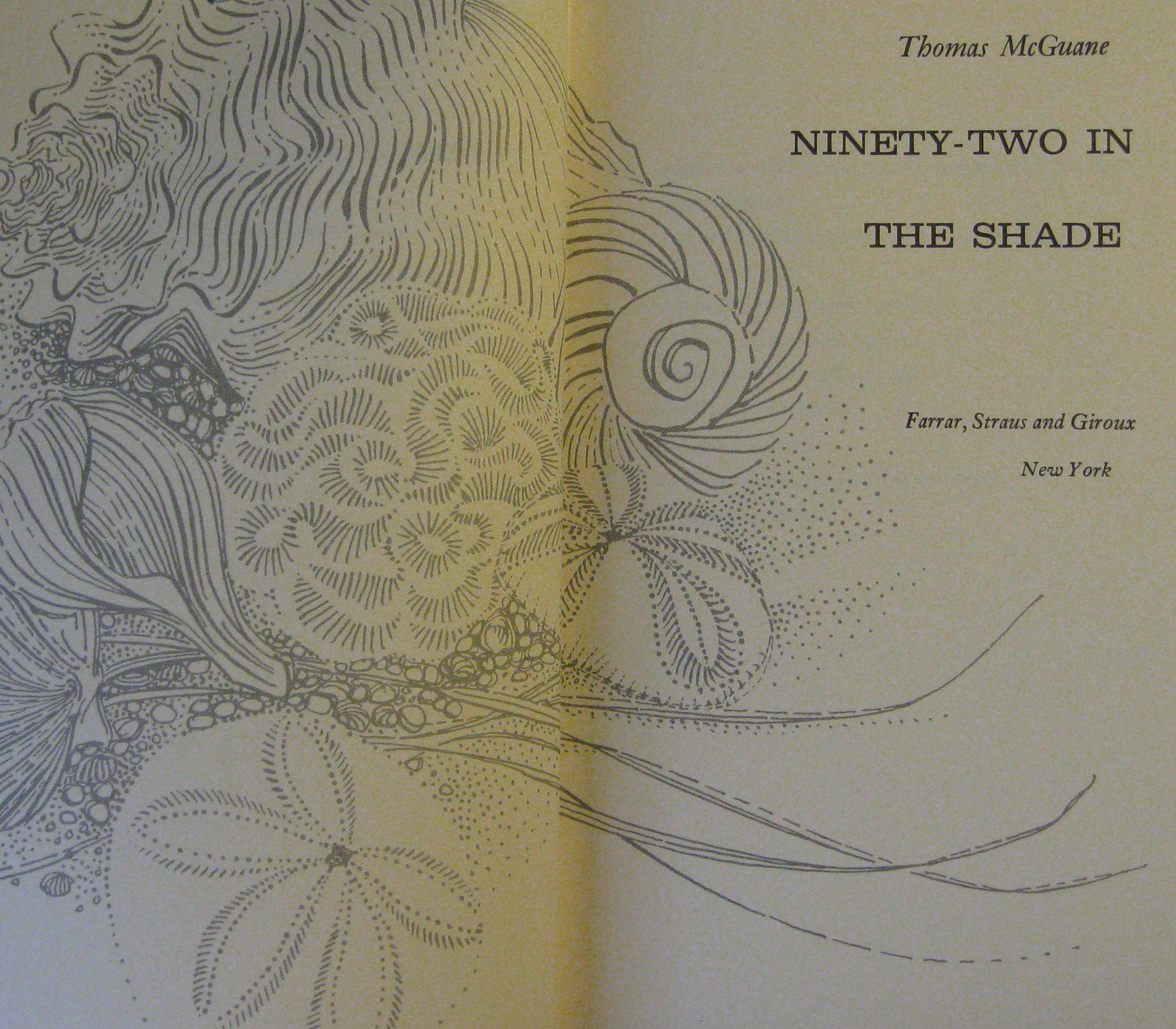
O’Brien, Tim. The Things They Carried. New York: Broadway Books, 1998.

I admit it. I have picked this book up three different times now. Technically, I should have read it in March to celebrate the day U.S. troops pulled out of Vietnam (March 1975), but as you can tell, there were plenty of other things to reach for in March…
Nope, I cracked this book open for no other reason than sheer boredom. I finished Peter Pan and The Ground Beneath Her Feet and decided I wasn’t up for The Joy Luck Club…at least not right now. The Things They Carried has been hanging around my office for months now. It just seemed to say “read me” and the time was right. I am so very glad.

This was an amazingly moving book. I had a hard time getting into it the first two times I picked it up, but the third time was a charm because after that I couldn’t put it down. Tim O’Brien writes with such ferocious honesty. He calls it a fiction but it easily could have been the truth. The shocking violence, the depths of sadness, the urgency to survive, the humble efforts to maintain sanity and the humor that survives it all…each chapter is a short story of all of these things. Each story stands alone, complete as it is, yet connects beautifully to the story before it as well as the one after it. Peter S. Prescott from Newsweek said the stories “bounce off each other…” and I would agree.
I could quote nearly each story, but here are my favorites:
“They carried all they could bear, and then some, including a silent awe for the terible power of the things they carried” (p 7). The reason why this quote stuck with me is because O’Brien spends the opening chapter listing everything a soldier carried in the Vietnam war. Both the physical and mental, the essential and the sentimental. This quote sums up how they never forgot why they were carrying everything else.
“The problem, though, was that a draft board did not let you choose your war” (p 44). I found this to be one of the most humanitarian statements of the book. O’Brien had just finished explaining that some wars were justified, like stopping Hitler, but in this case he was drafted to fight a war he didn’t understand.

BookLust Twist: From Book Lust in the chapter “Vietnam” (p 239).
ps~ one of the reasons for starting the Book Lust challenge was to find writers I could fall in love with. I wanted one book that would spark an obsession. Much like Margaret Atwood’s The Handmaid’s Tale or Barbara Kingsolver’s Animal Dreams or Katherine Weber’s Objects in the Mirror are Closer than They Appear. All of these books created a rabid need to read anything else written by the authors. I found such an obsession with The Things they Carried. I will go on to get my hands on any and everything Tim O’Brien has written before and since.

May Was…

A month of allergies. Lilacs. The end of the school year (yay). Dreams coming true. The final Chuck Lelas walk. A new haircut. The serious house hunt. Family time. Natalie Merchant performing with the Boston Pops and ten good books (Nine and a half…).

  • Educating Esme: Diary of a Teacher’s First Year by Esme Raji Codell (National Education Month)
  • Plain Speaking by Merle Miller (Harry Truman’s birthday, Merle Miller’s birthday, on the heels of a book about Roosevelt…it just made sense).
  • True Confessions: a Novel by Mary Bringle (Mothers & Daughters)
  • Dreamland by Kevin Baker (History. I have to admit, tail between my legs, that I didn’t finish this one. Once I found out what the reader doesn’t find out I didn’t want to continue. BooHiss).
  • Ground Beneath Her Feet by Salman Rushdie (Music month)
  • Murder on the Leviathan by Boris Akunin.

Books added to the list because I gave up on Dreamland:

  • Peter Pan by J.M. Barrie (celebrating Barrie’s birthday)
  • The Things They Carried by Tim O’Brien for no ther reason than it was a great book!

For LibraryThing & the Early Review Program~two books!:

  • Best Girlfriends Getaways Worldwide by Marybeth Bond (really, really fun travel guide)
  • Home Girl: Building a Dream House on a Lawless Block by Judith Matloff. Interesting, considering I’m dreaming of houses these days…


Ground Beneath Her Feet

IMG_1374
Rushdie, Salman. The Ground Beneath Her Feet. New York: Henry Holt & Co., 1999.

May was deemed National Music Month by someone out there so, in honor of that tidbit I chose The Ground Beneath Her Feet as my “music book.” This was my first time reading Salman Rushdie & I have to confess, if all his other books are so lengthy and detail driven, I am going to have a hard time getting through them. This one was a whopping 575 pages long and and and! I knew the ending in the first chapter!

The Ground Beneath Her Feet is an epic rock and roll love story. Spanning several lifetimes Rushdie tells the love story of Ormus and Vina, two musicians from Bombay. Their story is like a gigantic flood, catching up and describing in detail: cultures, mythologies, histories, industries (agriculture (goats!), music and beyond), the landscapes of India, England and America, their societies, religions, ancestries of families, personalities, births, deaths, emotions, tragedies, triumphs, anything and everything from  the mid 1950s until the early 1990s.  This is a sweeping story that cannot be pigeon-holed into a romance, mystery, or comedy. It is all these things and thensome. Suicides and secrets, miscarriages and murders, wealth and poverty, sane and strange, greedy and generous, brothers and sisters, twins and torture, and of course, sex, drugs and rock and roll.

My favorite quotes circled and scrutinized love:
“In love one advances by retreating” (p 15).
“when it comes to love there’s no telling what people will convince themselves of” (p 30).
“But as the years passed we became each other’s bad habit” (215).

And one quote about my fave, the drums: “It is as if the drums have been yearning to speak to him, and he to them. Finally, he thinks: at long last, here are friends” (p 287).

BookLust Twist: From Book Lust in the chapter “Music and Musicians” (p 164).


Murder on the Leviathan

Murder on the LeviathanAkunin, Boris. Murder on the Leviathan. New York: Random House, 2004.

Oddly enough, I chose this book because it was written by an author who spent a great deal of time in Moscow and a guide book advised me that now was the best time to visit Russia. There was no other reason to read this at this particular time. But, having said that, I’m glad that I did. It was fun.
Murder on the Leviathan starts out violently, a record of an examination of a crime scene set in 1878. I think the murders of ten people ranging from ages 6 to 54 in one Parisian house would cause a stir even in the 21st century. Oddly enough, this is not the murder the title of the book refers to. Commissioner Gauche discovers a clue that leads him to the Leviathan, a giant steamship headed for Calcutta. As he sets sail with a host of interesting passengers (in first class) he soons discovers each and every one of them is a potential suspect. It gets interesting when people start dying on the ship. A Russian detective soon joins Gauche on the hunt for the killer.

I didn’t find any quotes to include, but I did have to look up “gutta-percha” shoes. Depending on who you ask, gutta percha is described as tree gum, rubber, or plastic.

BookLust Twist: In More Book Lust in the chapter “Crime is a Globetrotter”, subsection, “Russia” (p 59).

Dreamland

DreamlandBaker, Kevin. Dreamland. New York: Harper Collins, 1999.

It makes sense that a historian like Kevin Baker would write something as epic and sweeping as Dreamland. It is a beautifully blended tale of fiction and reality. Events like the Triangle Shirtwaist fire and people like Sigmund Freud and politics like Tammany Hall exist in harmony with fictional Coney Island gangsters and seedy carnival performers. It’s a world of underground rat fights, prostitution, gambling, and the sheer violent will to survive. It’s dirty and tragic. A love story hidden behind the grime, the colorful lights, the tricks, and the chaotic noise of New York.
Favorite lines that moved me: “That is always the thing with depravity: just when you think you’ve plumbed the very depths, there is always someplece lower to fall” (p 26).
“I sat behind the left ear of Satan, and watched the sun come up over Sheepshead Bay, and dreamed of an empire of little men and little women, ruled by a mad queen” (p 34).

BookLust Twist: From Book Lust in the chapter “American History: Fiction” (p 21). I think Pearl’s description says it all, ” Dreamlandvividly describes the lives of poor immigrants families on the Lower East Side of New York City, circa 1910, who find their lives somewhat more bearable by the promise of excitement of Coney Island” (p 21).

True Confessions

True Confessions
Bringle, Mary. True Confessions. New York: Donald I. Fine, 1996.

This sounds like it would be the title of a very juicy blog. Something I haven’t already spilled in some sordid way or another. Unfortunately, it’s only the latest challenge book for Book Lust. I read this in honor of Mother’s Day and I have to admit it was a strange choice. The inside book cover describes True Confessions (in part) as “…a mother who loves her to death and an ex-mother in-law who doesn’t approve…” So, yes, mothers are part of the story, but you never really meet either mother. As a result I didn’t get that loved to death feeling from mom, nor the disapprovefrom the ex-mother in-law.
But here’s the story in a nutshell: Grace teaches writing in New York, lies to her mother about her location (mom thinks she’s in England), struggles with relationships and fantasizes about being a story in a magazine she is obsessed with called – you guessed it – True Confessions. Grace doesn’t have direction. In the beginning she seems shallow and self-absorbed. Of course there is a period of growth through odd incidents such as her friend’s affair revealed on television, a kidnapping, and even a death. When it is all said and done, Grace emerges a stronger, wiser person.
Critics describe the book as funny, but I have to admit the first laugh-out-loud moment I had was when Grace is in Central Park with her friend Naomi. Naomi has two children, but acts like she wasn’t meant for motherhood: “Grace always felt grateful to Naomi for refusing to submit to the role which it would have been so natural for her to assume” (p 68). On describing her daughter Alice, Naomi says, “Sometimes I think we have her on loan, like a library book…sometimes…it’s not even a book I want to finish” (p 68). There is more. Naomi rants about trying to keep kids away from television. “…unless you want them to be social pariahs they’ll be contaminated sooner or later” (p 69.
Another favorite line: “lunacy is quite impartial. Warps in the genes, screwy endocrines – they don’t count” (p72).

BookLust Twist: From Book Lust in the chapter “Mothers and Daughters” (p 160).

Plain Speaking

harry s trumanMiller, Merle. Plain Speaking: An Oral Biography of Harry S. Truman. New York: P.G. Putnam, 1973.

I think I mentioned before that reading this was good timing. For starters, both Truman and Miller share May as their birth month. Secondly, I just finished reading about Roosevelt for the Early Review program. This just seemed appropriate for the next book to read. There was “flow” to the subject material, if you will.

Comprised of interviews in chronological order, Miller talks to Truman (as former President) as well as Mary Jane Truman (Truman’s sister), fellow Battery D veteran Albert Ridge, even a childhood neighbor of Truman’s, Henry Chiles. The interviews (as opposed to Miller’s interpretation) allow for personalities to emerge. Miller spends more time delving into Truman’s political and military careers instead of the more personal subjects such as Truman’s childhood and relationships. There is a definite rapport between Miller and Truman and Miller is careful to avoid disrespect on several occasions.
While the interviews are very candid (I thoroughly enjoyed “hearing” Truman swear) I thought some sections were drawn out and much longer than they needed to be. I also found myself skipping some of the footnotes because they didn’t always relate to the subject. Another small criticism I had is while reading it was sometimes difficult to know the difference between Truman answering a question and Miller telling his reader something. While he used a different font for the questions posed to the respondent he didn’t for generalized comments to the reader.

BookLust Twist: From Book Lust in the chapter “Merle Miller: Too Good To Miss” (p 155).

Red Badge of Courage

Red Badge of CourageCrane, Stephen. Red Badge of Courage. New York: Signet, 1960.

I have heard complaints about Red Badge (language is archaic, plot is meaningless, etc) and while all those points are valid, they don’t take away from the fact that for a person who never saw a day of combat in life Crane does an excellent job portraying a young soldier in battle. I would imagine that anyone facing death would wrestle with the choice to be brave (“heroic” or “patriotic”) or be a coward. To stay and fight or take flight…especially after encountering death up close.
To say that Red Badge of Courage is about a young man in combat during the Civil War sells the story short. Henry is a young man facing many things for the first time in his life and throughout battle he struggles with all of it. It’s a historical snapshot of the psychology of war. It goes beyond whether Henry can be brave or not. Whether he is a true soldier or not.

I haven’t read Red Badge of Courage since high school but the one scene that has always stuck in my mind is when Henry comes across the dead soldier in the woods. I will always picture the blue uniform faded to a shade of green and the ants. The ants crawling on the dead man’s lip. It’s a powerful scene. The other moment I always remember is when Henry longs to be one of the wounded so that he may have his “red badge of courage” too.

BookLust Twist: From Book Lust in the “Civil War Fiction” chapter (p 57).

Educating Esme

Educating EsmeCodell, Esme Raji. Educating Esme:  Diary oi a Teacher’s First Year. Chapel Hill: Algonquin Books, 1999.

Word to the wise: if you want to celebrate education month and you need something really quick to read, grab Educating Esme. Barely 200 pages it’s an entertaining, fast and funny book. This one interested me on so many different levels. For starters, at one time I thought I might be a teacher – even declared Education as my major for a while (until I found out that you never have time to read anything, you just pretend you do). It also interested me because I know two different people who have gone through that “first year” of teaching. They had completely different experiences and I wanted to compare notes.

What went on LibraryThing:
Educating Esme: Diary of a Teacher’s First Year  is smart and funny. It’s a journey inside the mind of a young, fresh-minded educator hell bent on doing things her way. Her lessons and style of teaching are engaging. They allow students to be themselves and in the process learn something.  The students are not bribed or cajoled into lesson plans. Codell disguises education in a safe, fun environment. This is not to say she doesn’t have her share of problems. Chicago has it’s gang culture, it’s broken homes, it’s drug addled families; not to mention a difficult hierarchy within the school system. Codell encounters it all with grace and strength.

Funny quotes: “The way they sassed patrons they didn’t like. The way they seemed to know too much. A little like librarians” (p 62). You would think this quote would somehow offend me on some level…especially considering the fact Esme is describing prostitutes! LOL
“What sort of Jedi would I be if I don’t really face the Dark Side? Mr. Turner may be Vader, but is there an enemy that remains to be revealed , like that bossy old wrinkled guy who told Vader what to do?” (p 112).

BookLust Twist: From Book Lust in the chapter “Teachers and Teaching Tales” (p 230). I love how Pearl calls Codell “relatively” hip (p 231).

Love, Loss, and What I Wore

Mr. StylishBeckerman, Ilene. Love, Loss, and What I Wore. Chapel Hill: Algonquin Books, 1995.

This is on the list in honor of National Fashion Month. Someone told me it really does exists (this fashion month), so I’ve added a bunch of books to the April List. Go Figure.
Anyway, back to Love, Loss, and What I Wore. What a freakin’ cute book. At first I was a cynic and thought, geeze, if this is writing then anyone can do it! Basically Beckerman’s book is small, 139 page, 50% illustrated, all about what she wore throughout major moments of her life. We’re only talking about 65 pages of text which only took me 25 minutes to read (twice). But, in all actuality I loved it. Here are a few reasons why:
I have a lot in common with Beckerman despite the fact she grew up in New York City in the 1940’s and 50’s. For example:

  • Her sister had a significant other who didn’t like her name and insisted on calling her something completely different (ahem)
  • She sometimes wore clothing backwards because it suited her better that way ( 🙂 )
  • She went to Simmon College (yup)
  • She has a fur coat from Bonwit Teller (don’t hate me)
  • She has shopped at the Short Hills Mall (you have too, RT!)
  • She prefers black (duh)

Quotes that caused me to think:
“After I went to love with my grandparents, I never saw my father again” (p 40).
“In another drawer she kept a long, thick, auburn braid of hair that my mother had saved from when she was young and had cut her hair. It was about fourteen inches in length, and sometimes I wore it as a chignon” (p 86). Does anyone else find this a little funky?

BookLust Twist: From Book Lust in the chapter “Do Clothes Make the Man (or Woman)?” (p 75).

Elephant of the Sea

elephant of the seaKirby, David. “Elephant of the Sea,” The Ha-Ha.Baton Rouge: Louisiana State University Press, 2003. 46.

Crack me up. This poem is really funny. It’s one of those comments on culture and keeping up with what’s cool. It’s also about language. Words and meanings. A French man wants to buy an automobile just like his American friend’s. Right down to the manatee on the license plate – the “elephant of the sea.” The friend doesn’t get it. He’s imagining what the clerk at the DMV are going to say and how the whole incident will shape her future.
And this is just one poem. Everything David Kirby writes is great. He is like geek rock of poetry. He’s smart and too funny for words.

Favorite line: “‘I can have zuh elephant of the zuh sea on my matriculation?’ to a clerk who’s got this grin on her face like she’s either seeing God or having an aneurysm” (p 46). 

BookLust Twist: From More Book Lustin the chapter “Poetry Pleasers” (p 188). He’s also mentioned in Book Lust in the chapter “Kitchen-Sink Poetry” (p 138).

Gain

GainPowers, Richard. Gain.New York: Farrar, Straus & Giroux, 1998.

LibraryThing review (with a few edits): Gain reminds me of a fictional A Civil Action. Big company being implicated in a cancer case. Except it’s more complicated than that. In trying to describe Gain to my husband, here’s what I said, “There are two stories being told. In the here and now is Laura, real estate agent, mother of two, divorced, just found out she has cancer. Simultaneously, there is the historical story of these soap making brothers who create a chemical conglomerate. The historical story is like a train from the past rushing towards the future, each chapter brings the giant closer to Laura’s story until they collide disastrously. You switch back and forth between Laura (now) and the brothers (from the past)” My husband just cocked his head and replied, “huh.” Okay, so he didn’t get it. In truth, the historical side is more complicated, scientifically written; the voice more impersonal & dry. It should be because it’s recounting the rise of a company from its roots including the advances in science and the strategies of marketing, whereas Laura’s part of the story is more intimate, emotional, warm and telling.

Favorite lines: “They throw silence back and forth at each other until the gyny surgeon comes in” (p 74).
“Avoid meat and fat. Don’t smoke or drink. Limit the time you spend in the sun. Don’t expose yourself to toxic chemicals at home or at work. Do not indulge in multiple sexual partners. And send twenty-five dollars” (p 283). This last one cracked me up because Laura has just gotten a solicitation from a cancer charity looking for money. At first she thinks she’s being targeted as someone who would be more sympathetic because she has cancer. The above is her reaction to the mailing.
But, probably my favorite – favorite part isn’t a line I can quote but a whole section. Laura goes to the library and learns the value of research…from a librarian.

BookLust Twist: Gain is actually in More Book Lust twice. Once for the reason why I’m reading it in April: it’s included in the “Ecofiction” chapter (p 78), and again in “Richard Powers: Too Good To Miss” (p 192).

Three Roads to the Alamo

Davis, C. William, Three Roads to the Alamo: The Lives and Fortunes of David Crockett, James Bowie, and William Barret Travis. New York: HarperPerennial, 1999.

When I first picked up Three Roads I thought to myself there is no way I want to carry this thing around with me. It’s nearly 800 pages long, and despite the pages being super thin, it’s a heavy book. However, when I quickly calculated that in order to finish Three Roads by the end of March (the month Texas became a state), I would need to read over 40 pages a day I decided carry it around, I would! 
When I read the reviews for Davis’s book one word always seemed to pop up: exhaustive. Exhaustive research, exhaustive detail, exhaustive portraits, exhaustive this, exhaustive that. It’s true. There is so much detail given to not only the personalities and lives of Crockett, Bowie, and Travis, but to the culture and landscape of both politics and era as well. It’s as if the reader is witness to the pioneering growth of Louisiana, Texas and Virginia by default. History, politics and geography all rolled into one book.
Because not much is known about Crockett, Bowie and Travis each has become a legend beyond compare. Using as much information as he was able to research (exhaustively) Davis does a great job trying to dispel rumor and myth surrounding each man, admitting that these are men of folklorish proportions, but not much of it can be substantiated.
Confession: knowing there was no way I was going to finish this in time I skipped to the last chapter of the book. It is, of course, the end of Crockett, Bowie and Travis. Davis paints a tragic picture of what their last days must have been like in Alamo, Texas. The one image that kept playing in my mind was the uncertainty of their fates. When their families did not hear from them they could only speculate and worry. Word travelled slowly in those days. A telegram dispatched two weeks earlier can give loved ones the impression you are still alive despite the fact you died the next day.

BookLust Twist: From Book Lust in the chapter “Texas: Lone Star State of Mind” (p 233).

HUGE woops. This was supposed to be published last month!

Apologizing to Dogs

Apologizing To Dogs
Coomer, Joe. Apologizing to Dogs. New York: Scribner, 1999.

LibraryThing Review: The first thing I thought when I started to read this book is odd, odd, odd. For one, the first character you meet is a man named “Bone.” He’s not called Bone because he’s super skinny. Nothing obvious like that. He’s called Bone because he sucks on a chicken bone all the time. How bizarre.
The whole story just gets weirder and weirder. Elderly Effie sits out on her porch and spies on the neighborhood. She keeps a journal of everything her paranoid self sees. Her neighbors come and go around her, all of them quirky, too. I found the development of each character too shallow to muster up any real feelings for them. In fact, there are so many characters and their development so shallow I had trouble keeping them straight. In all, there are over 18 different characters and each get barely a paragraph at one time. If anyone, I liked Carl the best. In an effort to impress a woman he builds a boat…from inside his house – using the insides of his house. And. And, I liked Himself, the dog. Himself is the star of the story, but you wouldn’t know right away.

Here are a couple of funny/good quotes:
“‘You know what’s wrong with you, Mrs. Haygood? You’ve got opticum rectitus, a growth connecting the optic nerve to the rectum, producing a continual sh!tty outlook,’ Mr. Haygood said. He was oiling a gear on a blue tin tank” (p 34). 
“10:57 Strong marijuana odor from That Big Indian’s. I think one of his bathtubs is creeping over my property line” (p 37). Obviously, this is from Effie’s journal. She’s the funniest one in the book. Her paranoia is great.

BookLust Twist: From Book Lust in the chapter “Great Dogs in Fiction” (p 105). Himself is a great dog but he was barely in it.

The Road From Coorain

Road from Coorain
Conway, Jill Kerr. The Road From Coorain. New York: Vintage Books, 1989.

First and foremost for the record: Jill Kerr Conway was the very first woman president of Smith College. Just had to get that out there since we’re in the area and I thought that was a pretty interesting fact.
According to several different travel websites, April is the start of the best season to visit Australia. Taking that as my cue I decided Road From Coorain would be my very first April book.
My LibraryThing Review:
Jill Conway’s memoir is about her unusual childhood in Australia. Raised until she was 11 on a sheep farm in Coorain, Australia, Conway grows up without other children for companionship. All she knows are her family, (her only playmates being her older brothers), the hard work associated with raising sheep, and the cruelty of mother nature when she doesn’t bring the rains. She doesn’t have social graces, competitive edges or the typical angsts associated with coming-of age girls. Things like sports, fashion and friendships are lost on her when she finally reaches the big city of Sydney. I can certainly relate to all of it coming from an island life that lacked much of the same things.
One of my favorite parts of the book was when Jill goes back to Coorain to help with shearing season. She’s teetering on the edge of adulthood so she sees everything with a different eye and intellect. Comparing her life as it was she notices her mother’s gardens are all dead and gone. The house doesn’t have the luster of cleanliness. It’s decidedly more rundown than she remembered. She allows that the farm is no place for a young person. I see this moment as pivotal in Conway’s life. It helps her reach for loftier goals and makes her examine her own future.
My only disappointment? I wished Conway included pictures. I know, I know. Not all memoirs need mementos like photographs, but she described her personal landscape in such a way that I wanted more. Her house, her sheep, her family. I realize Conway painted adequate pictures of all of it, but it would have been nice to have more.
Favorite quotes:
“Had she known how to tell directions she would have walked her way to human voices” (p 25).
“Being Australian, we exchanged no deep confidences” (p 142).
“I was angry at myself for being so upset by receiving the treatment I ought to have expected anyway” (p 194).

BookLust Twist: From Book Lust in the chapter called “Girls Growing Up” (p 101).