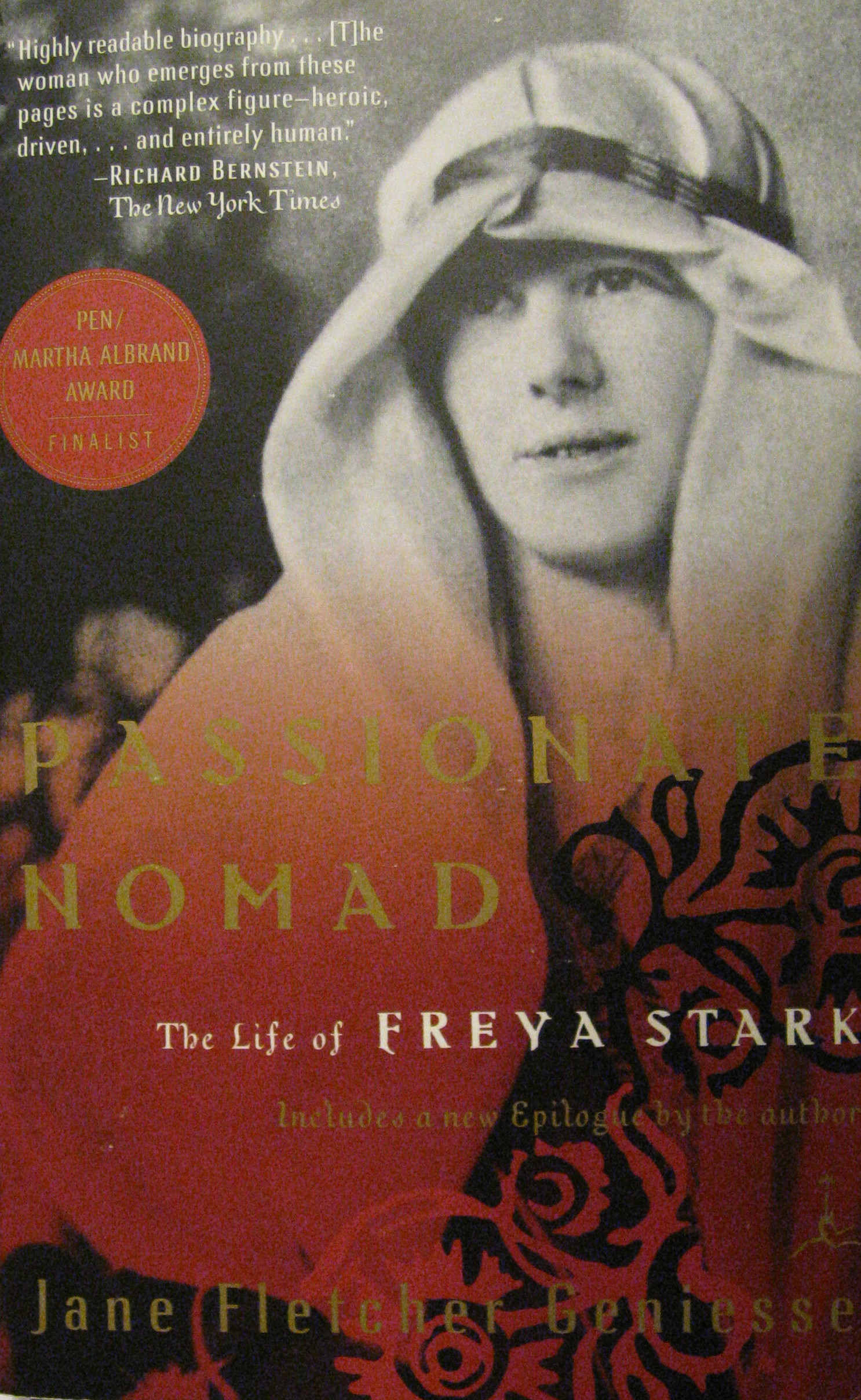
Dubliners

Joyce, James. Dubliners. New York: Signet, 1991.

When I was in high school I fell in love with James Joyce’s style of writing. We share the same birthday. The Dead, a short story from Dubliners was my all time favorite. Gabriel became my favorite name; a long lost child.

Dubliners is comprised of 15 short  and simple stories all centered around the people of Dublin. To sum up the collection it is a portrait of a city as seen from the eyes of the people living there. The very first story, The Sisters, is nothing more than a family’s reaction to a priest’s death. While the characters are not connected, their stories are. Life and death, love and loss, youth and aging, poverty and wealth. Joyce does a remarkable job capturing the spirit of the Irish while revealing universal truths about mankind as a whole. It is as if we, as readers, get to peek into the character’s lives and are witness to moments of our own circumstances.

What I find so remarkable about Dubliners is that Joyce originally had great trouble getting it published. And even after he finally did it didn’t sell that well.

BookLust Twist: From Book Lust in the chapter “Irish Fiction” (p 125). Where else? Edited to add: I’ll tell you where else…Book Lust To Go in the chapter called “Ireland: Beyond Joyce, Behan, Beckett, and Synge” (p 110). I guess you could say Dubliners shouldn’t be included in this chapter because it’s supposed to be about “beyond Joyce.” Something to think about.

Crime Novels

Polito, Robert. Crime Novels: American Noir of the 1930s & 40s. New York: Library of America, 1997.

Something scary for Halloween. Six different stories about crime. Three of them are novels already on my list. Go figure.

  1. The Postman Always Rings Twice by James M. Cain
  2. They Shoot Horses Don’t They? by Horace McCoy
  3. The Big Clock by Kenneth Fearing

and three others:

  • Thieves Like Us by Edward Anderson
  • Nightmare Alley by William Lindsay Gresham
  • I Married a Dead Man by Cornell Woolrich

From The Postman Always Rings Twice~ I have always wanted to know what this story was all about. Written in 1934 it tells the sexy, gritty tale of Frank Chambers, a drifter who finds himself grounded by Cora Papadakis, a married woman. Cora’s beauty and instant mutual attraction leads to Frank’s uncharacteristic staying put. Soon the adulterous couple is contemplating murder. The plot is timeless. Desire has led them to the devil’s doorstep.
Favorite lines: “I kissed her. Her eyes were shining up at me like two blue stars. It was like being in church” (p13).
“Then the devil went to bed with us, and believe you me, kid, he sleeps pretty good” (p 70).
What Nancy had to say about : “…filled with desperate, scheming men and women…” (Pearl, Nancy. Book Lust, p66).

From They Shoot Horses Don’t They?: This was a bizarre, psychological tale about two kids with very different dreams. Robert is looking to be a film producer and Gloria wants to be an actress. They pair up and enter a Hollywood dance contest knowing Hollywood bigwigs would be in attendance. The contest is all about making money, working the contestants like racehorses, making bigger and better stunts to attract sponsors and a bigger audience. Analogies to horse racing are abundant. From the title of the book it is obvious what happens in the end, but it’s a fascinating read just the same.
What Nancy had to say, “…wonderfully grungy dance-marathon nightmare novel” (Book Lust p 67).

From Thieves Like Us ~ : I found this to be a very slow moving, almost methodical story. Written in 1937 it tells the tale of three bank robbers: Elmo Mobley, T.W. Masefeld and Bowie A. Bowers. While the story of these thieves as fugitives on the run is interesting, what makes the entire piece come alive is the vivid imagery used to describe the landscape these men hide in. Across Texas and Oklahoma’s back country there are many farmhouses and hideaways to keep the story moving. Favorite lines: Oddly enough, the dedication caught my eye: “To my cousin and my wife, because there I was with an empty gun and you, Roy, supplied the ammunition and you, Anne, directed my aim” (p 216). Here’s where my sick mind went with this: Roy (the cousin) had an affair with Anne (the wife). Don’t mind me.
Second favorite line: “The moon hung in the heavens like a shred of fingernail” (p 224). There have been a lot of interesting moon descriptions, but I liked this one a lot.

The Big Clock by Kenneth Fearing started out slow. George Stroud works for a conglomerate of magazines in their Crimeways department. He is a simple family man with a wife and daughter, but his dreams and ambitious are big. When he has an affair with his boss’s girlfriend and she winds up bludgeoned to death things get a little tricky. It’s a story of conspiracy and cat and mouse. George must prove his innocence when everything points to the contrary. Once it gets going it’s fascinating!
From The Big Clock: “The eye saw nothing but innocence, to the instincts she was undiluted sex, the brain said here was a perfect hell” (p 383), “He said how nice Georgette was looking which was true, how she always reminded him of carnivals and Hallowe’en” (p 385) and “I could feel the laborious steps her reasoning took before she reached a tentative, spoken conclusion” (p 393).
What Nancy Pearl had to say, “…edgy corporate-as-hell thriller” (Book Lust p 66).

Nightmare Alley was intriguing on many different levels. It was the ultimate “what goes around comes around” story. The lives of carnival entertainers serves as the backdrop for Stanton Carlise’s rise and fall. He joins the carnival and soon picks of the tricks of Zeena, the Seer. Once Stan the Great learns the craft (an inadvertently commits murder) he leaves the carny and sets out on his own as a Mentalist, becoming greedier and greedier for taking the sucker’s buck. Soon he passes himself off as a priest with the capability of bringing loved ones back from the dead. Constantly running from troubles in his own life Stan gets himself deeper and deeper until no one is trustworthy.

I Married a Dead Man by Cornell Woolrich was probably my favorite. You don’t know much about Helen Georgesson before she assumes the identity of Patrice Hazzard. The facts are Helen is a pregnant girl, riding the rails with 17 cents to her name. A chance encounter and a terrible accident leave Helen with a case of mistaken identity. For the opportunity to start life anew and give her baby a better life Helen accepts Patrice’s identity as her own. Living the life of luxury doesn’t come easy when Helen’s past comes to town and threatens to unveil her true self.

BookLust Twist: Crime Novels: American Noir of the 1930s & 40s can be found in Book Lust in the chapter, “Les Crimes Noir” (p 65).

Artemis Fowl

IMG_3757
Colfer, Eion. Artemis Fowl. New York: Talk Miramax Books, 2001.

Another book that I finished in a day. I suppose it helped that it’s a book for young adults so it was a breeze to read. The real reason was it was a fun read.

Meet Artemis Fowl. Only 12 years old but already a millionaire – a criminally brilliant millionaire. When we first meet Artemis we learn he is out to kidnap a fairy. Let the games begin! From the very beginning Artemis Fowl is full of folklore. Besides fairies there are goblins, dwarfs, gnomes, a centaur, trolls and the ever tantalizing hoard of gold. Artemis, though only 12, has devised a plan to rid the fairies of their riches by using their own powers against them. For being a childrens’ book it is pretty fast paced and violent.

Favorite lines: “…A ragged apron does not a waiter make” (p 4), and “Holly unhooked a set of wings from their bracket. They were double ovals, with a clunky motor. She moaned. Dragonflies. She hated that model….now the Hummingbird Z&, that was transport” (p50). Can you just see it? Fairies don’t have wings! They have strap-ons! The idea that Holly was “stuck” with Dragonflies rather than her preferred Hummingbirds cracked me up.

BookLust Twist: From Book Lust in the chapter, ”

ps~ From what I understand Artemis Fowl was made into a movie. This is one to put on the NetFlix list!

Special thank youuuuu to Kisa Too Cool for posting…

Accidental Tourist ~with spoiler

Tyler, Anne. The Accidental Tourist. New York: Berkley, 1985.

This was a reread. I couldn’t remember anything about it and rules are rules: if I don’t remember the plot, I don’t remember the main characters or, I don’t remember how it ended I read it again. This one was a cinch. I reread it in a day.

Macon Leary is a man stuck in his ways. He’s so eccentric I almost disliked him in the beginning…until I met his family. They’re all the same way. Macon is the author of unique travel books centered around business travel. The problem is Macon doesn’t like to travel, doesn’t like meeting new people, doesn’t like being in unfamiliar places. Upon separating from his wife Macon’s whole life turns upside down. He learns how to feel emotions, to see the world as if through the eyes of a completely different person. The Accidental Tourist takes you on a journey of awakening and growth.

Lines that hooked me: “Could you really drive a car without reversing?” (p 18). Okay, not the most poetic of lines, but here’s the story: Kisa has a coworker who consistently parks in the turn around instead of using the lot – the huge lot. We used to complain about it until we found out his car couldn’t reverse!
“”She always seemed about to fall over the brink of something” (p 63). Love the imagery!
“Macon got out Miss MacIntosh just for something to pin his mind to” (318). It was at this moment that I knew Macon loved Muriel and would return to her. Don’t ask me why.

BookLust Twist: From Book Lust in the chapter, “Real Characters” (p 197). Incidentally, The Accidental Tourist was made into a movie. I’m thinking if Nancy Pearl ever writes another Lust book she should include books made into movies (worth seeing). I’m betting she would include this one.

Good Enough Parent

Bettelheim, Bruno. A Good Enough Parent. New York: Alfred A. Knopf, 1987.

It’s funny that this was written in the year I graduated from high school and went onto college. I consider 1987 one of the biggest “brink” years – standing on the brink of something bigger. However, reading this 21 years later reminds me of something else: homework!

Maybe it’s because I don’t have kids (and the fact I’ll never have kids) that I didn’t find A Good Enough Parent all that interesting. Instead it was rather dry and psychological. Nancy Pearl says this book is a must for any new parent. I honestly do not know when any new parent would have the time! Pearl also goes on to say, “Be forewarned: Bettelheim’s perspective is very psychoanalytical” (Book Lust p 30). He does make the text a little easier (interesting) by including personal anecdotes and compelling stories to punctuate his point.

Lines I like: “None of this holds true for what happens between a parent and child. Anything that occurs in their relationship is heir to a long and complicated history” (p 5).
“I feel that a parent’s most important task is to get a feeling for what things may mean to his child” (p 14).
“Parental anxiety makes life very difficult for parent and child, since the child responds to the anxiety of the parents with even more severe anxiety” (p 41).

BookLust Twist: From Book Lust in the chapter called “Babies: A Readers Guide” (p 30).

World’s Fair

Doctorow, E.L. World’s Fair. New York: Fawcett Crest, 1985.

This is another challenge book that I read out of order. It was supposed to be on the July list. The only reason for this out-of-orderness was I didn’t plan very well. Technically, I have two Early Review books and four challenge books on the way but…you guessed it, none of them are here yet. I needed something to read over the weekend after finally, finally unpacking from the trip, while waiting for laundry (seven loads) to cycle and while Kisa was at a Patriots game. While this was a chore chocked weekend I needed to do my own thing, too. Nothing beats uninterrupted reading!

World’s Fair is the brilliant story of a boy named Edgar and his life in the 1930’s in New York City. Spanning Manhattan, the Bronx and Brooklyn, all senses come alive with Doctorow’s descriptive narrative. From the bustling, noisy market places to the quieter mom & pop shops; from the silent synagogues to the crowded beaches of Rockaway, New York is on display through the eyes of a child. Edgar is the youngest brother in a musical family. As he grows up, goes to school and becomes more aware of the world around him, politics and economics become less abstract and more of a reality in his day to day life. He sees his parents not getting along, his brother becoming more adult (and less fun), grandparents getting frailer, and finally, his own life becoming more complicated.

I thoroughly enjoyed World’s Fair. It was a clean, straightforward book with lots of vivid description and emotion. Most of the time Edgar tells the story, but intermittently his mother Rose, or brother Donald will step in for a chapter. Even an aunt has a moment in the story.

Favorite lines: “I am roused from sleep in one instant from glutinous sleep to grieving awareness” (p 4), “My mother ran our home and our lives with a kind of tactless administration that often left a child with bruised feelings, though an indelible understanding of right and wrong” (p 13), “this was her way, to express concern from opposite sides of the crisis” (p 27), and “I lived in the weather of my mother’s spirit,  and at these times, after these visits, the sky grew black” (p 96).

BookLust Twist: From Book Lust in the chapter “New York, New York” (p 170).

Heartbreaking Work

Eggers, Dave. A Heartbreaking Work of Staggering Genius. New York: Vintage Books, 2001.

I didn’t even have to touch this book to know it was going to be great. It landed on my desk upside down. the first words I read from the back cover were, “Yes lets and then can we leave and run in shallow warm water.” I was intrigued, to say the least!

It’s the story of Eggers as a young adult faced with having to take care of his younger brother after losing both his parents to cancer. It’s sad and funny. Witty and sarcastic. It took my much longer to read because I had to drink every little word. I read the Rules and Suggestions for Enjoyment of This Book, the Preface to this Edition, the Contents, Achknowledgments, even Mistakes We Knew We Were Making which contains notes, corrections, clarifications, apologies, and addenda. Too funny.

A few of my favorite lines:
“I have visions of my demise: When I know I have only so much time left – for example, if I do in fact have AIDS as I believe I probably do, if anyone does, it’s me, why not – when the time comes, I will just leave, say goodbye and leave, and then throw myself into a volcano” (p xiii)
“Beth and I take turns driving him to and fro, down the hill and up again and otherwise we lose weeks like buttons, like pencils” (p 55).
Then there’s this scene. I don’t know how to describe it other than to say I’ve been there: “I want to put the box somewhere else…The box which is not my mother cannot go in the trunk because she would be livid if I put her in the trunk. She would fucking kill me” (p 383). This is so, so, dare I say it? Heartbreaking.

BookLust Twist: Pearl really liked this book. It’s mentioned four different times between her two books Book Lust and More Book Lust. From Book Lust: in the chapter “Memoirs” (p 152), and “The Postmodern Condition” (p 191) and again in the preface on page xi. Then again in More Book Lust in the chapter “And The Award for Best Title Goes To…” ( p 12).

Dog Handling

Naylor, Clare. Dog Handling. New York: Ballentine Books, 2004.

When it comes to chick lit I think there has to be a trick to reading it. At least for me there are two tricks. Suspension of belief, first and foremost…and the ability to laugh out loud at some of the nonsense.

Dog Handling is the story (cute story!) of Liv Elliot, a soon-to-be married accountant in London’s Notting Hill district. When Liv’s fiance breaks off the engagement she flees to Australia to mend her not so broken heart. Australia brings new friendships, a new career opportunity, new men (of course), and a whole new way of dating them. Liv’s outlook on life changes once she learns the rules of “dog handling.”

Traditionally, I am not a big fan of mind games, overextended cliches and predictable sappy-happy endings and Dog Handling had all of the above. It took me sometime to stop making Bridget Jones comparisons and seeing Liv Elliot in her own bumbling, lovable, all’s well that ends well movie. Once I was able to get past all that I truly enjoyed the story. The characters were delightful and the plot, humorous. It was a great summer read.

Favorite lines: “After all, a foreign city is a foreign city, and until she knew the precise location of the nearest places to buy newspapers, tampons, and beer she wasn’t taking any chances” (p 40).
“Liv had been cutting split ends off her hair with a potato peeler” (p 232). What a great idea!

BookLust Twist: From Book Lust in the chapter “Chick Lit” (p 54). Where else?

Boy With Loaded Gun

Nordan, Lewis. Boy With Loaded Gun. Chapel Hill: Algonquin, 2000.

Lewis Nordan celebrates a birthday in August. I am pleased to have started off with his nonfiction/fiction memoir, Boy with Loaded Gunas my introduction to Nordan’s writing. I think it will bring insight to everything else I read of his. While this may or may not be a good thing, I am looking forward to it just the same.
Boy with Loaded Gunis heartbreaking and humorous at the same time. Pulling the reader down into sadness, lifting him or her back up with laughter. I found myself comparing the reading experience to that of a fast moving, slightly rickety, out of control rollercoaster. At times I didn’t know whether to laugh or cry. I didn’t know what was real or an exaggeration. But, I did know one thing, I loved every minute of it; page by page.
Nordan’s memoir begins with the chapter called “Voodoo” and Nordan’s inexplicable love for a voodoo practicing woman. It is at this time Nordan professes, “In these lonely backwaters and days of grief my memory begins” (p 7). We are then taken on a journey through Nordan’s young life while he struggles to love his step-father and escape the confines of small town Itta Bena, Mississippi. Later, it’s coming-of-age encounters with sex and marriage. Babies and buying houses. Alcohol and writing. Down and outs, ups and accomplishements. At times you want to love him. Other times you have to hate him. Just like real life. In other words, human.

Best quotes: “Two men got into an argument about whether a tree was willow or a weed. It was a small knife, and not a deep wound, so neither of the men went home, they just didn’t talk to each other for a while. Then they seemed to forget all about it, and before long they were talking about something else” (p 49).
“Eventually I tried to kill my father, of course” (p 69). Nordan does address the “of course” part of the statement, but it struck me as funny the first time I read it.
“I could scarcely tolerate standing in my own skin, let alone being strong” (p 188).

BookLust Twist: From Book Lust in the chapter “Lewis Nordan: Too Good To Miss” (p 172).

Jackson’s Dilemma

Murdoch, Iris. Jackson’s Dilemma. New York: Viking, 1995.

I hate it when I read a review that influences my way of thinking, my way of reading a book. This happened innocently enough. I was looking for more information about Jackson’s Dilemma. Was it ever made into a movie? Adapted for the stage? A musical? As a result of my searching I discovered Jackson’s Dilemma was Murdock’s last book. Not only that, but she was diagnosed with Alzheimer’s right around the time of publication. Inadvertently, I read two reviews that seemed to blame the disease for the demise of Murdoch’s craft. In other words, Jackson’s Dilemma bombed. Because of the reviews I found myself wondering about the words. I will admit, the beginning was slow and the characters, curious, but in the end I didn’t think it was all that bad.

It starts off on the eve of Edward and Marian’s wedding. Edward is enjoying dinner with friends when he discovers a note under the door: an “I can’t marry you” letter from Marian. There is no explanation but the following day there is much hoopla about making sure people are “barred” from the church and from attending a wedding that won’t happen. All of Edward’s friends are absurdly devastated by this turn of events, so much so that I started to really question their sanity. Meanwhile, both Edward and Marian disappear (separately, of course). Enter Jackson (Just Jackson, no last name). Even his arrival is peculiar.

In the end the plot becomes a garbled mess. Everyone is trying to be in love with someone else, exclaiming undying devotion left and right. Even Owen (male) and Tuan (also male) have some kind of odd, unexplained relationship going on. Despite all this, I did have two favorite lines: “The moon was not present, being elsewhere” (p 22). Who actually knows where the moon was, but I thought that was funny. The other line: “After all, as Randall said, it’s the sea that matters” (p 100). Too bad Randall would lose his life to the very thing that mattered.

BookLust Twist: Book Lust in the chapter “Iris Murdoch: Too Good To Miss”. Leave it to me to read her last book (sorta) first.

Citizen of the Galaxy

Heinlein, Robert A. Citizen of the Galaxy. New York: Ballantine, 1991.

I have a confession to make. I have never settled down with a good science fiction book because I love science fiction. Because I don’t prefer science fiction. There. I said it. My father-in-law’s first book was a sci-fi thriller with the main character named after the family pet. Go figure. Luckily, he’s never asked me to read it. Otherwise, I couldn’t wouldn’t refuse and would diligently struggle through it.

I didn’t struggle through Heinlein’s Citizen of the Galaxy, though – much to my surprise. Armed with the “rule” that I could quit after the first 50 pages I attacked it with relish, thinking I would put it down after the first 50 pages in. When I stopped reading that first night I was on page 110, again, much to my surprise. It’s highly enjoyable for a genre I usually do not go out of my way to enjoy.
Thorby is a slave and in the opening scene he is “bought” by a beggar who turns out to be more than what anyone, especially Thorby, bargained for. His master hates slavery “with a cold passion” and releases Thorby and instead adopts him, training him to be a beggar and thensome. Soon Thorby is learning different customs and family structures as he travels from planet to planet. Life as he knew it is never the same again especially after he meets his real family on Earth.

Some interesting points: In Jubbulpore (capital of Jubbul) “slave” is a legally recognized status & “beggar” is a licensed profession (p 20 & 21).
“The Sargon’s police operated on a concept older than justice; they assumed a man was guilty, they questioned him by increasingly strong methods until he talked…” (p 48).
And…my favorite line:
“A Losian would come zipping toward Thorby on the wrong side of the street (there was no right side), squeal to a stop almost on Thorby’s toes, zig aside while snatching the breath off his face and the heart out of his mouth – and never touch him” (p 116). Sounds like a scene out of Star Wars.

BookLust Twist: From Book Lust in the chapter “Robert Heinlein: Too Good To Miss” (p 109).

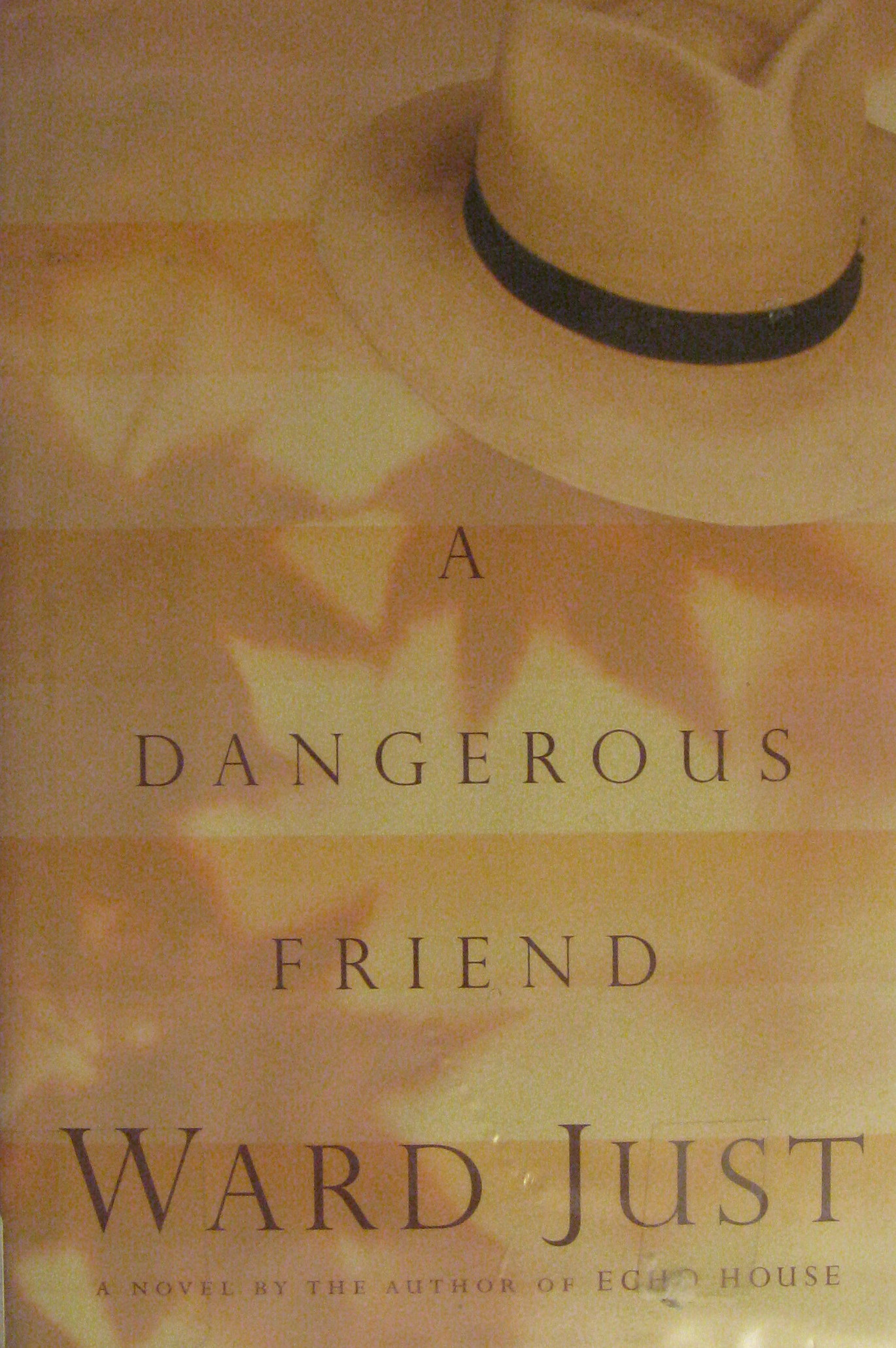
American Ambassador

Just, Ward. The American Ambassador. Boston: Houghton Mifflin, 1987.

I think this novel is a dark example of fatherhood failed and an odd choice for celebrating Father’s Day. Oh well. Quite literally this is a story of father against son. Bill North is a Foreign Service Officer with strong loyalty to his job and marriage. His son, Bill Jr., sees his father as all things corrupt and sets himself apart from first his family, then his country in the ultimate betrayal of his father. After abandoning his family Bill Jr. joins a German terrorist group. Ward Just’s story takes the reader from Boston & Washington D.C. to France, Germany, and Africa as the hunt goes from father to son and back again. I was fascinated with this falling out of family and couldn’t put it down until the devastating end. I almost want to say what happens, but you really should read it for yourself.

Favorite quotes: “His favorite word, injustice, applied equally to underdone hamburgers, a Red Sox loss in extra innings, a quarrel with the houseboy, a missed airplane connection, or a death” (p 55).
“The son is always the shadow of the thatther, is that not true?” (p 153).

BookLust Twist: From Book Lust”  in the chapter “Fathers and Sons” (p 85) and “Ward Just: Too Good To Miss” (p 135).

Act of the Damned

Antunes, Antonio Lobo. Act of the Damned. New York: Grove Press, 1995.

I have to admit this was not one of my favorite books this month. Maybe something was lost in the translation (literally from Portuguese to English), but there were too many layers of storytelling going on. Dr. Nuno Souza, a dentist, tells his story in first person, but his imagination works overtime to include an Edward G. Robinson, a cigar smoking, gun toting tough guy. Nuno is married to Ana, but has a drug addicted girlfriend on the side.
Even though Nuno is telling the story in the first part, it’s Ana’s family that is the center of the story. Her family is beyond corrupt. Incest and greed come second nature to these people. Ana’s mother is the voice in part two. I think what makes the story so confusing is that no one really uses names. When Ana’s mother tells the story she uses family connections, “my brother-in-law, sister-in-law, my husband, his father, her brother…” Later, Ana herself tells the story…then someone else who uses the same technique…

These are the quotes that caught my attention:
“I opened the drawer to take out a shirt and tie, and was met by enough sicks for an army of ankles” (p 5).
“I laid down the receiver while the two voices tussled, scratched and bit each other in an electric desert of screws and wires” (p 17).
“‘I want her out by the thirtieth at the latest. She can go to tell and listen to conversations down there'” (p 42).
“I wiped the smile off my mouth with a napkin” (p 71).

BookLust Twist: From Book Lust from the chapter “Families in Trouble” (p 83).

An Academic Question

Pym, Barbara. An Academic Question. New York: E.P. Dutton, 1986.

When this book landed on my desk I nearly laughed. It’s only 182 pages long with a decidedly easy-to-read large font. Needless to say I read it in a day!
Here are some things that intrigued me about the book before I read it: Barbara Pym died of breast cancer when she was only 66 years old. Her last book, An Academic Question was published six years after her passing and is actually a blend of two different manuscripts.
Here’s what I put on LibraryThing: An Academic Question at first read appears to be about a lonely, bored, mother of one, who is feels neglected her professor husband. Her friends are bland, her hobbies even moreso. It’s only after she agrees to help her husband find information to support an article he is drafting do things really start to get interesting. As with any academic, there is competition to get published and for Caro’s husband the pressure is on. Human emotion is played out in subtle detail as Caro deals with jealousy, betrayal, and the need for approval from everyone around her.

One of my favorite scenes is when Caro is in the audience, listening to a young professor give a lecture. Bored with the beautiful lecturer’s topic, Caro starts to focus in on how the striking woman is dressed. Upon noticing a pale pink rose pinned between her breasts Caro decides the color matches the roses she has in her own garden. Soon she is imagining her own husband placing the rose…and speculation and imagination create jealousy which becomes an accusation later on…It truly is a classic way jealousy manifests itself.

BookLust Twist: From Book Lust in the chapter, “Barbara Pym: Too Good To Miss” (p 196).


92 in the Shade


McGuane, Thomas. Ninety-Two in the Shade. New York: Farrar, Straus & Giroux, 1972.

June is fishing month. Go figure. Ninety-Two in the Shade is about a man (Thomas Skelton) who has always wanted to run a guided fishing tour off the Florida Keys. Not the fishing I had pictured for the month of June, but a form of it, I guess. Thomas is new to the business and even newer to competition. He is not without his share of problems. The opening “scene” is Thomas waking up in a hotel and finding four people standing naked in a tub. Right away you know this isn’t your typical River Runs Through It fishing story! Other quirks: violence that does (or doesn’t) happen, relationships that are (or aren’t) good, and the entire book is absent of chapters. I may have come across other books like this but never noticed this chapterlessness before. The only reason why this seems odd is because not having chapters makes it difficult to know where to stop!

I did a little extra research and found out that Ninety-Two in the Shade was made into a movie not long after it was written and while it’s Thomas McGuane’s third work of fiction many critics consider it his best.

I never did get used to McGuane’s “gritty” style of writing, but here are some quotes (and scenes) that caught me: “He walked to Homestead, then right on through town, tripping his brains out in the emptiness of 5 a.m.” (p 4).
A conversation between Skelton and “his girl.” May it confuse you as much as it did me:
Miranda~ “Tom, I had this incredible orgasm.”
Tom~ “Do I have to hear about your organism too?”
M ~ “Just this one. It was like a whole dream of sweet things to eat…Spun sugar, meringue, whipped egg whites…”
T ~ “How about when your chum shot off? Was it a blintz or an omelet?”
M~ “Ask him.”

To say that Ninety-Two in the Shade isn’t without humor would be a lie: “You should never kill somebody if it isn’t funny” ( 34).

BookLust Twist: In both Book Lust and More Book Lust. Book Lust: in the chapter “Montana: In Big Sky Country” (p 156) because Thomas McGuane is from Montana. This, by the way, takes care of a November read because that’s when Montana became a state and Ninety-Two in the Shade was on the November list. More Book Lust: in the chapter “Gone Fishin'” (p 101).