Abandoned Bride

Abandoned BrideLayton, Edith. The Disdainful Marquis and The Abandoned Bride. New York: Signet, 2002.

One of the great things about this BookLust challenge is the fact that I get to read so many different and interesting books in order to complete the challenge. The only bad thing is romance novels are included in the list and they certainly are “different”…in other words, not my cup of tea or coffee. I simply don’t read the “bodice rippers” as I call them. They scare me. I can’t get into all that…heaving.
Luckily, out of this double feature paperback I only had to read the Abandoned Bride story, and I did it on another quick trip to Maine this past weekend. Here’s the kicker – this one wasn’t that bad. Okay, so the heroine of the story is stunningly, absolutely, beautiful (I can’t even tell you how many times her beauty was referred to – especially her “moonlight-spun gold hair.”) and the villain (who, of course, turns out to be Mr. Romance) is dashing and “trim.” But, the story really wasn’t that bad. Here’s the premise: Julia (Miss Moonspun Hair, virginal-too-good-to-be-true-at-17-years-old) is set to elope with Robin, a boyishly handsome rich guy. They run away to some lodge where he abruptly leaves her for unknown reasons. Three years later Robin’s uncle, Nick (the dashing, trim, bad guy) “kidnaps” Julia in an effort to get her and Robin together to right past wrongs. Robin is also supposed to take over his father’s inheritance and he can’t do that while he’s running away from the memory of Julia (so he claims). The immediate problem is Robin doesn’t want to be found so Nick must drag Julia, against her will, of course, across the continent looking for Robin.
As you can probably guess, the falling in love of Nick and Julia is predictable and a little silly, but the reason for Robin’s abandonment was an interesting twist. I only figured it out when Robin is finally confronted by Julia.

Here are a few favorite lines: “…the entire stack of books fell open neatly to the middle to reveal that the book covers were false and what lay within them was not pages, but a cleverly designed box containing two decanters and a set of blown crystal glasses. “Ha!” Sir Sidney said with satisfaction. “now this, I think, is what a library is really for.”” (p 102) and “I am leagues in love with you” (p 217).

My only moment of “huh?” was when Julia used a phrase similar to being buttered up and I’d like to know if someone could be flattered in the sense of being “buttered up” in 1815.

BookLust Twist: From Book Lust in the chapter called, “Romance Novels: Our Love is Here to Stay” (p 203).

Bastard out of Carolina

Bastard out of CarolinaAllison, Dorothy. Bastard out of Carolina. New York: Penguin, 1993.

The only way I can describe how I felt after finishing Bastard is raw. Raw and used up. Maybe it’s because this is my second time reading it. Maybe it’s because I reread this in two days. I don’t know. There are a thousand different ways to describe the book itself: coming of age, looking for acceptance, southern, white trash poverty, motherhood gone by the wayside. It’s a nightmare of a mother loving a cruel stepfather (Pearl calls him “violent and predatory”) more than her own daughter. I could go on and on but that would only ruin the depression. Oddly enough, I loved it. I loved Bone’s defiant voice as she tried to make her way through life as the oldest daughter of young mother Anney. I loved her keen observance of her surroundings, “It was dangerous, that heat. It wanted to pour out and burn everything up, everything they had that we couldn’t have, everything that made them think they were better than us” (p 103).
The social commentary on men and women, men against women was poignant, too. “A man belongs to the woman who feeds him…the woman belongs to the ones she feeds” (p 157).

BookLust Twist: Bastard out of Carolina is mentioned twice in Nancy Pearl’s Book Lust. First, in the chapter called “Grit Lit” (p 106), and then in the chapter simply called “Southern Fiction” (p 222).

pps~ I was wondering if this was ever made into a movie and it has…back in 1996. Where have I been?

Gift from the Sea

GiftsLindbergh, Anne Morrow. Gift From the Sea. New York: Vintage Books, 1991.

I have to say this is something every woman should read annually. The words and their meaning will change every single time and they will be different for every reader. In the simpliest of terms Gift From the Sea uses seashells, (whelk, moon shell, oyster) all gifts from the sea, as metaphors for life, vehicles for deeper thoughts. On vacation (ironically on an island, like me) Anne picks seashells and ponders religion, relationships, growing old, being young, nature, love and marriage…She picks at nagging thoughts like scabs, letting them bleed, revealing raw emotion and a tender heart. Here are a few of my favorite quotes:

“…I think best with a pencil in my hand” (p 9). I agree!
“…I have shed the shell of my life for these few weeks of vacation” (p 22). Since I was on vacation when I read that I had to smile because it happens to me, too.
“…social life is exhausting; one is wearing a mask” (p 32). Very true! Couldn’t have said it better myself.
“And since our communication seems more important to us than our chores, the chores are done without thinking” (p 100).

I read this in an afternoon. Gulls cried overhead, sea air salted my skin, waves crashed in the distance. It was the perfect setting for Gift from the Sea.

BookLust Twist: From the chapter called “Journals and Letters: We Are All Voyeurs at Heart” (p 130). I swear on everything holy I did NOT have More Book Lust with me when I wrote this review. I was still home without any of my Pearl books. So, I was incredibly surprised to read these words from Pearl, “Some of us still reread them yearly to remind ourselves of what’s important in this frantic world” (p 131). Pearl is referring to everything written by Lindbergh, but I had the exact same thought specifically about Gift from the Sea. Gift from the Sea is also in Book Lust in the chapter, “100 Good Reads, Decade by Decade” (p 175).

All-Bright Court

All-Bright CourtPorter, Connie. All-Bright Court. New York: HarperPerennial, 1992.

I adore debut novels. There is something about that leap of faith that a writer must take before anything else can happen. Every writer is a closet published writer. They walk around with the words in their head, barely daring to dreaming of the day those words will be sold in a big bookstore. Opened up for all the world to see.
That’s exactly how I picture Connie Porter, walking around with the words to All-Bright Court in her head, dreaming of the day they’ll be on paper. I can picture the personalities of  the All-Bright Court residents starting to take shape. It’s the story of two decades of african american families trying to make their way in a steel mill town near Buffalo, New York. All-Bright Court is the housing project that ties them all together.

“She found herself saving things to say to her, storing them away in her mind, folding them as neatly as sheets.” (p 82).
“These people lived inches away from one another, and much of what was done did not have to be told. They did not look away because they did not want to know. They looked away because they did know, and looking away was the only way to grant the woman dignity, to go on believing, to let her go on believing she was a woman” (p 85).

BookLust Twist: From Book Lust  and the chapter “African American: She Say” (p 12).

Anne Frank

Anne FrankFrank, Anne. Anne Frank: Diary of a Young Girl. New York: Doubleday, 1995.
I was prompted to reread Anne Frank: Diary of a Young Girl after reading the New York Times article about her cousin, Bernhard “Buddy” Elias, donating 25,000 letters, photos and other documents to the Anne Frank House. What an amazing thing to do. I’m sure Hans Westra, director of the Anne Frank House, is…well…psyched. Imagine the historical value of such a gift! It’s a gift for all humanity and truthfully, it’s worth is immeasurable. Anne Frank died when she was 16 years old. Her “dates” are 1929 – 1945 and that alone devastates me. My heart was caught in my throat when I opened my copy of Diary of a Young Girl and saw her handwriting staring back at me. Everyone knows Anne’s story so I won’t bother with a “review” per se, except to say I simply cannot believe there are people out there who feel her diary is a fraud!

Probably the hardest thing about reading Diary of a Young Girl was the fact I was painfully aware of dates. I knew she was arrested and taken from the Annex on August 4th, 1944. As soon as her diary entries had the “1944” date I started to despair. It was like counting down to death row. It was different when I read this as a child. Anne Frank was a character to me. I couldn’t put reality to her words, flesh and blood to her black and white photo. This time it was different, tragically so. I found myself wiping away tears whenever she mentioned “the end being near.”

What fascinates me about Anne Frank first and foremost is her dedication to telling her truth. She started her diary for herself but, after hearing first hand accounts of life under German occupation were needed, she decided to edit her diary for publication. After her death her father combined both versions and created what we all have read, The Diary of a Young Girl. I never knew there were versions A, B & C.

Two of my favorite quotes, about writing, appear on the same page, “I have an even greater need to get all kinds of things off my chest” and “paper has more patience than people” (p. 6). I couldn’t agree more. 
“Memories mean more to me than dresses” (p 20) and “Will the reader please take into consideration that this story was written before the writer’s fury had cooled?” (p 120) indicate I would have gotten along with Miss Frank “swimmingly”. Seriously.

BookLust Twist: I would have thought Pearl would have a chapter on the Holocaust and this would be included in it. However, I’m relieved it’s in the chapter “100 Reads, Decade by Decade” (p. 177) from Book Lust.

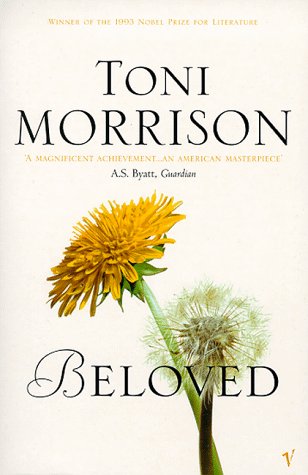
Beloved

BelovedMorrison, Toni. Beloved. New York: Penguin, 1987.

It’s been 21 years since I first read Beloved. The one and only thing I remember is my reaction to it. I remember crying and crying, not understanding why the words moved me so. Every sentence was so beautiful in its heartbreak.
After rereading Beloved I realize why I had such a hard time remembering people and plot. Beloved is the story of running. At the center is Sethe, a former slave who cannot escape her past. Everyday she lives in fear of being brought back to someone’s possession. Her history chases her everywhere. Denver is her surviving daughter who runs from loneliness, constantly trying to catch up to her mother’s attention. Paul D is another former slave who shares Sethe’s past. He, too, is in a devastating cycle of running away from his past, never believing he is capable of staying in one place freely. Beloved is Sethe’s murdered daughter, back from the dead to reclaim her life with Sethe.
After rereading Beloved I remembered English class and how we went round and round about the symbolism. What did the number 124 on the house meant? Why was color such a prominant description for things? What about Baby Suggs? In the end we decided one of the most powerful images of Beloved is Denver’s birth. Denver wouldn’t have made it into the world had it not been for the help of a white woman when Sethe was in labor. It’s almost a commentary on how society should be thinking today – we can’t make it in this world if we do not work together.

“The sky above them was another country. Winter stars, close enough to lick, had come out before sunset” (p 175) is my favorite line.

BookLust Twist: From Book Lust and the chapter called, “African American Fiction: She Say” (p. 12).

Tuck Everlasting

Tuck EverlastingBabbitt, Natalie. Tuck Everlasting.New York: Farrar, Straus and Giroux, 1985.

Do I dare say this book was delightful? I read it in an hour over a tuna sandwich lunchbreak. It’s a cute story about ten year old Winnie Foster and her discovery of a family that has eternal life. At first it seems impossible, but after befriending the strange family, Winnie realizes it’s true. The one complication of the story? Someone else (aka “bad guy”) knows the secret and wants to market it for himself.

Favorite line: “The first week of August was asserting itself after a good night’s sleep” (p 86). I like the imagery of this, of August saving it’s energy during the night in order to roast the day.

BookLust Twist: From Book Lust.

As I Lay Dying

As I Lay DyingFaulkner, William. Novels 1930 – 1930: As I Lay Dying, Santuary, Light in August, Pylon. New York: The Library of America, 1996.

As I Lay Dying is terribly sad. Through a stream of consciousness every character tells the tale of Addie Bundren’s dying days. Addie’s five children, husband, neighbors and doctor all chime in. Strangely enough, even Addie expressing herself…from her coffin. I’m not exactly sure what Anse (Addie’s husband) did besides being selfish and greedy but Addie’s final revenge on her husband is to have him bury her in her birthtown of Jefferson – a long and difficult journey. Even the kids have something against their father. In one chapter Cash doesn’t look at pa and in another, Dewey doesn’t look at pa. Eveyone has something bad to say about “pa” but, the one thing I find admirable in Anse is that he sticks to his promise saying, “I give my promise. She’s counting on it” (p 92).

One of my favorite lines is from Addie when she says, “I could just remember how my father used to say that the reason for living was to get ready to stay dead a long time” (p 114).

BookLust Twist: From Pearl’s first lust book, Book Lust in the chapter “Southern Fiction” (p 222).

Sounder

SounderArmstrong, William, H. Sounder. New York: Harper & Row, 1969.

Haunting. I find this story haunting on so many different levels. Haunting and tragic. Where do I begin? Where can I begin? The copy of Sounder I picked up had the words “now a motion picture!” emblazoned across the cover with photographs of scenes from the movie inside. Of course, I studied the photos before I read a single word and saw pictures of an obviously poor black family. One picture showed the mother with three kids as a father, handcuffed, is being led away by white, mean looking “authorities.” Another picture depicts the “criminal” as he is about to be struck by a prison guard…

But, the tragic pictures couldn’t prepare me for the quiet yet strong story. The raw undercurrent of something more ominous buzzed constantly. No one in the story has a name except the family hunting dog, Sounder. The father is accused of stealing a ham and is sent to jail, the mother cracks walnuts and sells the meat in town. There are three children and the story is told from the oldest’s perspective.
During the father’s arrest, Sounder is shot. Everyone in the family thinks Sounder is dead. What amazes me is the oldest son is more worried about the dog than his own father. His father’s guilt is plain, simple and true when his mother returns what was stolen, yet because Sounder’s body cannot be found, it’s all the boy can think about. “If the deputy sherrif had turned around on the seat of the wagon and shot his father, the visiting preacher and somebody would bring him back and bury him behind the meetin’ house, the boy thought. And if Sounder dies, I won’t drag him over the hard earth. I’ll carry him. I know I can carry him if I try hard enough, and I will bury him across the field, near the fencerow, under the big jack oak tree.” (p34)

I can’t do the storyline justice, but the writing is beautiful. Here are a few of my favorite lines:

  • “And Sounder, too, settin’ on his haunches, would speak to the moon in ghost-stirrin’ tones of lonesome dog-talk” (p 38).
  • “Now the cabin was even quieter than it had been before loneliness put its stamp on everything” (p 76).

BookLust Twist: From Book Lust and the chapter called “Three-Hanky Reads.” Sounder is paired with other dog books for children like Beautiful Joe and Goodbye, My Lady (p 237).

Zelda: A biography

ZeldaMilford, Nancy Winston. Zelda: A biography. New York: Harper & Row, 1970.

I want to be Zelda. Zelda as a young girl, that is. From the time she was a small child and all through her teens she was a strong-will, independent, defiant, do-as-I-like girl. She was wild and free, not confined to WhatWillTheyThinkOfMe thoughts. We do have something, one thing in common, “Zelda did not have the knack for forming close friendships with girls her own age” (p16). I can relate but unlike Zelda, it’s not to say the similarity didn’t cause me considerable angst.

Zelda, as Mrs. F. Scott Fitzgerald, seem to have it all. As a couple, they roamed America and Europe carefree and extravagantly. One of their friends made a prediction, “I do not think the marriage can succeed. Both drinking heavily. Think they will be divorced in 3 years” (p67). Even parenting didn’t slow down the partying. Scottie, their daughter was pawned off on nannies most of the time.
In the summer of 1929 Zelda quietly went mad. “…Zelda sank more deeply into her private world, becoming increasingly remote from Scott and Scottie” (p 155). Her turmoil during a stay in a mental institute is well documented through letters to Scott. It was heartbreaking to read and I decided I didn’t like F. Scott and maybe I didn’t want to be Zelda anymore. But, what I am now is fascinated with Zelda’s life. I want to read her book, Save Me the Waltz. I suppose it will have to wait until after the BLC.

Probably the thing that disturbed me the most about this biography is F. Scott. He blatently took Zelda’s life as subject matter for most, if not all, of his novels. When Zelda tried to do the same thing he became jealous and domineering, demanding she edit certain parts (which she does). It’s as if he is unable to accept the possibility that his wife has talent as a writer. The inequality in their relationship speaks volumes.

BookLust Twist: From Book Lust and the chapter “People You Ought to Meet” (p 183). She called the book “compelling” and I would say she forgot to add “tragic” because by the end of Milford’s biography of Zelda I was heartbroken.

The Awakening (w/ spoiler)

AwakeningChopin, Kate. The Awakening. New York: New American Library, 1976.

If I had a tag for “feminism” this book would be under it. Actually, it’s more of a long short story than a book. Only 125 pages long Kate Chopin tells the story of discontented, tragic Edna Pontellier. A wife and a mother she is dutiful as both until a younger man awakens her inner rebel and sex goddess. You can see it start slowly when she states, “I feel this summer as if I were walking thrugh the green meadow again; idly, aimlessly, unthinking and unguided” (p. 17). It grows stronger when she disobeys her husband, “Another time she would have gone in at his request” (p. 33). Finally, the ultimate of rebellion reaches its peak when she is seduced by another man, Arobin. “He did not say goodnight until she had become supple to his gentle, seductive entreaties” (p. 100).

BookLust Twist: While Pearl doesn’t think anything really happened with Edna (” …poor Edna Pontellier…who doesn’t actually do anything but suffers the consequences anyway.” More Book Lust, Wayward Wives p 232), I strongly disagree. What Edna doesn’t do is be a good mother to her kids (they’re shipped off while she pretends to be an artist), or a good wife. She moved out of their home while hubby’s away. He’s left making excuses to save face (said the house was being renovated and that’s why his wife took up another residence).

In the end Edna commits suicide. She knows she’s not a good mother. She knows she isn’t a faithful wife. She can’t have the man who truly awakened her sexuality. Trapped in a life she cannot conform to she walks into the sea never to emerge.

Allegra Maud Goldman

AllegraKonecky, Edith. Allegra Maud Goldman. New York: The Feminist Press, 1990.

This was another one of those “kid books” – about a kid coming of age, I should say. I enjoyed this much better than the Angus book. Both have witty, sarcastic, growing up girl narratives only Allegra is Jewish instead of Catholic and lives in Brooklyn, New York instead of England. She isn’t afraid to use her mind, or speak it. A few of my favorite quotes:

“Just thinking about that whole library filled with ideas, things to mull over , all sorts of new people to get to know, boggled my mind.” (p88)

“”You’ll never be really happy as a woman,” Sonia said “until you have your own sweet baby at your breast.” I recognized this as something her mother was always saying to her, but I refrained from throwing up.” (p145)

I enjoyed this book a great deal. Allegra Maud Goldman is my kind of kid. Her sense of humor stands up and takes a bow in the face if that audience called insecurity that only growing up can produce.

BookLust Twist: From Book Lust in the chapter appropriately called, “Girls Growing up” (p 101). Pearl liked Allegra as much as I did saying, “…Konecky manages to write from a child’s point of view  without ending up sounding silly, condescending or false.” (p 102)

About a Boy

About a boyHornby, Nick. About a Boy.New York: Riverhead Books, 1998.

I have heard so much about this book. Maybe it’s because I’ve liked other Hornby books that have been made into movies~ Fever Pitch & High Fidelity. Will is a pretty interesting character. He’s a single guy, bound and determined to never work a day in his life. He spends his time watching movies, listening to music and trolling for women. His newest tactic is to join SPAT (Single Parents Alone – Together). Needless to say, he’s not a single parent. In reality he hates kids. He’s callous and shallow but you can’t help but like him, especially when he gets involved with Fiona and her 12 year old son Marcus.

“There were about seventy-nine squillion people in the world, and if you were very lucky, you would end up being loved by 15-20 of them” (p147).

One of the things that struck me about this story is the philosophical ending. Marcus is a boy who acts too old for his age, too serious for his youth while Will acts too young for his years, too immature for the adulthood he is in. In the end they learn to swap maturities – growing down and up. Now I want to see the movie.

BookLust Twist: From both Book Lust and More Book Lust. In More Book Lust About a Boy is in the Chapter, “Dick Lit” (p.79). If you are scratching your head, think chick lit. Get it?

The Paperboy (with Spoiler)

PaperboyDexter, Pete. The Paperboy. New York: Random House, 1995.

For the longest time I have been concentrating on books that begin with the letter ‘A’ such as About Time, Animal Dreams, and Awakening. As if getting through the A titles would be the most reasonable thing to do first. When The Paperboy by Pete Dexter showed up at my library I felt it was a sign to read it. Especially since it’s on The List and academics don’t keep books like The Paperboy around. I listen to signs.

The Paperboy is an intriguing first-person tale about two brothers working to prove the innocence of a man convicted of murdering Moat County Sheriff Thurmond Call. As Hillary Van Wetter sits on death row, looking as guilty as a child with his hand caught in the cookie jar, Jack James and his journalist brother Ward investigate the events leading up to the murder. They get help along the way from Van Wetter’s girlfriend – an apparent death row groupie – as well as other interesting characters.
All the evidence leads towards Van Wetter’s innocence until one day it doesn’t. Instead of all hell breaking loose purgatory unfolds, unwinds for the brothers, slow and sinister like a boa constrictor unfurling itself from a tree limb. Things go from bad to worse until dark becomes death. I couldn’t put it down for three days straight. Even though I saw Ward’s suicide coming the instant he wanted to know more about swimming it still took me by surprise when it finally happened. 

BookLust Twists: From Nancy Pearl’s Book Lust and More Book Lust. In Book Lust in the chapter “First Lines to Remember” Pearl draws attention to Dexter’s first line, “My brother Ward was once a famous man”‘ (p.86) and in More Book Lust in the chapter called “O Brother!” (p180).

Animal Dreams

Animal DreamsKingsolver, Barbara. Animal Dreams. New York: HarperPerennial, 1990.

I wish I could remember the first time I read a Kingsolver novel. I know I was hooked on Atwood before Kingsolver, so there must have been something about Animal Dreams that made me think it was reminiscent of Handmaid’s Tale. I’m guessing there was something about a strong female voice, for starters, since that’s what drew me to Handmaid in the first place. It was more than that, really. If you read Handmaid outloud Offred comes alive; she’s in the room with you. Same with Codi from Animal Dreams.
Animal Dreams is, by far, my favorite Kingsolver book. I have read it countless times, passed it on to others just as many times, marked up every copy I own with bold underlining and exclamation points. It’s the book I pick up just to relive a chapter or a sentence. It’s the book I call Essential and would rush into a burning building to save.

To start from the beginning,  Animal Dreams is about a woman (around my age) who comes home to take care of her aging father. She also becomes the biology teacher at the local high school. She’s been away awhile so she’s awkward in her re-entry to hometown life. Memories stagger and stumble back into her heart and mind from time to time. She has a cool name (Cosima but goes by Codi) and a cool way of looking at the world. She adores her sister, Halimeda, and barely remembers life when her mom was alive. Her dad is crusty and unforgiving, loving and fumbling. As a result Codi is tough and sensitive. She views coming home like I do, “hoping for forgiveness for something I can’t quite apologize for.” (p12) While home she faces the complication of an old love and the tragedy of a town endangered by a poisoned water supply.

BookTwist: From Nancy Pearl’s Book Lust in the chapter “Ecofiction” (p 78). Although Pearl inaccurately calls Codi “Cosi”, I’m glad she included my favorite Kingsolver novel.