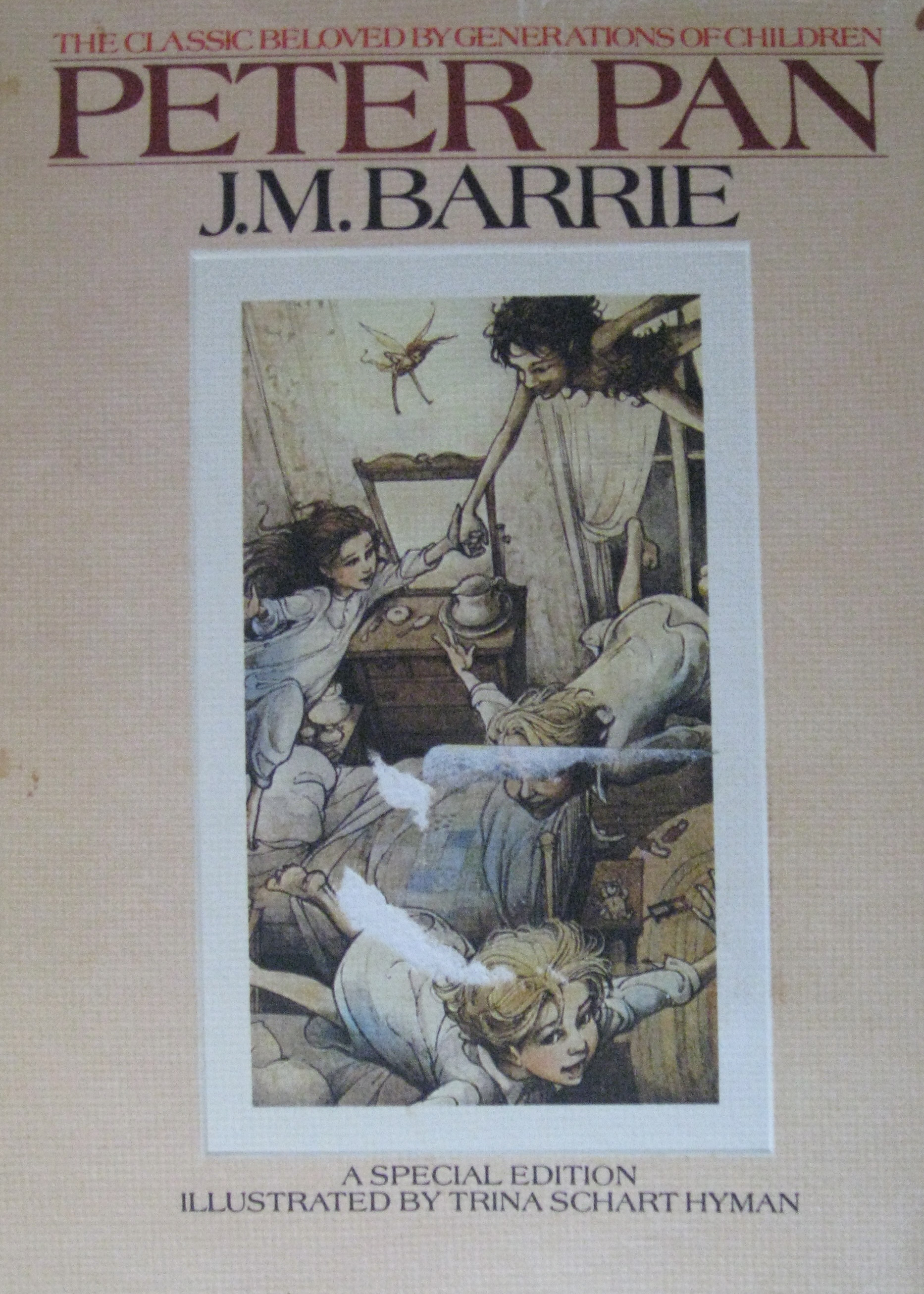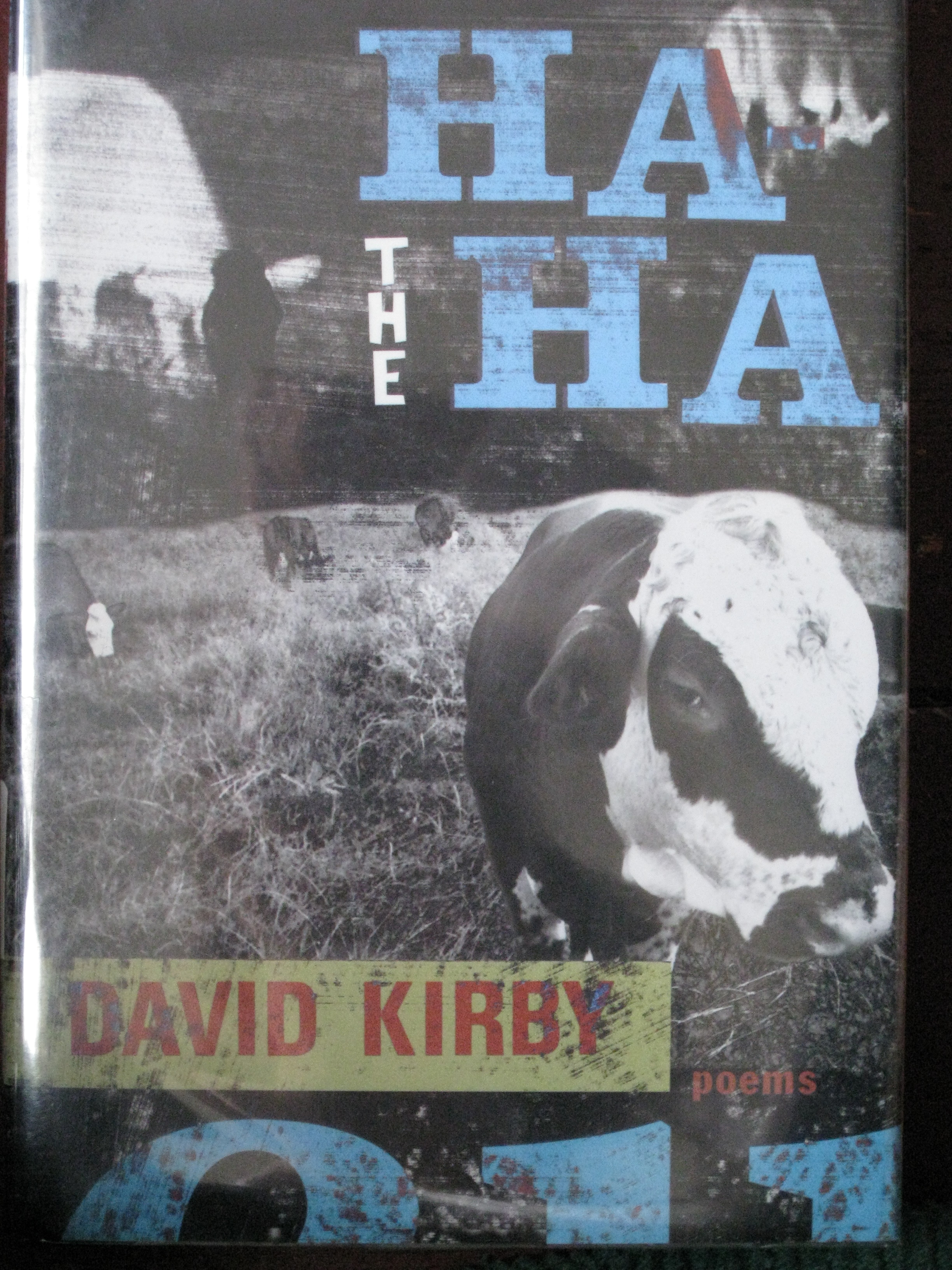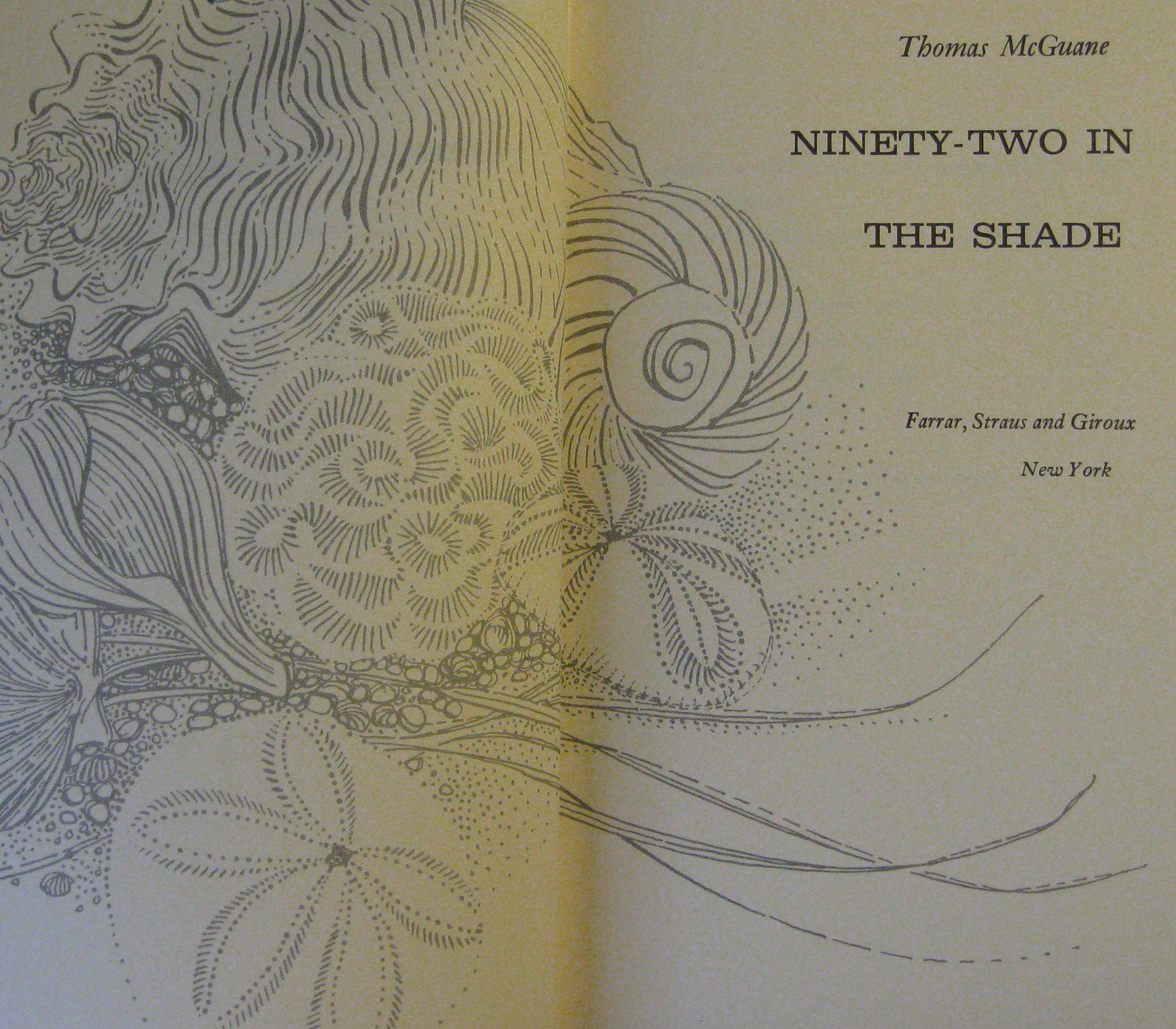
Yet Do I Marvel

On These I Stand
Cullen, Countee. “Yet Do I Marvel.” On These I Stand: An Anthology of the Best Poems of Countee Cullen. New York: Harper & Brothers, 1927.

This is Cullen’s first poem of On These I Stand and if order was of important to him, Cullen made a wise decision. The imagery in this first poem is so powerful! How many of us have looked at the atrocities of this world and wondered, if there really is a God, why he would allow such horrible things to happen? Cullen does the same thing – only he takes his “religion” to a whole new level citing the less than savory Greek gods of mythology, evil doer Tantalus & forever doomed Sisyphus. And yet. Yet, Cullen concedes the god he knows must be good to allow him, a black man, to sing with poetry.  

BookLust Twist: From More Book Lust in the chapter “Poetry Pleasers” (p 188).

Ginger Pye

Ginger Pye
Estes, Eleanor. Ginger Pye. New York: Harcourt, 1951.

Written in 1951 this book has classic charm. It’s written for kids – gradeschool age – but not a bad read for adults either. It’s the story of Jared Pye (Jerry) and his dog, Ginger. It opens with Jerry needing to earn a dollar to buy a puppy. His sister Rachel helps him and before long they have the smartest puppy on the block. It’s not long before Ginger’s talents as the smartest puppy are notice by some unsavory types and he disappears. Of course, being a book for kids it all ends well, but I won’t spoil it for you.
What I loved about the book was the complexity of the story. Ginger disappears in chapter 7 and the mystery remains unsolved until the last chapter of the book. Ginger is missing for six months. In a child’s mind that is a long time. Seven chapters are filled with how the children search and seach for Ginger, but it’s also about how they carry on without him. There are interesting things that happen outside of the main plot.
I didn’t find any quotes that really grabbed me, but I did promise myself to look up mite boxes to see what they really looked like.

BookLust Twist: From More Book Lust in two different chapters: “Best for Boys and Girls (p 21) and “Libraries and Librarians” (p 138). In this last chapter Ginger Pye is mentioned as an aside. Pearl is really drawing attention to Estes’s other book, The Moffats.

Continental Drift

continental driftBanks, Russell. Continental Drift. New York: HarperPerennial, 2007.

This book was spellbinding.
Thing on LibraryThing: Russell Banks really knows how to tell a good story. On the surface, it’s about Bob Dubois and his downward spiral. Bob is a New Hampshire man who seems to have it all: a wife, two kids, a decent job, a house, a boat to take out on the weekends and even a girlfriend on the side. His problem: greed. He is a man who compares himself too often to the people around him: his brother, his best friend. He doesn’t let go of grudges or jealousies all that easily. Feeling like the man who has nothing to lose, he gives up everything to move to Florida for a “fresh start.” His tale is just the vessel for Banks to describe a society fueled by the overwhelming need for more and more. Excess is not enough. Bob soon learns the meaning of “good enough” when his life spins out of control.
One of my favorite parts is about halfway through the book, the two brothers, Bob and Eddie, are trying to have a conversation. Each one takes a turn to say something then the other responds. Only they aren’t talking about the same thing. Bob is trying to explain to Eddie that he (Eddie) needs to take away a handgun because Bob doesn’t understand himself anymore. He’s afraid of what would happen if the gun stays in his possession. Eddie responds that he has ulcers and his epilepsy has come back. Bob says he doesn’t want to kill anyone and Eddie reponds that he hates fukcing his wife. It’s comical and sad.

My favorite quotes:
“He’s never skied on water before; in fact, he’s never skied on any kind of surface, despite having been raised where people drive from cities hundreds of miles away just so they can spend a few hours careening down mountains on slats strapped to their feet” (p150). Having gone to school in “ski country” yet never skied, I can identify with this!
“She and her father never speak of the event again, not to each other and not to anyone else. There’s nothing to say about it to each other that is not already fully understood, so they remain silent about it, almost as if it never happened” (p 176). Can’t you just see this scene in a movie?
“There’s a mixture of passivity and will that he does not understand. They risk everything, their homes, their families, forsake all they know, and then strike out across the open sea for a place they’ve only heard about” (p 340). What struck me about this quote is where it’s coming from: Bob. Doesn’t he realize he’s just like them?

BookLust Twist: From More Book Lust and the chapter “It Was a Dark and Stormy Novel” (p 129). Pearl isn’t kidding. I’m surprised this hasn’t been made into a movie yet.

Bluest Eye

IMG_0663 Morrison, Toni. The Bluest Eye. New York: Plume, 1970.

The LibraryThing Review:
“Because The Bluest Eye doesn’t have a traditional storyline plot the reader is free to concentrate on the complexities of the characters. The entire work is like a patchwork quilt of human suffering. Each character a different patch of sadness and survival. With each square, the ugly underbelly of society is exposed: poverty, racism, rape, incest, abuse, violence…Toni Morrison is the eye that never blinks in the face of such harsh subjects.”

These are the quotes that stopped me short. “They did not talk, groan or curse during these beatings. There was only the muted sound of falling things, and flesh on unsurprised flesh” (p 43). It’s the word ‘unsurprised’ that speaks volumes.
“He urges his eyes out of his thoughts to encounter her” (p 49). Another way of describing a deep-seeded prejudice.

One aspect of this novel that caught me up was the narrator hearing certain words in colors like light green, black and red. I have done the same thing with my imagination. I see words as certain shades or hues. Aside from the colors, this was a hard book to read and I can’t say anything that hasn’t already been said.

BookLust Twist: From More Book Lust and the chapter called “Big Ten Country: The Literary Midwest (Ohio)” (p 29).

Dalva

Harrison, Jim. Dalva. New York: E.P. Dutton, 1988.Dalva

What I wrote on LibraryThing:
There are two elements that make this story compelling: the characters and the sweeping shadow of history under which they live. Dalva is supposed to be the main character, but her story is told through the richness of the other characters. Michael, the alcoholic professor bumbling his way through Dalva’s history in attempt to reach tenure; Duane, Dalva’s teenage half Sioux love; Dalva’s mother, Naomi; Uncle Paul and the diaries of her great-grandfather, the missionary who first came to Nebraska.

There are more quotes than this, but here are my favorites:
“You are at an age when you are not to yourself as you are to others” (p 51).
“I rehearsed my entire life and heard my heart for the first time” (p 56). Who hasn’t done this at least once?
“It’s not what turns one on, but what turns one on the most strongly” (p 61). Good explanation for the fickle.
“There was a loud noise that turned out to be my yelling, which I managed to do while running backwards” (p 115). Just a really funny image.
“In these semi-angry moods or after she had a few drinks she owned the edge of a predator” (p 122). Aren’t we all?
“Nebraska strikes one as a place where it never occurs to the citizens to leave” (p 126). I think that’s why I don’t know of anyone from Nebraska.
“Some wise soul said that grownups are only deteriorated children” (p 257).
“My mind so clear it shivered inside” (p 296).

The one thing I didn’t care for was the sense of false advertising I got from the description of the book – “this is the story of Dalva’s search for her lost son who was given away for adoption.” Out of a 324 page book it wasn’t until page 221 that Dalva has a serious dialogue about finding her son. Up until then it isn’t mentioned barely at all. That only leaves 103 pages for the story of searching. In truth, I found the first 221 pages were spent explaining Dalva’s past and the important people in her life. They all have stories to tell and fascinating ones at that!
BookLust Twist: From More Book Lust actually twice – once in the chapter “The Great Plains: Nebraska” (p 108) and again in “Men Channeling Women” (p 166).

Carter Clay

IMG_0624
Evans, Elizabeth. Carter Clay: a Novel. New York: HarperFlamingo, 1999.

The LibraryThing review:
The premise of Carter Clay is a guilty conscience. Instantly, I was brought back to Charles Dickens because same could have said for Great Expectations. In Great Expectations, Pip becomes a gentleman through the generosity of a convict Pip was forced to help earlier in his life. When he first finds out, he is disappointed his benefactor isn’t someone more appropriate to society’s standards. In Carter Clay there is a similar parallel. Carter Clay is a homeless drunk who accidentally plows his van into a family, killing the father and seriously wounding the mother and daughter. His guilt and sense of debt drive him to be close to his victims, to care for them as penance. Additional factors, such as the man who wants to kill him, complicate the plot.
While I was impressed by the way Evans tells the story, weaving past and present through the different voices, I didn’t find her writing quotable. Nothing grabbed me in that way. Character development was my favorite. From flashbacks you got a sense of how everyone used to be before the accident. But, those flashbacks are subjective to human emotion and the desire to remember things a certain way which may or may not reflect reality. I found the psychology of what has or hasn’t changed for each character very interesting.

BookLust Twist: From More Book Lust and the chapters “Florida Fiction” (p 90) because most of the plot (and accident) happens in Florida, and “Teenage Times” (p 217) because Jersey, the daughter paralyzed in the accident, is a central character.

Baby Sister for Frances

BabySisterForFrancisHoban, Russell. A Baby Sister for Frances. New York: Scholastic, 1992.

Who doesn’t remember this one from their childhood? Originally published in 1964 this was a standard in my young life. I don’t remember if my parents bought this for me in preparation for my sister’s arrival, but I was certainly old enough to be skeptical (and more than a little jealous) of the little bundle everyone kept cooing over. This book would have made sense for that reason alone.

LibraryThing Review:
This is childrens’ book classic. Told from the point of view of a badger, Frances is jealous of her new baby sister, Gloria. Gloria seems to be distracting enough that mama badger is forgetting to do the laundry and shop for groceries. As a result, Frances feels neglected and needs to be noticed. Accepting a new sibling can be hard on anyone, even badgers.

There must be hundreds of self help books out there, all tackling the tricky question of sibling rivalry and what to do when a new baby comes along. All parents need to do is read A Baby Sister for Frances and they’ll be reminded of how the older child often feels diminished, neglected. Hoban hit that one on the head. How Frances “runs away” is hilarious. I know I did the same thing – only I think I didn’t run away long enough to be missed!
My favorite part is when Frances “calls” her parents from under the dining room table then comes “home” singing a rhyme. Very cute.

BookLust Twist: From More Book Lust and the chapter “Russell Hoban: Too Good To Miss” (p 113).

His Excellency

IMG_0571Ellis, Joseph J. His Excellency: George Washington. New York: Afred A Knopf, 2004.

In honor of Presidents’ Day and Washington’s birthday. The LT review: Ellis writes in an easy, flowing style. Almost conversational in tone, Washington’s life comes alive as the pages turn. While not a great deal of evidence of Washington’s personal life has survived, Ellis does a fantastic job filling in the gaps with Washington’s military career and political rise to power. The text is supplemented by a few pages of photographs – mostly portraits Washington had commissioned of himself.

A few of my favorite quotes that make Washington seem less historical and more human. First, a  description of Washington as a 20-something year old man: “He was the epitome of the man’s man: physically strong, mentally enigmatic, emotionally restrained” (p 12).
A commnet on Washington’s unique military order: “…when a ranger…is killed in action, continue his salary for 28 days to pay for his coffin” (p 26).

BookLust Twist: From More Book Lust in the chapter “Founding Fathers” (p 91). Last month I read about Benjamin Franklin from the same chapter. Note to self: Self, don’t read anything from that chapter in March!

Americanization of Benjamin Franklin


Wood, Gordon S. The Americanization of Benjamin Franklin. New York: Penguin, 2004.

Benjamin Franklin celebrates a birthday in January (on the 17th day in the year 1706 to be precise; in other words, today); hence my reading of his biography (one of many on my list).
Let me say first and foremost that Mr. Franklin is a personal hero of mine for advocating for libraries so much! If it were not for him who knows where my profession would be. I do not, however, approve of his treatment of his wife Deborah. Can you imagine being married to someone who insisted on living in a different country (and only returns home after your death)? Even Franklin’s friends made no mention of Deborah’s passing after he returned to America.
Wood’s biography deals mostly with Franklin’s political aspirations and most pointedly, his “switch” from supporting Britain to supporting America (hence “americanization” in the title). Of course, Franklin’s involvement in postal services and electricity were also touched upon, but only because they are important elements to Franklin’s history.

My favorite quotes:
“Things that struck him as new and odd were always worth thinking about, for experiencing them might advance the boundaries of knowledge” (p 62).
“…but Franklin thought the electrical charge necessary to kill large animals might end up killing the cook” (p 64).
“The degree of Franklin’s Revolutionary fervor and his loathing of the king surprised even John Adams, who was no slouch himself when it came to hating (p 154).

BookLust Twist: From More Book Lust and the chapter called “Founding Fathers” (p 91).

The Dollmaker

Arnow, Harriette. The Dollmaker. New York: Avon, 1972.

Weighing in at 599 pages this book truly can be called a saga. It’s the story of Gertie Nevens, a simple country woman from Kentucky during World War II. After her husband moves to Detroit, Michigan to find work in the factories, Gertie follows with her five children. Life in the city is cold, dirty, and unkind. Gertie learns of prejudices against “hillbillies” and the importance of the word “adjust”. There is tragedy and triumph with human frailty constantly hanging in the balance. At times I couldn’t believe the hard times Gertie and her family faced. It almost seemed too much to bear. Gertie’s strongest moments are in the very beginning of the book when she has to save her baby from a life threatening illness. After moving from Kentucky it’s as if the city steals Gertie’s strength and spirit.

“…for after the bright whiteness of the hot little room, the cold rain and dark were like old friends” (p 38).
The government owed them at least one man who could fix anything and never got drunk” (p 108).
“‘Are you busy?…Yes and no…I’m in the worst kind of business – tryen to make up my mind'” (p 260).
“She stood, her mind, as always, stumbling around, picking up words, laying them down” (p 538).

BookLust Twist: From More Book Lust and the chapter “Big Ten Country: The Literary Midwest” & the section ‘Michigan’ (p 26).

Thousand Acres

acres.jpg

Smiley, Jane. A Thousand Acres. New York: Fawcett Columbine, 1991.

I’ll admit it. It took me forever to even want to read this book even though it has been sitting on my book shelf for months, right within easy reach. I tried picking up Moo a few times and something made me keep putting it down. I have no clue why. I assumed A Thousand Acres would be the same difficult to pick up experience. I was wrong. Once I got into it, Thousand Acres was fascinating, troubling and oh so true to family life. I’ve never lived on a farm. I’ve never set foot in Iowa, but thanks to Smiley I knew exactly what both would be like.
One thing I didn’t understand, nor will I ever, is how a family can so completely and utterly fall apart. By the end of the book not one family is intact and it’s all because of a thousand acres.

“You shouldn’t think somethings changed just because you haven’t seen it in thirteen years” (p 11).
“It was exhausting just to hold ourselves at the table… You felt a palpable sense of relief when you gave up and let yourself fall away from the table and wound up in the kitchen getting something, or in the bathroom running the water and splashing it on your face” (p 101).

BookLust Twist: From More Book Lust and the chapter called “Big Ten Country: The Literary Midwest (Iowa)” (p 27) and Book Lust in the chapter “Growing Writers” (p 107). Personally, I think Pearl also could have put this in her “Families in Trouble” chapter. Not to give anything away but…who tries to poison her own sister? Who does that?

Beyond the Black Stump

Shute, Nevil. Beyond the Black Stump. New York: William Morrow, 1956.

Nancy Pearl likes Nevil Shute. There is a whole chapter on him in More Book Lust. This being my first “Shute book” I was enchanted. Beyond the Black Stump is about an American geologist, Stanton Laird, who is assigned to dig for oil in Australia. Stanton is a stand-up guy with a secret in his past, but when he meets and falls in love with Mollie Regan in the Australian outback, he realizes can’t compete with her past. This is the story of two people too different to make it work. It goes beyond race or religion. Prejudices and historical resentments run deep for both families. Despite the plot being predictable I enjoyed getting to the conclusion no matter how obvious it would be.

“It’s the greed for the gold, the curse of the modern age. Avarice kills more men than any physical disease, I am afraid. These men will not make old bones” (p 136).

BookLust Twist: From More Book Lust and the chapter “Nevil Shute: Too Good To Miss” (p 199).

Always Outnumbered


Mosley, Walter. Always Outnumbered, Always Outgunned. New York: W.W. Norton, 1998.

Always Outnumbered, Always Outgunned is like looking at snapshots of one man’s existence. Each chapter is a different time in Socrates Fortlow’s life, a different picture. His past, his friends, and his skewed sense of morality are the common threads in each scene. Socrates is a man, free after 28 years in prison, trying to make his way in Los Angeles, California. The violent streak that landed him in the penitentiary is still prominent in his personality. He is an angel and a devil all in one. A saint with a dark side. A demon with a halo. My favorite example of this split personality is when a friend’s wife comes looking for her husband at Socrates’s door. While telling Corrine she should leave her no-good husband (and be with Socrates) that same no-good husband is hiding out in Socrates’s back room.

Some of my favorite quotes describing Socrates:
“Back then he enjoyed the company of fear” (p 19).
“He wasn’t a thief. Or, if he was, the only thing he ever took was life” (p 64).

BookLust Twist: from More Book Lust and the chapter “Walter Mosley: Too Good To miss” (p 169). Happy Birthday Mr. Mosley!

January Is…

Here are the parameters for this month’s reading and what is at the top of the list. January is… 

  • Walter Mosley’s birth month (Always Outnumbered, Always Outgunned)
  • Nevil Shute’s birth month (Beyond the Black Stump)
  • Benjamin Franklin’s birth month (The Americanization of Benjamin Franklin)
  • National Yoga Month (Everday Zen)
  • The month Michigan became a state (The Dollmaker)

Of course, I’ve been reading something else lately….But, now that January is here, Happy New Year & Happy Reading!

The Book Lover’s Cookbook


Wenger, Shaundra Kennedy and Janet Kay Jensen. The Book Lover’s Cookbook: Recipes Inspired by Celebrated Works of Literature, and the Passages That Feature Them. New York: Ballantine Books, 2003.

I grazed on this book a while ago. The hardcover (borrowed) version sat on my desk for a few days and every so often I would pick it up, skim the pages, eye the recipes, until it was time to send it back. I couldn’t get into it because I was truly afraid I would mark up a book that wasn’t mine. I have that habit with cookbooks – writing in them. So, I sent it back, barely digested.
Fast forward to last year. Book Lover’s Cookbook was on The List. I was thinking I could call it accomplished until I remembered how I didn’t devour it.
Skip to this Christmas. My sister and brother-in-law gave me the softcover version and suddenly, I’m not only devouring the book I’m dedicated to cooking every recipe, reading every book mentioned. This version is mine, mine, mine and I can write in it all I want.

What is so special about this book is that it includes a variety of books and are not all standard Oprah favorites. There are classics, stories for children, chick lit, murder mysteries, nonfiction, and even poetry. Same goes for the dishes – they aren’t all typical recipes. There is something for everyone.

BookLust Twist: From More Book Lust in the chapter “Dewey Deconstructed” (in the 600s, p72).