1968: The Year That Rocked the World

1968Kurlansky, Mark. 1968: The Year That Rocked the World. New York: Ballentine Books, 2004.

The year before I came into being. What an amazingly troubled yet vibrant time. There is very little that Kurlansky doesn’t cover. Everything you want to know about what changed world views is here. My favorite chapters were about the civil rights movement and the protesting that went on. From sit-ins and the feminist movement to Freedom Rides and every raised sign in between. Talk about voicing your opinion! Here are my favorite quote on the subject: “The protesters can be nonviolent, but they must evoke a violent reaction. If both sides are nonviolent, there is no story” (p. 38). For this very reason women had a hard time getting their January protest march on Washington documented. They weren’t violent enough.
The harder chapters to read were about politics and the Vietnam war, two very unavoidable subjects for 1968. Both carried the weight of violence and unbridled hatred. The Chicago convention in August…”miraculously, the clubbings in Chicago killed no one…At the same time, Vietnam had its worst week of the summer, with 308 Americans killed, 1,134 wounded, and an estimated 4,755 enemy soldiers killed” (p286).

BookLust Twist: In the chapter “The 1960s in Fact & Fiction” (p 179) from More Book Lust.

Bastard out of Carolina

Bastard out of CarolinaAllison, Dorothy. Bastard out of Carolina. New York: Penguin, 1993.

The only way I can describe how I felt after finishing Bastard is raw. Raw and used up. Maybe it’s because this is my second time reading it. Maybe it’s because I reread this in two days. I don’t know. There are a thousand different ways to describe the book itself: coming of age, looking for acceptance, southern, white trash poverty, motherhood gone by the wayside. It’s a nightmare of a mother loving a cruel stepfather (Pearl calls him “violent and predatory”) more than her own daughter. I could go on and on but that would only ruin the depression. Oddly enough, I loved it. I loved Bone’s defiant voice as she tried to make her way through life as the oldest daughter of young mother Anney. I loved her keen observance of her surroundings, “It was dangerous, that heat. It wanted to pour out and burn everything up, everything they had that we couldn’t have, everything that made them think they were better than us” (p 103).
The social commentary on men and women, men against women was poignant, too. “A man belongs to the woman who feeds him…the woman belongs to the ones she feeds” (p 157).

BookLust Twist: Bastard out of Carolina is mentioned twice in Nancy Pearl’s Book Lust. First, in the chapter called “Grit Lit” (p 106), and then in the chapter simply called “Southern Fiction” (p 222).

pps~ I was wondering if this was ever made into a movie and it has…back in 1996. Where have I been?

Gift from the Sea

GiftsLindbergh, Anne Morrow. Gift From the Sea. New York: Vintage Books, 1991.

I have to say this is something every woman should read annually. The words and their meaning will change every single time and they will be different for every reader. In the simpliest of terms Gift From the Sea uses seashells, (whelk, moon shell, oyster) all gifts from the sea, as metaphors for life, vehicles for deeper thoughts. On vacation (ironically on an island, like me) Anne picks seashells and ponders religion, relationships, growing old, being young, nature, love and marriage…She picks at nagging thoughts like scabs, letting them bleed, revealing raw emotion and a tender heart. Here are a few of my favorite quotes:

“…I think best with a pencil in my hand” (p 9). I agree!
“…I have shed the shell of my life for these few weeks of vacation” (p 22). Since I was on vacation when I read that I had to smile because it happens to me, too.
“…social life is exhausting; one is wearing a mask” (p 32). Very true! Couldn’t have said it better myself.
“And since our communication seems more important to us than our chores, the chores are done without thinking” (p 100).

I read this in an afternoon. Gulls cried overhead, sea air salted my skin, waves crashed in the distance. It was the perfect setting for Gift from the Sea.

BookLust Twist: From the chapter called “Journals and Letters: We Are All Voyeurs at Heart” (p 130). I swear on everything holy I did NOT have More Book Lust with me when I wrote this review. I was still home without any of my Pearl books. So, I was incredibly surprised to read these words from Pearl, “Some of us still reread them yearly to remind ourselves of what’s important in this frantic world” (p 131). Pearl is referring to everything written by Lindbergh, but I had the exact same thought specifically about Gift from the Sea. Gift from the Sea is also in Book Lust in the chapter, “100 Good Reads, Decade by Decade” (p 175).

Under the Tuscan Sun

Mayes, Frances. Under the Tuscan Sun: At Home in Italy. New York: Broadway Books, 1997.Under the Tuscan Sun

Under the Tuscan Sun was made into a movie I have never seen, nor do I think I ever want to. I don’t see how the richness of Mayes’s Italy comes to life on the silver screen. I can’t picture the blood, sweat and tears of rebuilding a house; the glorious smells of garden fresh cooking; the love and laughter of enjoying one’s surroundings in moving pictures. I don’t see how Mayes’s  lush language is communicated. Really. Tuscan Sun is the journey of a woman (with the help of her second husband) to rebuild a Tuscan farmhouse. While she struggles with culture, language barriers and politics she falls in love with her Italian life. Try as I might I can’t see it as a movie. Okay, so now maybe I’ve convinced myself to see it out of curiosity!
I think I’m having trouble picturing a movie because I read Under the Tuscan Sun in my own personal paradise – by the dying light of fiery sunsets with the cadance of the surf as my only distractions. To say that I devoured Under the Tuscan Sun is an understatement. During the day I read it between hiking, eating, and breathing in my own love affair with a place. Every single time Mayes gushed about her Italian home I wanted to challenge her. I wanted to boast that it was I, not she, who was living the perfect life. On page 86 she says, “Where you are is who you are. The further inside you the place moves, the more your identity is intertwined with it. Never casual the choice of place is the choice of something you crave.” I found that quote so profound to my place I had to choke back tears. It is hard to explain arriving on Monhegan and reading those words on the very first night home. I had arrived to the only place my soul knows intimately. The only place where my whole being breathes a sigh of relief. Home is who I am, for sure. Later, I bought a guestbook for our rental cottage and wrote Mayes’s same words on the inside cover.

BookLust Twist: From More Book Lust in the chapter called “Ciao, Italia” (p 46). I like that Pearl describes Mayes adventure as a “love affair” (p 47). We’re both on the same page with this book.

My love affair:
875069607_94b33dab01.jpg

Autobiography of a Face

AutobiographyGrealy, Lucy. Autobiography of a Face.New York: HarperCollins, 2003.

I had all the right conditions to finish this book in two days – traveling, vacationing, but most of all, fascination. I couldn’t put it down. On the surface Autobiography of a Face is the tragic story of one woman’s struggle with cancer and journey through recovery. Only her struggle isn’t as an adult. She is a child. Confronting Ewing’s sarcoma at age nine Lucy battles through radiation therapy and chemotherapy. Her tone can only be described as matter of fact as she recounts the loneliness and pain after countless surgeries to correct the deformity of losing a third of her jaw. Deeper than that, Autobiography is about rising above the cruelty of others, shaking off the superficial prejudices of what supposedly makes a face beautiful. Lucy is defiant and remarkably stoic in her recollections of childhood taunts, adult avoidance, and across the board lack of social acceptance.
Critics call this book the vehicle with which to free oneself from self loathing and fears of rejection. It is a message to stop wallowing in self pity and live with dignity – no matter what. It’s also a call to be human and have real emotions as Lucy admits, “and as much as I wanted to love everybody in school and waft esoterically into the ether when someone called me ugly, I was plagued with petty desires and secret, evil hates” (p 181).

My favorite quote: “speaking seemed like something one could grow tired of” (p 77).

Lucy’s story ends with her getting published, finding friendships and getting on with her life. Yet, there is a darkness to it all. She is criticized for not telling the whole truth. There is mystery surrounding her untimely death in 2002. Her story leaves you asking what happened and wanting more. What the book doesn’t tell you is that her multiple surgeries led to an addiction to pain meds and subsequently, heroin. She died of an overdose at the age of 39. There is more drama after death, but I’ll leave that for you to figure out.

BookLust Twist: From More Book Lust and the chapter “Other People’s Shoes” (p 181). I can’t even begin to imagine being in Lucy’s shoes.

The African Cookbook

African CookbookSandler, Bea. The African Cookbook: Menus and Recipes From Eleven African Countries and the Island of Zanzibar. New York: Citadel Press Book, 1993.

This is a gorgeous cookbook. Not just for the recipes and menus, but also for the art. The illustrations by Diane and Leo Dillon are amazing. My personal favorite introduces the recipes of Tanzania (p. 57).
In the first half of the cookbook the recipes cover all the regions of African cooking. In addition each chapter has a section on the culture of the region, how meals are served (traditionally) and how you, the American cook, can pull off your own Tanzanian, South African or Liberian meal. The second half of the cookbook covers additional recipes. Chapters are gouped by product – fish, poultry, beef, starch, etc.
Something else I find interesting is the nontraditional layout of each recipe. You won’t find a list of ingredients and then preparation instructions. Instead, each ingredient is presented as needed in the preparation instructions. Something I am never good at is reading through the entire recipe before starting and with The African Cookbook that step would be imperative.

BookLust Twist: From More Book Lust in the chapter “Africa: A Reader’s Itinerary” (p4).

All-Bright Court

All-Bright CourtPorter, Connie. All-Bright Court. New York: HarperPerennial, 1992.

I adore debut novels. There is something about that leap of faith that a writer must take before anything else can happen. Every writer is a closet published writer. They walk around with the words in their head, barely daring to dreaming of the day those words will be sold in a big bookstore. Opened up for all the world to see.
That’s exactly how I picture Connie Porter, walking around with the words to All-Bright Court in her head, dreaming of the day they’ll be on paper. I can picture the personalities of  the All-Bright Court residents starting to take shape. It’s the story of two decades of african american families trying to make their way in a steel mill town near Buffalo, New York. All-Bright Court is the housing project that ties them all together.

“She found herself saving things to say to her, storing them away in her mind, folding them as neatly as sheets.” (p 82).
“These people lived inches away from one another, and much of what was done did not have to be told. They did not look away because they did not want to know. They looked away because they did know, and looking away was the only way to grant the woman dignity, to go on believing, to let her go on believing she was a woman” (p 85).

BookLust Twist: From Book Lust  and the chapter “African American: She Say” (p 12).

Second Sex – Failed

Second sexde Beauvoir, Simone. The Second Sex. New York: Alfred A. Knopf, 1971.

Okay, I admit it. I got two paragraphs into the translator’s preface then skipped to the author’s introduction. There, I got as far as page v . Mind you, the introduction starts on page v. Then, I skipped to chapter one, got as far as paragraph three where I promptly fell asleep. I couldn’t get a single page entirely read. Not a one. Here and now I’m evoking the BookLust 50 page rule and admiting defeat with The Second Sex (see Book Lust Rules). Women everywhere hate me now for what I’m about to say.

I am not a diehard feminist. I have strong beliefs in what a woman can and can’t do. I’ve said before that women are more cerebral than men. They frequently change their minds, then change them back again. This makes them flighty, indecisive. Not exactly the type of person I would want in combat. The ability to drive a car? Please, don’t even get me started! I could go on, but I don’t think I can take the hate mail.
My second reason for not wanting to finish (or even properly start) Second Sex is the fact that it was written in 1952 (from a treatise written three years earlier, in 1949). Much has changed for women since that time. We’re more accepted in the corporate world, the political realm & even the far reaches of outer space. It’s becoming more acceptable for women to be the bread winners while their husbands stay at home with the kids. One might argue that reading Second Sex would be good from a historical standpoint. True, but I’m just not that interested in standing in that light.
My third reason for not reading Second Sex is purely a selfish one. The book is long – over 750 pages! I just don’t see myself devoting my entire summer vacation to something that reads like a textbook.

BookLust Twist: From More Book Lust in the chapter, “I Am Woman – Hear Me Roar” (p 120). Pearl calls de Beauvoir a pioneer  of the women’s movement. I’ll take her word for it.

Note: This makes the seventh book I have given up on since starting the Book Lust Challenge.

Anne Frank

Anne FrankFrank, Anne. Anne Frank: Diary of a Young Girl. New York: Doubleday, 1995.
I was prompted to reread Anne Frank: Diary of a Young Girl after reading the New York Times article about her cousin, Bernhard “Buddy” Elias, donating 25,000 letters, photos and other documents to the Anne Frank House. What an amazing thing to do. I’m sure Hans Westra, director of the Anne Frank House, is…well…psyched. Imagine the historical value of such a gift! It’s a gift for all humanity and truthfully, it’s worth is immeasurable. Anne Frank died when she was 16 years old. Her “dates” are 1929 – 1945 and that alone devastates me. My heart was caught in my throat when I opened my copy of Diary of a Young Girl and saw her handwriting staring back at me. Everyone knows Anne’s story so I won’t bother with a “review” per se, except to say I simply cannot believe there are people out there who feel her diary is a fraud!

Probably the hardest thing about reading Diary of a Young Girl was the fact I was painfully aware of dates. I knew she was arrested and taken from the Annex on August 4th, 1944. As soon as her diary entries had the “1944” date I started to despair. It was like counting down to death row. It was different when I read this as a child. Anne Frank was a character to me. I couldn’t put reality to her words, flesh and blood to her black and white photo. This time it was different, tragically so. I found myself wiping away tears whenever she mentioned “the end being near.”

What fascinates me about Anne Frank first and foremost is her dedication to telling her truth. She started her diary for herself but, after hearing first hand accounts of life under German occupation were needed, she decided to edit her diary for publication. After her death her father combined both versions and created what we all have read, The Diary of a Young Girl. I never knew there were versions A, B & C.

Two of my favorite quotes, about writing, appear on the same page, “I have an even greater need to get all kinds of things off my chest” and “paper has more patience than people” (p. 6). I couldn’t agree more. 
“Memories mean more to me than dresses” (p 20) and “Will the reader please take into consideration that this story was written before the writer’s fury had cooled?” (p 120) indicate I would have gotten along with Miss Frank “swimmingly”. Seriously.

BookLust Twist: I would have thought Pearl would have a chapter on the Holocaust and this would be included in it. However, I’m relieved it’s in the chapter “100 Reads, Decade by Decade” (p. 177) from Book Lust.

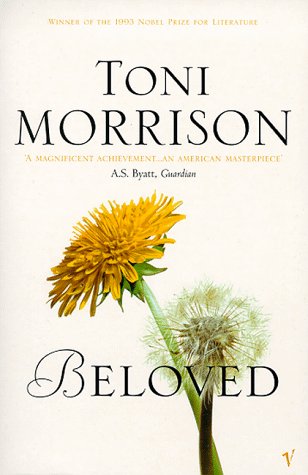
Beloved

BelovedMorrison, Toni. Beloved. New York: Penguin, 1987.

It’s been 21 years since I first read Beloved. The one and only thing I remember is my reaction to it. I remember crying and crying, not understanding why the words moved me so. Every sentence was so beautiful in its heartbreak.
After rereading Beloved I realize why I had such a hard time remembering people and plot. Beloved is the story of running. At the center is Sethe, a former slave who cannot escape her past. Everyday she lives in fear of being brought back to someone’s possession. Her history chases her everywhere. Denver is her surviving daughter who runs from loneliness, constantly trying to catch up to her mother’s attention. Paul D is another former slave who shares Sethe’s past. He, too, is in a devastating cycle of running away from his past, never believing he is capable of staying in one place freely. Beloved is Sethe’s murdered daughter, back from the dead to reclaim her life with Sethe.
After rereading Beloved I remembered English class and how we went round and round about the symbolism. What did the number 124 on the house meant? Why was color such a prominant description for things? What about Baby Suggs? In the end we decided one of the most powerful images of Beloved is Denver’s birth. Denver wouldn’t have made it into the world had it not been for the help of a white woman when Sethe was in labor. It’s almost a commentary on how society should be thinking today – we can’t make it in this world if we do not work together.

“The sky above them was another country. Winter stars, close enough to lick, had come out before sunset” (p 175) is my favorite line.

BookLust Twist: From Book Lust and the chapter called, “African American Fiction: She Say” (p. 12).

Abbreviating Ernie

Abbreviating ErnieLefcourt, Peter. Abbreviating Ernie. New York: Villard, 1997.

At first glance this humorous book is just plain cut and dried funny. Okay, bad pun. Read on and you’ll see why. Here’s the surface premise, the tip of the iceburg, of Abbreviating Ernie. Ernie and his wife are having sex. He drops dead of a heart attack. She’s blamed for his death. Here’s the just under the surface details: Ernie likes to dress in his wife clothes while having sex. He also likes to handcuff his wife and he can’t seem to “do the deed” anywhere normal. Long story cut short (there’s that pun again): Wife is found holding an electric carving knife, chained in the kitchen while hubby lies dead on the floor missing his “tommyhawk” as one character put it. All of this happens within the first twenty pages of the book so I found myself wondering what in the world Lefcourt would have say in the remaining 271.
Here’s the rest of the iceburg. Abbreviating Ernie is a commentary on the legal system, mental illness, women’s rights, the sensationalism the media can create, the Hollywoodization of a tragedy (what famous actor will portray the prosecutor?), and the exposure to human nature, often seen as failings. It’s about how warped our society can be when confronted with the dark secrets of suburbia. Yet, it keeps you laughing.

BookLust Twist: Abbreviating Ernie shows up in Pearl’s More Book Lust in the chapter on “Alabama” (p 207). While Abbreviating Ernie doesn’t take place in Alabama Pearl makes mention of Lefcourt’s book because Crazy in Alabama has an electric carving knife in its plot.

Tuck Everlasting

Tuck EverlastingBabbitt, Natalie. Tuck Everlasting.New York: Farrar, Straus and Giroux, 1985.

Do I dare say this book was delightful? I read it in an hour over a tuna sandwich lunchbreak. It’s a cute story about ten year old Winnie Foster and her discovery of a family that has eternal life. At first it seems impossible, but after befriending the strange family, Winnie realizes it’s true. The one complication of the story? Someone else (aka “bad guy”) knows the secret and wants to market it for himself.

Favorite line: “The first week of August was asserting itself after a good night’s sleep” (p 86). I like the imagery of this, of August saving it’s energy during the night in order to roast the day.

BookLust Twist: From Book Lust.

Aspects of the Novel

Aspects of the novelForster, E. M. Aspects of the Novel. New York: Harcourt, Brace & Co., 1940.

I loved holding this book in my hands. Old and musty, it just felt right to read. There is an inscription on the inside cover, “Presented by Miss H. Miller’s Freshman English Classes, February 1941.” My father was four. My mother still had another seven years before even being born. But, anyway.
Aspects of the Novel came out of lectures Forster gave at Cambridge University in 1927. In these lectures Forester divides a novel into six crucial parts: story, people, plot, fantasy, prophesy and pattern and rhythym (counting as one element). Story asks the question what next. The trick is to keep the reader asking that very question. As soon as they can predict the next “they either fell asleep or killed him [the author].”  (p 46). There is a grave price for being predictable in literature.
In the element of character (or people as Forster refers to them) love is an emotion highly questioned. Love can be more complicated than food or sleep and Forster begs the question “How much time does love take?” (p 79). 
In the element of plot readers are not supposed to be asking what next, but rather, why? Why does this happen? They keep reading to find out more.
Fantasy and prophecy are the mythologies, the magic of writing. This is where the reader *thinks* the next twist in the plot should be obvious, but acutally isn’t. It’s the unbelievable made believable. 
My favorite elements are the combined Pattern and Rhythym. I like that Forster draws from art for the description of pattern and music for rhythym and continues with one of my favorite words, symmetry. “History develops, art stands still.” (p 244)

BookLust Twist: From More Book Lust, mentioned twice- Once in the chapter “Commonplace Books” (p 53) and again in the chapter called “The Writers Craft” (p 236).

As I Lay Dying

As I Lay DyingFaulkner, William. Novels 1930 – 1930: As I Lay Dying, Santuary, Light in August, Pylon. New York: The Library of America, 1996.

As I Lay Dying is terribly sad. Through a stream of consciousness every character tells the tale of Addie Bundren’s dying days. Addie’s five children, husband, neighbors and doctor all chime in. Strangely enough, even Addie expressing herself…from her coffin. I’m not exactly sure what Anse (Addie’s husband) did besides being selfish and greedy but Addie’s final revenge on her husband is to have him bury her in her birthtown of Jefferson – a long and difficult journey. Even the kids have something against their father. In one chapter Cash doesn’t look at pa and in another, Dewey doesn’t look at pa. Eveyone has something bad to say about “pa” but, the one thing I find admirable in Anse is that he sticks to his promise saying, “I give my promise. She’s counting on it” (p 92).

One of my favorite lines is from Addie when she says, “I could just remember how my father used to say that the reason for living was to get ready to stay dead a long time” (p 114).

BookLust Twist: From Pearl’s first lust book, Book Lust in the chapter “Southern Fiction” (p 222).

Above The Thunder

Above the ThunderManfredi, Renee. Above the Thunder. San Francisco: MacAdam & Cage, 2004.

Once I started reading Above the Thunder it was like a giant boulder building momentum down a hill. I couldn’t stop turning the pages. I like that it’s all about journeys, big and small. Personal and global. On the surface its four people, on the whole it’s humanity. The plot is simple – it’s about the life of Anna. She starts out being a cynical, bitter widow who “doesn’t want to get involved.”‘ She doesn’t want to get involved in living, period. She has all but disowned her daughter whom she hasn’t seen in 12 years. She has one friend. When her son-in-law and granddaughter return to live with her and she reluctantly agrees to help moderate an aids support group she ends up being the center of a collection of people so diverse and wonderful she can’t help but change and, in the process, grow. Sounds predictable and nice, but it isn’t. There is a harsh reality to this coming-into-the-light story: aids, suicide, divorce, miscarriage and sadness all play an important part in the plot.

The thing I liked best about Above the Thunder are the characters. They are believable. Anna is introduced to us as closed off and inflexible. In time she changes, but when faced with a new tragedy she reverts back her old self and craves solitude where she can grieve in private. In shrugging off the comfort of others she is still the same person we meet in chapter one. Even Jack, a homosexual with problems with fidelity, doesn’t change his desire for sexual freedom once he discovers he is hiv positive. All the characters go through a period of growth and acceptance, but at the core are all still the same unique individuals.
Some favorite lines:

  • “She doubted it was possible to understand someone else’s suffering. Even her beloved husband whose pain had become a private geography on which she couldn’t trespass.” (p 21)
  • “Holy God, man, how long does it take to cook a hot dog? I’ve been in line long enough to break a habit, backslide, and recommit.” (p 183)

And a favorite scene: two homosexual men trying to teach a pubescent girl how to use a tampon for the first time. It’s hysterical and poignant all at once.

BookLust Twist: From More Book Lust in the chapter called, “Maiden Voyages” (p 159). I have always loved discovering someone’s very first novel. Katherine Weber’s maiden voyage is one of my favorite, but Above the Thunder rates right up there, too.