January’s Time

This year, more than ever, I am struck by time’s marching; the relentless footfalls of days and weeks passing by. I know that is mortality speaking, but it rings eerie in my mind nonetheless. Not helping the doom and gloom is the first book on my list, On The Beach by Nevil Shute. I wanted a different book from Shute but there isn’t a library local enough to loan it to me.

Here are the planned books for January 2018:

Fiction:

  • On The Beach (AB) by Nevil Shute (previously mentioned) – in honor of Shute’s birth month.
  • Clara Callan by Richard Wright – in honor of Sisters Week being in January.
  • Tea From an Empty Cup by Pat Cadigan – in honor of January being Science Fiction Month.

Nonfiction:

  • Partisans: Marriage, Politics and Betrayal Among the New York Intellectuals by David Laskin – in honor of January 26th being Spouses’s Day.
  • War Child: a Child Soldier’s Story by Emmanuel Jal – in honor of the end of the Sudan civil war.
  • Travellers’ Prelude: Autobiography 1893-1927 by Freya Stark – in honor of Freya Stark’s birth month.
  • Practicing History by Barbara Tuchman (AB) – in honor of Tuchman’s birth month.

Series Continuations:

  • Mrs. Pollifax and the Golden Triangle by Dorothy Gilman – started in September in honor of Grandparents’ Day.

For the Early Review program for LibraryThing:

  • Brain Food: The Surprising Science of Eating for Cognitive Power by Lisa Mosconi, PhD (finishing).
  • Pep Talk for Writers: 52 Insights and Actions to Boost Your Creative Mojo by Grant Faulkner (also finishing).

On the Beach

Shute, Nevil. On the Beach. Read by Simon Prebble. New York: Recorded Books, 1991.

Reason read: Nevil Shute was born and died in January; read in his honor.

Preoccupation with The Bomb. Nuclear war. Alphaville wrote Forever Young thinking about the bomb. Randy Newman sneered about dropping the bomb…boom goes London. Shute takes it one step further. The nuclear bombs of World War III  have been dropped and as far as anyone knows, the entire northern hemisphere has been completely wiped out. There’s not a soul alive above the equator. It’s only a matter of time before winds blow the deadly radioactive fallout to New Zealand and Australia. For naval officers Peter Holmes and Dwight Towers stationed in Melbourne it is their job to pilot a submarine to the northern hemisphere to seek out survivors and make predictions about their own mortality. Will the deadly dust reach them in a year? A month? A week? No matter the time frame for surely they will all die. It’s a bleak read, there’s no doubt about that, but the characters are worth it. For Dwight Towers, originally from Connecticut, knowing he will never see his wife and children again is a hard pill to swallow. For young and beautiful Moira Davidson drinking her denial is the best policy. Others seek solace in the suicide pill or carrying on as if nothing tragic is going to happen. I found myself asking what would I do in this situation?

Author fact: Shute has his own fan webpage here.

Book trivia: When On the Beach was first published in 1957 it was met with sour reviews. Too depressing they all said.

Nancy said: Nevil is “probably best known for On the Beach” (p 198).

BookLust Twist: from More Book Lust in the obviously called “Nevil Shute: Too Good To Miss” (p 198).

Nero Wolfe of West Thirty-fifth Street

Baring-Gould, William S. Nero Wolfe of West Thirty-Fifth Street: the Life and Times of America’s Largest Detective. New York: Viking Press, 1969.

Reason read: Rex Stout was born in December. Read in his honor.

Right off the bat I need to tell you Nero Wolfe of West Thirty-Fifth Street is better read after you have consumed every Rex Stout mystery starring the portly private detective. I guarantee you will have many more ah-ha moments if you already know the cases. Baring-Gould fills his book with a mountain of facts but they are oddly assembled; a veritable mishmash of all things Nero Wolfe (and Archie Goodwin).  Everything from fashion, and facial tics to food and every case in between is scrutinized. It’s as if Baring-Gould combed the pages of every mystery, never missing a single detail, to build a character profile and biography of Nero Wolfe and Archie Goodwin.
Baring-Gould also has some interesting theories. I don’t think it is a spoiler to say that Baring-Gould thinks Sherlock Holmes fathered Nero Wolfe. He draws thought-provoking connections between Holmes and Wolfe, including the similar phrases they utter.

Author fact: Baring-Gould’s first claim to fame was his analysis of Sherlock Holmes. He was the editor of the Annotated Sherlock Holmes among other publications.

Book trivia: in addition to the floor plan to Wolfe’s ground floor apartment, Baring-Gould also lays out an impressive chronology of Nero Wolfe’s movements from his birth in 1892 or 1893 to The Father Hunt case in August – September of 1967.

Nancy said: Nancy recommends reading Nero Wolfe of West Thirty-Fifth Street… if “the Nero Wolfe bug bites you” (p 226).

BookLust Twist: from Book Lust in the chapter called “Rex Stout’s Nero Wolfe: Too Good to Miss” (p 226).

December Books

I opted out of the cutesy title for this blog because…well…I simply wasn’t in the mood to come up with anything clever. What was December all about? For the run it was a 5k that I finished in “about 30 minutes” as my running partner put it. I also ran a mile every day (from Thanksgiving to New Year’s Day). I think I’m satisfied with that accomplishment the most because I ran even when we were traveling, even when we were completely swamped with other things going on, even when I didn’t feel like lifting a finger. Despite it all, I still ran at least one mile.

Enough of that. In addition to running I read. Here are the books finished in the month of December. For some reason I surrounded myself with some of the most depressing books imaginable:

Fiction:

    • Ballet Shoes by Noel Streatfeild – read in two lazy afternoons
    • Fay by Larry Brown – devoured in a week (super sad).
    • Doomsday Book by Connie Willis (AB/print) – confessional: I started this the last week of November fearing I wouldn’t conquer all 600 pages before 12/31/17 but I did. (again, super sad book).
    • Wanting by Richard Flanagan (really, really sad when you consider Mathinna’s fate).
    • Between the Assassinations by Avarind Adiga (sad).
    • The Beach by Alex Garland (again, sad in a weird way).
    • God Lives in St. Petersburg and Other Stories by Tom Bissell (the last of the sad books).
    • Nero Wolf of West Thirty-fifth Street: the Life and Times of America’s Largest Detective by William Stuart Baring-Gould.

Nonfiction:

  • Iron & Silk by Mark Salzman – read in three days. The only real funny book read this month.

Series continuations:

  • Mrs. Pollifax and the Hong Kong Buddha by Dorothy Gilman – read in the same weekend as Ballet Shoes.

Early Review for LibraryThing:

  • Brain Food: the Surprising Science of Eating for Cognitive Power by Lisa Mosconi (started).

For fun:

  • Hit Reset: Revolutionary Yoga for Athletes by Erin Taylor.

The Beach

Garland, Alex. The Beach. New York: Riverhead Books, 1997.

Reason read: Thailand’s Constitution Day is observed on December 10th.

The quick and dirty plot: Richard is a young and adventurous English traveler hellbent on moving around the fringes of the world with a brazen attitude. He boasts of exploring where others fear to tread. However, on his first night in Bangkok Richard’s whole world changes after he thinks he has seen everything. His meeting with Daffy, also known as Mr. Duck, is a fateful turning point for all involved. Daffy, a Scottish traveler, ends up committing suicide but not before he leaves Richard a map of a beach he called paradise. Intrigued and unable to ignore the siren call of adventure, Richard recruits a French couple to join him and find this hidden oasis. Compared to Golding’s Lord of the Flies and Conrad’s Heart of Darkness, Garland takes us to the beach where a group of other tourists have created a commune, complete with an off-center leader and other misfits.

Author fact: this is Garland’s first novel.

No quotes to mention.

Book trivia: The Beach was made into a movie starring Leonardo DiCaprio in 2000.

Nancy said: nothing except to say The Beach takes place in Thailand.

BookLust Twist: from Book Lust To Go in the chapter called “Thai Tales” (p 226).

Between the Assassinations

Adiga, Aravind. Between the Assassinations. New York: Free Press, 2008.

Reason read: in celebration of the Vivah Panchami festival (usually takes place in November or December).

Between the Assassinations is a series of connected short stories that take place over the course of one week in Kittur, India. The stories focus mainly on the poor of Kittur, their perceptions of the caste system and how they survive their lot in life. Some face it with hatred and revenge, as  does Shankara in “Day Two (Afternoon): St. Alfonso’s Boys’  High School and Junior College” (49). Some recognize family and the act of sticking together as being the only option like Keshava and Vittal in the beginning of “Day Two (Evening: Market and Maidan” (p 107). Others are constantly scheming like George in “Day Five (Evening): The Cathedral of Our Lady of Valencia” ( p 243). Every character has a deep personality and even deeper desires. Be forewarned,  most of the stories are desperate and all leave a chill in the air.

Quotes I liked, “A man might be stabbed in daylight, but never at night, and never while sipping tea” (p 31) and “His caste seemed to be common knowledge to people who had no business knowing it” (p 63).

Author fact: Adiga also wrote The White Tiger which is on my Challenge list.

Book trivia: At the end of Between the Assassinations there is a chronology of events occuring in Kittur between October 31st,  1984 and May 21st, 1991. It begins and end with assassinations, hence the title of the book.

Nancy said: nothing in particular except to say it is Indian fiction to be included in the India chapter (p 214).

BookLust Twist: from Book Lust To Go in the chapter called “Sojourns in South Asia: India” (p 212).

Wanting

Flanagan, Richard. Wanting. New York: Atlantic Monthly Press, 2008.

Reason read: the Tasmania Food Fest occurs in December.

Set in 1839, real-life Arctic explorer Sir John Franklin has arrived for a governor’s position for the penal colony of Van Diemen’s Land. There, he and his wife, Lady Jane, fall in love with a spunky live-wire of a native Aboriginal child they call Mathinna. To the Franklins, Methinna is a grand experiment: to see if they can “civilize” the girl through Christianity. Viewed as a savage without reason, they want to tame her into their kind of submission. Leapfrogging ahead in time, Sir John Franklin and his crew have disappeared in the Arctic. Tales of cannibalism embarrass Lady Jane enough for her to approach Charles Dickens to tell a different story.
Through both timelines the emotion of wanting is explored. Sir John Franklin wanted to tame Mathinna. Later, he wanted to tame the Northwest Passage. Lady Jane wanted Methinna as the child she could not have herself and later, when her husband disappeared, she wanted to clear his name of the rumored savagery. How ironic. Dickens, in competition with other writers of the day like Thackeray, reveled in Franklin’s story and wanted a recognition he has never had before.

Author fact: Flanagan also wrote Gould’s Book of Fish, The Sound of One Hand Clapping, The Unknown Terrorist, and Death of a River Guide among others. These four listed are on my list.

Book trivia: Wanting is a short novel, only 252 pages long.

Nancy said: the angle of Lady Jane Franklin employing Charles Dickens to tell her husband’s tale was “deftly explored” in Richard Flanagan’s Wanting (p 232).

BookLust Twist: from Book Lust To Go in the chapter called “To the Ends of the Earth: North and South (the Arctic)” (p 230).

God Lives in St. Petersburg

Bissell, Tom. God Lives in St. Petersburg and Other Stories. New York: Pantheon Books, 2005.

Reason read: In recognition of the Decembrist uprising on December 26th, 1825.

God Lives in St. Petersburg is comprised of six short stories:

  • Death Defier – Two journalists are stuck in war torn Afghanistan and taken captive. Favorite line, “He disliked such emotional nudism” (p 21).
  • Aral – A biologist falls prey to a former KGB officer with a grudge. Best lines, “Hunger stumbled, heavy-footed, inside her stomach” (p 64).
  • Expensive Trips Nowhere – A hiker’s marriage is challenged when his wife develops a bond with their Kazakhstan guide. Best sarcastic line, “Jayne had stabilized into a teeth-clenched toleration of Douglas’s parents, Park-and-Seventieth gentry who never understood why their son had settled for “some mousy midwestern girl” (p 96).
  • The Ambassador’s Son – Alec is a spoiled ambassador’s son with a penchant for finding trouble. Favorite line, “Finally we had arrived at the shores of his unfaithfulness” (p 145).
  • God Lives in St. Petersburg – a teacher finds himself in a terrible situation with a student.
  • Animals in Our Lives – while walking around a zoo, a married couple watch their marriage disintegrate.

Bissell thrives on the theme of entrapment. Every story centers around a character’s inability to get away from an unpleasant situation. Whether it be ugly people, bad drugs or heartbreak.

Author fact: Bissell also wrote Chasing the Sea which is also on my Challenge list. I’ll be reading that in May 2047…if I am lucky.

Book trivia: Be prepared. There is a twinge of sadness to every story.

Nancy said: Nancy admitted Bissell hasn’t written a peace corps memoir but she thinks his experiences “certainly informed several of his other books” (p 176).

BookLust Twist: from Book Lust To Go from the chapter called “Peace Corps Memories” (p 175). There is nothing specifically about the Peace Corp or remembering it in the book though.

Doomsday Book

Willis, Connie. Doomsday Book. New York: Bantam Books, 1992.
Willis, Connie. Doomsday Book. Read by Jenny Sterlin.

Reason read: Connie Willis was born in the month of December. Read in her honor. Confessional: this book is nearly 600 pages long so I decided to start it early.

I don’t know why I get so nervous about reading science fiction. I really shouldn’t when it comes to Connie Willis. I have enjoyed everything I had read from her so far and Doomsday Book is no different. In a word Doomsday Book is brilliant. Young and ambitious student historian Kivrin has been eagerly preparing to leave her 21st century world for that of fourteenth century Oxford. Wearing a costume proper for women of the era? Check. Middle English language lessons completed? Check. Customs training for her alibi for a woman traveling alone? Check. Proper inoculations for illnesses of the day? Check. Or it is check with a question mark? Her instructors back in 2054 had made painstaking calculation to ensure she would arrive decades before the Black Death, but is it possible she slipped twenty eight years passed the targeted date? Did she arrive at ground zero at the exact wrong time? Strangely enough, the 21st century is suffering an epidemic of its own. Modern day Oxford is quarantined and fear bordering on panic runs rampant.
This is a story of parallel tragedies and the human nature that transcends all time…despite being “sci-fi.”

Author fact: at the time of publication Willis lived in Greeley, Colorado. Such a beautiful place!

Book trivia: Doomsday Book won both the Hugo and Nebula award for science fiction.

Nancy said: in Book Lust, “many people believe Doomsday Book Willis’s most accomplished novel (p 246). In More Book Lust, nothing other than to list it as a time travel book.

BookLust Twist: from Book Lust in the chapter called “Connie Willis: Too Good To Miss” (p 246). Also from More Book Lust in the chapter called “Time Travel” (p 221).

Mrs. Pollifax and the Hong Kong Buddha

Gilman, Dorothy. Mrs. Pollifax and the Hong Kong Buddha. New York: Doubleday & Company, 1985.

Reason read: to continue the series started in September in honor of Grandparents’ Day.

When we left Mrs. Pollifax after her African safari she and Cyrus Reed had just started a new romance. Now ten months later they are newlyweds living in a house they bought together. He’s off in upstate Vermont somewhere on a bird-counting expedition and Emily is overseeing renovations on their house when who should stop by for a visit, but old friend (and CIA man), Bishop. Of course, he needs Mrs. Pollifax for a delicate assignment and, but of course, there is no time to waste. If she agrees to take the case she doesn’t even have time to contact the hubby or pack properly (although she does remember to grab a snazzy hat). In an era when you could leave strangers in your house, Emily pops off a note to Cyrus and leaves the handymen to work unsupervised. Mrs. Pollifax’s new mission is a trip to Hong Kong to find missing agent Sheng Ti (a character from a previous story I didn’t read). Here’s the thing about Mrs. Pollifax – she will talk to just about anyone so the characters she meets run the gamut. She blithely shares information with double agents, gangsters and psychics alike. You could call this an adventure with just the right amount of silliness boiled in. There is death and violence and the threat of terrorism but take, for examples, the agents’s “secret” language, “…should be arriving you-know-where in fifteen minutes…” (p 128). I’m surprised the statement wasn’t followed by a wink-wink.
Mrs. Pollifax gets herself in a pickle but now she has a secret weapon to help save the day, her lovable husband, Cyrus!
Author fact: According to the back flap of Mrs. Pollifax and the Hong Kong Buddha, Dorothy Gilman lived in New Mexico and Nova Scotia. That sounds like the best of both worlds.

Book trivia: My copy of Mrs. Pollifax was peppered with highlighting. It was if someone had been using it as a vocabulary primer for words like shrubbery and ensconced were marked.

Nancy said: Nancy called Emily Pollifax a “dithery elderly woman with a penchant for unusual hats” (p 98). I would agree with that.

BookLust Twist: from Book Lust To Go in the simple and to the point chapter, “Hong Kong” (p 97).

Fay

Brown, Larry. Fay. Chapel Hill: Algonquin Books, 2000.

Reason reading: December is Southern Literature Month. Fay takes place in Mississippi.

You can’t help but fall in love with Fay…in the beginning. Despite being abused by animals and humans alike beautiful seventeen year old Fay Jones holds out hope she can be friends with either of them. Preferably both at some point in her young life. But for now she is eager to find Biloxi after running away from a potentially dangerous and definitely drunk father. With only the clothes on her back and two dollars hidden in her bra, she is uneducated and generous; thoughtful in a complicated and naive way. She’ll trust anyone who can steer her in the right direction. You’ll find yourself holding your breath as she hitches a ride with three drunk boys back to their trailer deep in the woods. You again become breathless when a cop picks her up and takes her home. Fay’s ignorance makes people want to help her and hurt her all at the same time. I must admit, over time Fay’s willingness (eagerness?) to fall in with some really bad people grew wearisome. She’s either intensely shallow or so stupid she can’t help herself. She doesn’t recognize when someone is taking advantage of her. When she goes from being a blushing virgin to an easy lay in one week’s time I felt myself losing interest in her fate and willing the character I did care about to stay away from her.
Because Brown will make you care about some people. Even Fay.

My biggest pet peeve? Brown is almost too coy, too cute and dare I say, cheesy? about creating reader suspense at times. His first mention of Alesandra elicited an eye roll from me. One inappropriate remark that spoke volumes in a sea of other details and then nothing for pages and pages. It’s the proverbial gun on a table. Sooner or later it has to go off.

The only line I liked, “Then he was standing there with his neatly pressed gray trousers, a blue stripe down each leg, a gun on his hip and a crisp shirt, his nameplate and his shiny brass and all the authority she feared” (p 34).

Author fact: Brown also wrote Joe and Dirty Work. I’m reading both. Here is the crazy thing. For the first time I have started tracking the approximate time certain books will come up on the schedule. According to the master calendar I will be reading Joe in December of 2037 and Dirty Work in October of 2040.

Book trivia: This should be a movie. It has everything. Sex, drugs and rock and roll. Strippers, prostitutes and drug dealers. Explosions and violence. And don’t forget beautiful scenery of the Mississippi gulf coast.

Nancy said: Nancy said “any list of grit-lit practitioners worth its whiskey would also include Larry Brown” (p 106). She also said Fay drifts through life “serenely” and “almost untouched” by the violence around her. I don’t know if I would agree. Fay’s traumas haunt her constantly. I would see her more as resilient; trying to push on despite the abuses. She has a steely determination to survive.

BookLust Twist: from Book Lust in the very appropriate chapter called “Grit Lit” (p 106).

Ballet Shoes

Streatfield, Noel. Ballet Shoes. New York: Bullseye Books, 1937.

Reason read: Streatfeild was born in the month of December. Read in her honor.

The children in Noel Streatfeild’s Ballet Shoes reminded me of the very ambitious Melendy family in the Melendy Quartet by Elizabeth Enright. Each child in both families has a special talent and  the adults are super supportive of each and every endeavor. But, Streafeild has a twist to her story. The Fossil sisters in Ballet Shoes aren’t sisters at all and they pursue their talents in order to avoid going into debt. Pauline, Petrova and Posy are all orphaned children adopted by kindhearted yet often absent fossil collector Great-Uncle Matthew (GUM, as he is affectionately known). While Gum is off on another expedition Pauline finds the theater, Posy is a natural at ballet and Petrova prefers aviation and motor cars to the stage but she does what she can. The “sisters” may be very different from one another but they share one important truth, their self-decided last name of Fossil. They create a vow to honor the name and renew that vow every year on each girl’s birthday. It’s a very cute story.

Author fact: Streatfeild wrote a bunch of books for children. I have four books on my list. It should be noted, however, Fearless Treasure has been difficult to borrow from a library so it’s on my “trouble” list.

Book trivia: The edition of Ballet Shoes I read was illustrated by Diane Goode. A second piece of trivia: Ballet Shoes is mentioned in the Meg Ryan/Tom Hanks movie, You’ve Got Mail. Meg plays the owner of a small bookstore for children and Tom is the evil big box bookseller destined to put her out of business. There is a memorable scene where Meg visits Tom’s store and helps a woman chose Streatfeild’s Ballet Shoes.

Nancy said: Streatfeild is known for her “shoe” books (p 84).

BookLust Twist: from More Book Lust in the chapter called “Fantasy For Young And Old” (p 83). Obviously, Ballet Shoes doesn’t belong in this chapter.

December Whatnot

Here’s something of a shocker. I am running a 5k during the first week of December! Actually, it shouldn’t be that much of a surprise because I mentioned signing up for it in the last post…just yesterday. But. But! But, enough about the first week of December. Let’s talk about the last week of December! I am looking forward to a week off from work with nothing to do except read, read, read. Another opportunity to gorge on books is a six hour car ride when I won’t be driving. A perfect opportunity to finished a shorter book! And speaking of books, Here is the list:

Fiction:

  • God Lives in St. Petersburg and Other Stories by Tom Bissell ~ in honor of a day in December as being one of the coldest days in Russian history.
  • Fay by  Larry Brown ~ in honor of December being Southern Literature Month.
  • Fearless Treasure by Noel Streatfeild in honor of Streatfeild’s birth month. Actually, no library would lend Fearless Treasure without charging an ILL fee so I am reading Ballet Shoes instead. Good thing I wasn’t looking forward to reading fantasy!
  • Wanting by Richard Flanagan ~ in honor of Tasmania’s taste fest which happens in December. To be honest, I don’t know how I made this connection.
  • The Doomsday Book by Connie Willis ~ in honor of Willis being born in December. Confessional: this is a huge book so I started it a little early (AB & print).
  • The Beach by Alex Garland in honor of Thailand’s Constitution Day observance in December.

Nonfiction:

  • Iron and Silk by Mark Salzman ~ in honor of Mark Salzman’s birth month being in December.
  • Nero Wolf at West Thirty Fourth Street: the life and times of America’s Largest Private Detective by William S. Baring-Gold ~ in honor of Rex Stout’s birth month.

Series continuations:

  • Mrs. Pollifax and the Golden Buddha by Dorothy Gilman ~ to continue the series started in September in honor of Grandparents’ month.

Early Review for LibraryThing:

  • I was supposed to receive Jam Today by Tod Davies last month but hasn’t arrived yet. Maybe I’ll get it this month.
  • I am also suppose to receive Pep Talk for Writers by Grant Faulkner by Dec 29th, 2017. We’ll see about that!

For fun:

  • Hit Reset: Revolutionary Yoga for Athletes by Erin Taylor ~ because I’m still trying keep running.

If there is time:

  • Between the Assassinations by Avavind Adiga ~in honor of Vivah Panchami
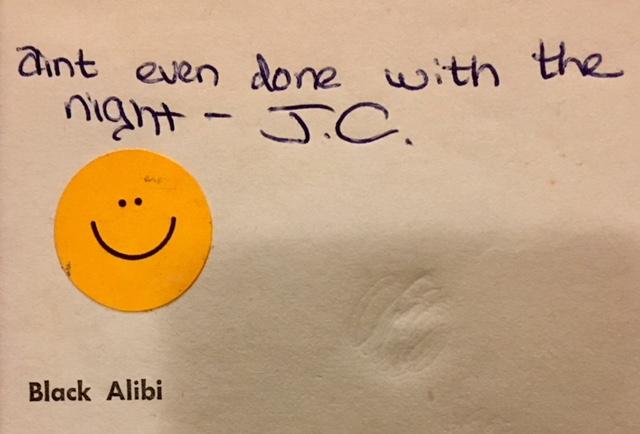
  • Black Alibi by Cornell Woolrich ~ in honor of Woolrich’s birth month

Nod to November

What happened in November? I finished physical therapy. But really, PT is not finished with me. I signed up for a 5k in order to keep the running alive. As soon as I did that I needed x-rays for the worst pain I’ve ever felt in my hip and groin. Like stabbing, electrocuting pains. Diagnosis? More sclerosis and fusing. Yay, me! In defiance of that diagnosis I then signed up for a 21k. I am officially crazy.
Here are the books finished for the month of November:

Fiction:

  • A Fine Balance by Rohinton Mistry (AB/print)
  • The Edge of the Crazies by Jamie Harrison
  • Ysabel by Guy Gavriel Kay
  • Beaufort by Ron Leshem

Nonfiction:

  • Gastronomical Me by M.F.K. Fisher

Series continuations:

  • No Villain Need Be by Vardis Fisher (finally finished!)
  • Mrs. Pollifax on Safari by Dorothy Gilman
  • Henry James: the Master by Leon Edel
  • I Will Bear Witness: the Nazi Years, 1942 – 1945 by Victor Klemperer

Early Review for LibraryThing: nothing. I jinxed myself by mentioning the book I was supposed to receive. Needless to say, it never arrived. So I never finished it. Ugh.

Beaufort

Leshem, Ron. Beaufort. Translated by Evan Fallenberg.  New York: Delacorte Press, 2008.

Reason read: Lebanon gained independence on November 22nd, 1943.

In a word, Beaufort is gritty. The military outpost Beaufort is a living nightmare for Israeli soldier Liraz, (better known as Erez), but yet he must defend it to the death. Twenty-one year old Erez commands the defense with thirteen boy-soldiers with insane courage, sharp wit and fierce loyalty. All around this crumbling and ancient fortress unseen enemies hide just waiting for the right moment to strike. And strike, they do. Erez is witness to death, up close and personal. In order to cope he and his men play a macabre game called “What He Can’t Do Anymore” where, when a soldier loses his life in battle, the survivors list all the things their fallen comrade will never do again. It’s a crude way of acknowledging his death as reality. By the end of Beaufort you will swear Leshem simply interviewed the real Erez and wrote it all down, word for word. Erez, crude and passionate, walks out of the pages in a blaze of glory and his words burn in the brain long after the last page is turned. I can why they made this into a movie.

Confessional: I have never done this before. Somehow I threw away all my notes for Beaufort. Which means I don’t have any favorite quotes to share, which is a shame because I know I had a few.

Author fact: to look at Leshem’s picture, you would never know at the time of Beaufort’s publication he was a deputy director in charge of programming for a television station. He looks like he should be in high school.

Book trivia: Beaufort is Leshem’s first novel.

Nancy said: nothing besides explaining the plot.

BookLust Twist: from Book Lust To Go in the no-brainer chapter called “Leavened in Lebanon” (p 130).