Are You There God?

Blume, Judy. Are You There God? It’s Me, Margaret. New York: Dell, 1970.

What woman in her 40s or even 50s doesn’t remember reading Are You There God? It’s Me, Margaret? Seriously. If you were anything like me, all you could focus on were the parts of the story related to sex and the human body. I remember being insanely embarrassed by “the cotton ball” incident. So much so that I didn’t even attempt it myself (although I was tempted, being so flat-chested and all). What I don’t remember is being that anxious to grow up. Maybe because in some ways when I was Margaret’s age I was already way ahead of her when it came to certain life experiences.

Margaret Simon is a well-rounded eleven year old who has just moved from Manhattan to suburbia New Jersey. She quickly makes friends with three other girls her age. All four of them are in a hurry to have breasts, get their periods, and kiss boys. Margaret learns about all these things by keen observation, but what she really wants to know in detail is religion. With her mother’s side of the family being Christian and her father’s side Jewish, Margaret doesn’t know what to be. She has been raised without a religion which her friends think is cool but Margaret disagrees. She is so desperate to fit in she feels she needs to decide on religion to be like everyone else. The irony is every night Margaret talks to “God” about her hopes and fears without really knowing who she’s talking to.

BookLust Twist: From  More Book Lust in the chapter called, “Best For Boys and Girls” (p 21). Yes, I double-dipped from the same chapter in one month.

Okay – since this book was (and still is) so freaking popular I am very surprised it hasn’t been made into a movie…something for the Oxygen or Lifetime channel. An after school special? Think about it – it covers sex, puberty, religion, interfaith marriages, morals, social class distinction…
Making of the Atomic Bomb

Rhodes, Richard. The Making of the Atomic Bomb. New York: Simon & Schuster, 1986.

I think I should feel more disappointed that I didn’t get through this book. And yet, I don’t. Quite simply put – I’m just not that into atomic bombs. I think I knew this would happen when I said I didn’t exactly see it as summer reading, despite the clever connection of the first bomb being testing in July…

Here’s what I know – The Making of the Atomic Bomb won a Pulitzer Prize, the National Book Award and the National Book Critics Circle Award. In other words, people liked it. A lot. I can also tell you it is a thick read. Over 800 pages long (and the pictures don’t count). I got through the first 50 and called it quits. Again, no regrets.

If I had been able to devote more time to The Making of an Atomic Bomb I would have found it to be a portrait of personalities ranging from scientists (Einstein) to political leaders (Roosevelt). I would have found it to be a commentary on the state of world economics (The Great Depression) and warfare (World War II). I would have found it to be scientific and philosophical, psychological and historical. All those things.

Believe it or not, I do have a favorite line from the little I read: “As he crossed the street time cracked open before him and he saw a way to the future, death into the world and all our woe, the shape of things to come” (p13). This was in the opening paragraph and sets the stage for science to unleash its dangers.
BookLust Twist: From Book Lust in the chapter called, “Bomb Makers” (p 42).

Eyes of the Amaryllis

Babbitt, Natalie. The eyes of the Amaryllis. New York: Farrar, Straus and Giroux, 1977.

This is a grade school book – one that I have never met. It’s part fantasy, part familiar and all cute. What captured my attention was Babbit’s understanding of the power of the ocean. Even though this is a book for children she captured the strength, the beauty, the danger, and the lure of the sea.

Jenny Reade is sent to Cape Cod to care for her grandmother Geneva, who has broken an ankle. Jenny is completely out of her element. Years earlier her sailor grandfather was lost at sea. Because Jenny’s father has never come to terms with losing his father he barely visits his mother, who has remained in their seaside house, and he has never brought Jenny to meet her grandmother. As a result Jenny has never seen the sea.
The story takes on a mystical air when Jenny’s true task comes to light. She is not there to care for Geneva while she is off her feet like her father thinks. She has been summoned to watch for her grandfather’s ghost ship. Geneva strongly believes that her dead husband will send her a sign from the depths of the ocean, so every night Jenny walks the beaches in search of such a sign.

Favorite line: “It takes what it wants and it will keep what it has taken, and you may not take away from it what it does not wish to give” (p 5). Babbitt is talking about the ocean, of course.

BookLust Twist: From More Book Lust in the chapter called, “Best For Boys and Girls” (p 21).

Incidentally, Babbitt is a Smith College alum.

Great Gatsby

Fitzgerald, F. Scott. The Great Gatsby. New York: Charles Scribner’s Sons, 1925.

Everyone knows The Great Gatsby, but the ironic thing is no one can figure out James Gatz Jay Gatsby. Every time someone saw me with this slim (182 page) paperback I was reminded of just how “great” Gatsby is, but no one could really tell me what it was about.

Consider this: the plot (set in the 1920s) is basically about a bunch of adulterous affairs observed by Nick Carraway. First, there is his second cousin, Daisy, and her husband, Tom. Tom is cheating with Myrtle. Myrtle is married to George Wilson, the drunk. Daisy is hooking up with Gatsby because five years earlier they had a thing and in Gatsby’s mind, he never let Daisy go.  The hook of the entire book is the mystery surrounding Jay Gatsby. For starters, that’s not his real name. He may or may not be wealthy, he may or may not be a war hero, he may or may not be a bootlegger, he may or may not be connected with organized crime, and he may or not be a murderer. He is a complex study in contradictions – throwing outrageous parties every weekend but not knowing enough people who would care enough to attend his funeral. Besides being an interesting portrait Jay Gatsby, The Great Gatsby is also a picture of society in the roaring 1920s, and a commentary on morality and the pitfalls of wealth.

Favorite lines:
“‘I’ve been drunk for about a week now, and I thought it might sober me up to sit in a library'” (p 46)…yeah, libraries have that effect on drunks.
“”No amount of fire or freshness can challenge what a man will store up in his ghostly heart” (p 97).
“She saw something awful in the very simplicity she failed to understand” (p 108).

Most shocking: Tom breaking Myrtle’s nose and the exclusion of Tom & Daisy’s three year old child, Penny, in the story.

BookLust Twist: The Great Gatsby gets a double mention. First, in Book Lust in the chapter called “Dewey Deconstructed: 600s” (mentioned for the teacakes) (p 73). Also in More Book Lust in the chapter called 100 good Reads, Decade By Decade: 1920s” (p 176).

Firewall

Mankell, Henning. Firewall. Trans. Ebba Segerberg. New York: The New Press, 1998.

I have to say it again. I think something got lost in the translation of this book.

Kurt Wallander is a Swedish detective trying to solve a series of mysterious deaths. At first the only common factor is the time frame in which these people died. A man falls dead after using an ATM, a cab driver is beaten to death, and someone has apparently committed suicide at a power station all within a matter of days. But, as the investigation continues pieces of the puzzle fall into place. Somehow the picture reveals an absurd terrorist plot.

What makes Firewall so entertaining is Kurt Wallander’s personality. He is a short tempered detective, good at what he does but not as great at being a divorced dad to his near-adult daughter. She finds him overbearing and lonely. I found Wallander and his Swedish police work very strange. For starters, Wallander is accused of not doing things by the book and for the most part those accusations hold true. Over and over he considers sharing information about the various investigations with his colleagues but over and over again he finds reasons not to. Also, computers connected to the crimes aren’t confiscated, potential witnesses and suspects aren’t detained for questioning, and despite rooms being searched several times, key evidence is not discovered right away. Case in point: an office was searched several times and yet Wallander finds a postcard under a computer keyboard days later.
I found some parts of Firewall predictable. Wallander is single. At his daughter’s urging he joins a dating service. Within days he gets a letter from a potential match. Right away I knew this “response” was trouble, for the letter is slid under his door – no return address or postmark. Wouldn’t Wallander have read how the service works and wouldn’t he have found a nondescript letter without a postmark a little suspect?
All in all Firewallwas a good vacation read. It was fast paced and highly entertaining.

Favorite line: “A person who died eventually became a person who had never existed” (p 7).

BookLust Twist: From More Book Lust in the chapter called, “Crime is a Globetrotter: Sweden” (p 59).

Scarlet Letter

Hawthorne, Nathaniel. The Scarlet Letter. New York: Literary Classics, 1987.

I had to write a book report on this in high school (who didn’t?) then I had to write a critical analysis complete with symbolic meaning and themes in college. I don’t remember what grade I got on the high school paper. Not to brag, but I’m sure it was an A because high school lit classes were easy. In college my paper received a B+/A- because a) I didn’t quote the professor teaching the class (he was an authority on The Scarlet Letter apparently), and b) I didn’t delve deeper in the sexual side of Hester. 19 year old me wanted to concentrate on sin and the effects of that sin on everyone. To me, that’s exactly what The Scarlet Letter is all about.

The Scarlet Letter opens with Hester Prynne being led to the stocks. She is the sinner and as a result is being publicly ridiculed. Her crime is having an adulterous affair that resulted in the birth of a baby girl. She not only won’t disclose the father of her child, but she won’t repent for her affair. She is condemned to wear the letter ‘A’ as a punishment, as a constant reminder to the community that she is an adulteress. While there is residual shame, Roger Chillingworth does not want the public to know Hester is his wife. There is honor in Hester’s scandal – because she refuses to give up the name of her lover. Dignity prevails and she outwardly bears the burden of shame alone. Her lover also shoulders the guilt of sin in his own way as he plays an important part of the community.

BookLust Twist: From More Book Lust in two different chapters. First, “Literary Lives: The Americans” (p 144). Second, “Wayward Wives” (p 231).

Morningside Heights

Mendelson, Cheryl. Morningside Heights. New York: Random House, 2003.

I need to start off by saying wordy books are hard for me to get into right away. It takes me somewhat longer to “feel” the story, if that makes any sense. Mendelson has a doctorate in philosophy and she has practiced law in New York City. Teacher, philosopher, lawyer, and now writer. Morningside Heights is her first novel. Maybe it’s the combination of all these professions that creates the need for lots and lots of words to set the scene, any scene. True, there is more than enough social commentary to analyze, but, there is also more than enough description as well.

Here’s one of my favorite quotes: “The oligarchs wanted to keep all the bourgeois pleasures for themselves, along with the money, while proletarianizing everyone else, squeezing people with overwork and low pay, corrupting the liberal political forms so that they only answered to cash” (p 120).

Morningside Heightsis the first of a trilogy of novels about an area of New York City called Morningside Heights. Like Astoria is a part of Queens, Morningside Heights is a neighborhood in Manhattan. For as long as anyone can remember it has been a quiet, affordable community but lately, as older residents pass away, their apartments are being sold to upscale “suits” creating an economy the lifelong tenants ca no longer afford. The story centers around Anne and Charles Braithwaite and their circle of family and friends. As the neighborhood changes so does the social structure that the Braithwaites have come to rely on. Everything they hold sacred – their culture – is compromised until finally they are forced to consider a new life…in the suburbs.

BookLust Twist: From Book Lust in the chapter called “New York, New York” (p 170). Also, from More Book Lust in the chapters, “Barsetshire and Beyond” (p 16) and “Maiden Voyages” (p 159). I disagree with this last inclusion. Maiden voyage implies first book, fiction or nonfiction. Morningside Heights is actually Mendelson’s second book. First fiction, yes. But, not first book.

Light That Failed

Kipling, Rudyard. the Light That Failed. New York: Doubleday, Page & Co., 1914.

I have to start off by saying seeing a swastika imprinted in this book gave me a start. This hated image got me thinking. What were Kipling’s political leanings? Was he actually a Nazi sympathizer? Even though the swastika in The Light That Failed was “backwards” or counter clockwise, I still questioned the meaning behind it. After doing a little research I discovered Kipling used the Indian symbol of good luck (typically paired with an elephant and a lotus flower – although my copy did not have either of these images). The Nazis adopted the swastika symbol for themselves in the 1920s, six years after my version of The Light That Failed was published.

This book was hard for me to get into, at first. The story didn’t roll off the pages as easily as other war-time novels. The Light that Failed follows the life of Richard Heldar, a soldier turned painter. The story begins with Dick as a child with his companion, Maisie, shooting a pistol by the ocean. This opening scene lays the foundation for the competitiveness they will share later in life. It also begins Dick’s never ending love for Maisie despite the fact they will have gone their separate ways by adulthood. Dick spends some time as a soldier in Sudan and makes some lifelong friends, but it’s after the war when he returns to London, England that the story really picks up. Dick comes home to be an artisit and to paint. His depictions of war become popular and his talent is exposed. Ironically, it is that same war that brought him fame that also brings his downfall.

Favorite lines, “Dick’s soul is in the bank. He’s working for cash” (p 64), and “I’m not going to belong to anybody except myself” (p 81).

BookLust Twist: From Book Lust in the chapter, “Balkan Specters” (p 31) although Bosnia is but a fraction of the plot.
ps~ Also, I should add – Because this book is out of copyright it’s available on the web.

Enemy

Child, Lee. The Enemy.New York: Delacourte Press, 2004.

If given the entire afternoon and evening I could have finished this book in one sitting. I loved it. It had just the right balance of good guy with a bad attitude; just the right amount of law and order verses crime and chaos. I can see why Pearl was mesmerized by the writing of Lee Child because I was, too.

The Enemy opens with a heart attack. A two-star general is found dead of an apparent heart attack. Within hours his wife is murdered. Within days two special forces soldiers are murdered, one at a time. At the center of each death is Jack Reacher, a complicated military cop. Ordinarily considered one of the best, suddenly Reacher is starting to look more like a suspect instead. Normally a loner, Reacher finds himself working with a young, female partner trying to clear his name. It is obvious he is being set up and Reacher will stop at nothing to get to the truth including going AWOL and much worse. The Enemy is peppered with military jargon and violence but not overwhelmingly so. Reacher has a likable character. He is human enough to do the wrong thing from time to time. How he gets out of the trickier situations really makes the story. I was fascinated from start to finish.

One thing I was really drawn to was the fact there were four murders (teeny spoiler there) and all four murders *seemed* to be staged. The general wearing the condom, Carbone’s over-the-top sex crime, Brubaker’s drug dealing…and…now, I really would be spoiling it if I said anything about the fourth murder!

Best lines, “They don’t like you, they don’t bring you coffee. They knife you in the back instead” (p 4). I saw this as premonition of sorts.
“My brother was a man horrified by anything less than the best” (p 75).

BookLust Twist: From More Book Lust in the chapter called, ” Lee Child: Too Good To Miss” (p 41). Nancy Pearl says it was Lee’s book, Persuader that sold her on reading everything else he wrote. She suggested starting with The Enemy since it’s the first Reacher book of the series. I agree.

Close Range

Proulx, Annie. Close Range: Wyoming Stories. New York: Scribner, 1999.

I am fascinated by Wyoming. Have been ever since I was a teenager. I think it started when a boyfriend of mine enthralled me with stories of Coffin Lake. It sounded so beautiful and wild and so far away. Close Range is a collection of short stories that take place in Wyoming. Here is a list of the short stories:

  • “The Half Skinned Steer” ~ a creepy story about an over-eighty year old man who travels from New England to Wyoming by car for his brother’s funeral. It’s an odd story because he and his brother weren’t close. Favorite line, “He wanted caffeine. The roots of his mind felt withered and punky” (p 29) and “He traveled against curdled sky” (p 34).
  • “The Mud Below” ~ a desperate tale about a man obsessed with bull riding because it’s all he knows how to do.
  • “Job History” ~ Literally, a fast-forward version of the job history of Lee Leland.
  • “The Blood Bay” ~ okay, I admit it. I don’t know how to describe this story. Just read it for yourself!
  • “People in Hell Just Want a Drink of Water”
  • “The Bunchgrass Edge of the World” ~ Girl talks to a tractor.
  • “Pair a Spurs” ~ favorite line, “I get the rough end a the pineapple every day” (p 153).
  • “A Lonely Coast”
  • “The Governors of Wyoming”
  • “55 Miles to the Gas Pump”
  • “Brokeback Mountain” ~ I think everyone knows this story, thanks to the movie.

Confessional: I read Close Range at the same time as Stillmeadow Road by Gladys Taber. Bad idea. Not because one made the other worse. It was just that they were too completely different books and the contrast made it difficult for me to concentrate.

Close Range: Wyoming Stories sets a very harsh, violent, sad landscape for its characters. Poverty and a sense of futility is in every story. Every situation is a lesson in survival and dealing with the crappy hand you have been dealt. Words like stark and bleak and depressed come to mind. The characters are born into a way of life that has barely any opportunity for change. There is no easy means of escape. The brutality of the landscape is matched only by the grit of its inhabitants.

BookLust Twist: From Book Lust in the chapter called, “Companion Reads” (p 64).

Up the Down Staircase

Kaufman, Bel. Up the Down Staircase. New York: Avon Books, 1964.

I admit it. I left work in a hurry. I didn’t clean up my desk and I didn’t pack my books. So, I had a weekend with nothing to read. True, I had some loose ends to finish up (Close Range turned out to be not my thing), but determining that didn’t take all weekend. Desperate for something that would be a quick read I found Up the Down Staircase by Bel Kaufman. Funny! I was supposed to read this sometime in May. Oh well. It ended up being a July 11th read.

In the spirit of every new-to-the-business, green educator, Sylvia Barrett is no different than all the rest. Every first year teacher can claim Up the Down Staircase illustrates his or her career. When Sylvia begins her first term in New York’s Calvin Coolidge high school she has nothing short of big dreams and great expectations. Within days she discovers her classes, her students, fellow teachers and the entire school administration are nothing like she imagined. Getting through to the students is an exercise in swimming in quicksand. Getting through to the administration is like screaming into the wind. In both situations Sylvia plods through with humor and grace. What makes this book such a pleasure to read is how the story is communicated. Through “intraschool communications,” homework assignments, suggestion box missives, and letters to a friend Sylvia’s teaching triumphs and tragedies come to life.

BookLust Twist: From Book Lust in the chapter called, “Teachers and Teaching Tales” (p 230).

Stillmeadow Road

Taber, Gladys. The Stillmeadow Road. New York: Harper & Row, 1984.

This was first published in 1962 and reissued in 1984. I like books that make a comeback. It is 1960’s quaint. Whimsical, even. Taber has a way of writing that is light and airy. There is no other way to describe it. Well, maybe it just seemed that way since I read it along side Annie Proulx’s harsh Close Range: Wyoming Stories. Whereas Proulx is arid and brutal and ugly, Taber is lush and sweet and pretty. Like, for example, I found it interesting that Taber glossed over everything involving her good, good friend Jill. They lived at Stillmeadow together. They did everything together. Yet, when Jill dies there is only a paragraph or two dedicated to the tragedy. It almost seemed as if Taber was skirting around her friend’s illness and death as a way to avoid talking about what Jill really meant to her.
Stillmeadow Road is a time capsule memoir about a homestead in Connecticut that Taber purchases with her friend, Jill. It’s all about country living, each chapter separated by the seasons. Month by month Taber lovingly describes life in a farmhouse by the weather, what’s happening in nature, how humans react to it all. Her observations focus on the trees, flowers, animals, and condition of the house throughout the changing seasons. Why do squirrels stay active throughout the winter? Why does it rain during dog shows? Why are storm doors so ugly? At the same time Taber injects social commentary about raising children, dealing with death, being neighborly, sorting out religious beliefs, remembering childhood…the story jumps between country-life observation and spiritual introspection.

A couple of favorite parts: “I do not know whether this happens to everyone, but I always have channeled great shocks into as many smaller ones as I can think of” (p 167), and “I have discovered if you take two steps forward and slip back one, you are sill a step ahead, which is a cliche but a true one” (p 169).

BookLust Twist: From More Book Lust in the chapter called “Cozies” (p 57).

Skull Mantra

Pattison, Eliot. The Skull Mantra. New York: St. Martin’s Minotaur, 1999.

This is the first piece of fiction I have read that has covered Tibetan culture in such great detail.

Shan Tao Yun is a former veteran police inspector – the perfect person to solve a murder. The clothing of the decapitated victim suggests he was either American or Chinese, and wealthy either way. With a delegation of American tourists arriving for a visit, the district commander is anxious to find the killer as soon as possible. Shan Tao Yun is enlisted except, there is one problem – Shan is currently serving time in a Tibetan prison for offending the Party in Beijing. He has been sentenced to the same hard labor as the Tibetan priests he reveres. Shan is given an ultimatum: find the killer or the priests get brutally punished. In the course of the investigation clues lead Shan to an illegal monastery, a mystical world of demons and spells, political upheaval, and historical tragedies bestowed upon the Tibetan people at the hands of China’s government.

This book definitely opened my eyes to the Tibetan culture. I am a big fan of Tibetan music and have seen several documentaries about the Chinese invasion, but Skull Mantra not only illustrated the struggles of the Tibetan people, but their mysteries as well. My favorite scenes involved Dr. Sung, the medical examiner. Pattison created a sarcastic, funny woman who wasn’t afraid to speak her mind. Here’s a tiny example: “A soiled cardboard box was on an examining table, resting on top of a covered body. He [Shan] turned away as Dr. Sung removed the contents of the box and leaned over the body. “Amazing. It [the head] fits.” She made a gesture to Shan. “Perhaps you would like to try? I know. We’ll cut off the limbs and play mix and match.”” (p 126).

BookLust Twist: From More Book Lust in the chapter called, “Crime is a Globetrotter: Tibet” (p 60).

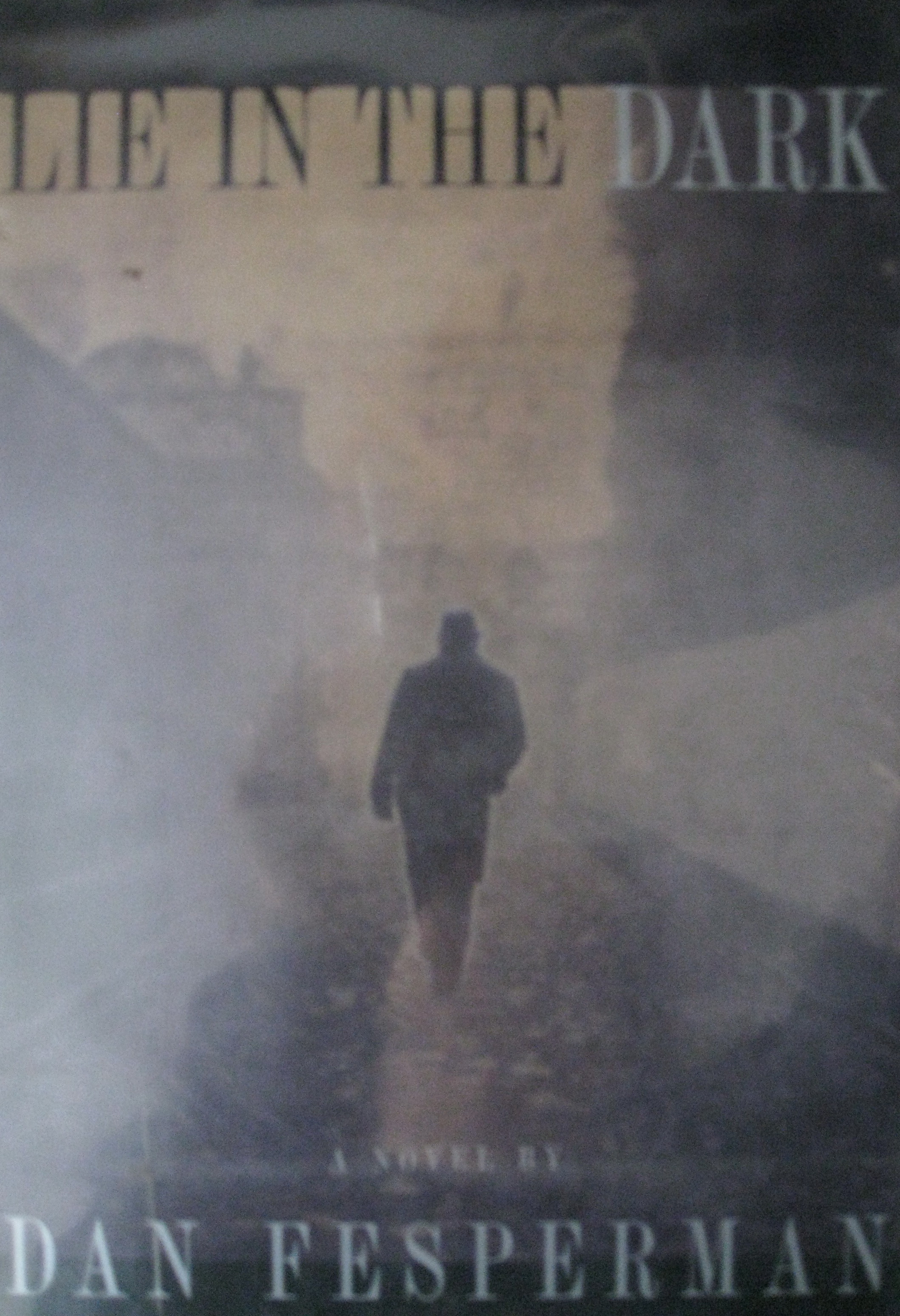
Lie in the Dark


Fesperman, Dan. Lie in the Dark. New York: Soho Press, 1999.

 I can remember this intense sadness when the civil war in Sarajevo broke out…the second time. It seemed like yesterday the Olympics were held there & it was a city of promise, of dreams come true.

Lie in the Dark is an interesting tale about life in war-torn Sarajevo and one police inspector’s fight to win his own private war. In the beginning of the conflict Vlado Petrics’s wife and infant daughter were allowed to escape to Germany. Vlado, as with all men of military serving age, stayed behind. He escaped being drafted into the military because of his employment as a policeman.
While investigating a murder Vlado is confronted with a much bigger scandal than he bargained for. Not knowing who to trust he works alone, unraveling the mystery while the civil war continues all around him. Woven into the plot are the harsh realities of what war can do to economics, politics, families, the landscape and the human spirit.

Right away I knew I would like this book. Fesperman does a great job describing the absurdity of investigating a murder in the middle of a war. As Fesperman says (p 2) “Vlado’s task was that of a plumber fixing leaky toilets in the middle of a flood.” It makes you realize that people will grasp and struggle for normalcy even if it doesn’t make sense.

Favorite lines: ” They never stopped retreating, ending up at the bottom of either a bottle or a grave” (p 5).
I found this next line profoundly sad: “It had taken the first few weeks of separation to rediscover her as lover, as something more than the wife and mother she’d become” (p 83).
“He felt himself beginning to deaden, to go numb and cold and dreary as he left the truth behind” (p 86).

BookLust Twist: From More Book Lust in the chapter “Crime is a Globetrotter” (p 59).

July Was…

DSCN0063

July flew by. I hardly knew where the month actually went. Here’s how it went for reading:


  • Bilgewater by Jane Gardam ~ lovely young adult book.
  • Blackwater by Kerstin Ekman ~ a dark story set in the woods of Sweden.
  • Finding Caruso by Kim Barnes ~ brotherly love set against sibling rivalry.
  • Citizen of the Galaxy by Robert Heinlein ~ Sci-fi story about a boy finding his way.
  • Chasing Vermeer by Blue Balliett ~ a young adult mystery.
  • Friend of My Youth by Alice Munro ~ short stories that center around women and their relationships.
  • Jackson’s Dilemma by Iris Murdoch ~ a muddled tale of twisted relationships with someone named Jackson in the middle…
  • Lie in the Dark by Dan Fesperman ~ whodunnit set in Bosnia.

For LibraryThing’s Early Review Program:

  • What We All Long For by Dionne Brand ~ previously published in 2003

Just for the fun of it:

  • Bobby Flay’s Mesa Grill:Explosive Flavors from the Southwestern Kitchen by Bobby Flay with Stephanie Banyas and Sally Jackson. Made several recipes out of this and loved every one.
  • The Food You Crave: Luscious Recipes for a Healthy Life by Ellie Krieger. Meant to make more recipes from this, but every one I tried was amazing.
  • Music of Coal: Mining Songs from the Appalachian Coalfields (Introduction by Jack Wright). This is actually a two cd/book set published in 2007. Because Natalie Merchant contributed to the compilation I just had to check it out.
  • Kim Lyons’ Your Body, Your Life by Kim Lyons & Lara McGlashan