September ’10 is…

September is the storm before the calm – literally since Earl is raging up the coast! School is back in session. A new hire is on the premises. Things are a little crazy right now. Here are how things look for books at the moment:

  • Tinker, Tailor, Soldier, Spy by John Le Carre ~ in honor of the Cold War starting in September
  • Between Parent and Child by Haim G. Ginott ~ in honor of National Family Month
  • Where Big Foot Walks: Crossing the Dark Divide by Robert Pyle ~ in honor of Bigfoot being spotted on September 16, 2007 in Pennsylvania (yay for the Northeast Sasquatch!)
  • Wild Life by Molly Gloss ~ a companion read to Where Big Foot Walks: Crossing the Dark Divide.
  • Moo by Jane Smiley ~ in honor of school being back in session

I’m also in the process of reading a few food books and an Early Review book. More on all of that later.

August ’10 was…

August. The last gasp of summer before everyone starts thinking about back-to-school clothes, back-to-school school supplies and back-to-school attitudes. I know my college has already adopted the attitude now that the athletes and international students have started arriving on campus. August was quiet compared to July’s crazy traveling. But, for books it was:

  • The All-Girl Football Team by Lewis Nordan ~ Nordan is my emotional train wreck.
  • Zarafa: a Giraffes’s True Story, from Deep in Africa to the Heart of Paris by Michael Allin ~ in honor of Napoleon’s birth month even though Napoleon is a teeny part of the story
  • Zel by Donna Jo Napoli ~ the clever, psychological retelling of Rapunzel.
  • The Meaning of Everything: the Story of the Oxford English Dictionary by Simon Winchester ~ in honor of National Language Month, but I didn’t finish it. Not even close.
  • Undaunted Courage by Simon Winchester ~ a really interesting account of the Lewis & Clark Expedition.
  • A Separate Peace by John Knowles ~ probably one of my all-time favorite books.

For LibraryThing and the Early Review Program: I started reading Play Their Hearts Out by George Dohrmann. Review coming in September.

For fun I read:

  • fit = female: the perfect fitness and nutrition game plan for your unique body type by geralyn b. coopersmith ~ the cover of the book didn’t use capital letters so neither did i.
  • Nutrition for Life: The no-fad, no-nonsense approach to eating well and researching your healthy weight by Lisa Hark, Phd, RD & Darwin Deen, MD ~ this is a really, really informative book.

My Formerly Hot Life

Dolgoff, Stephanie. My Formerly Hot Life: Dispatches From Just the Other Side of Young. New York: Ballantine Books, 2010.

Funny, funny, funny. I loved My Formerly Hot Life and not because I am over 40 and formerly had a hot life. I am over 40 but I would call my past “fireside cozy” and leave it at that. Dolgoff, however, claims to have had a hot life. Her book is all about how “formerly” her life has become now that she is over 40 and married with children. She dishes out how reality bites when gravity takes over. Sexy clothes don’t fit anymore, bars are too loud and it takes forever to plan a girls night out. Yet, all that doesn’t matter because you’re too tired to go out anyway.
My Formerly Hot Life is not just all fun and games. There is a serious side to Dolgoff as well, especially when she delves into subjects such as aging parents, the question of having kids at a Formerly age, health issues, and ultimately recognizing your own mortality. These are sections of the book I hope she keeps because as fun as it is to poke fun at sagging breasts and lumpy butts, there is this not-so-fun side to aging that shouldn’t be ignored.

What’s a Mother (in-law) To Do?

Angelich, Jane. What’s a Mother (in-law) To Do?: 5 Essential Steps to Building a Loving Relationship with Your Son’s New Wife. New York: Howard Books, 2009.

I have to start off by saying this was a May 2009 Early Review book from LibraryThing. That means roughly a year ago I was supposed to read and review this book. I received it in the mail today. Today. June 26th, 2010. I am assuming this has already hit book stores and doesn’t really need my promotion. However, because I respect the program and the review process I am still going to write about it.

My first impression of What’s a Mother (in-law) To Do? was, “wow, this is short!” Indeed, it’s an odd little book. Hardcover yet the size of a paperback and only 130 pages long. As a librarian I automatically went to the back pages to look for a bibliography of sorts. If this is a book that involved research I expected to see a works cited page. There wasn’t one.

In the end I was disappointed by What’s a Mother (in-law) to Do? because I felt like it was something any old MIL could write: all she would have to do is fill 131 pages with a variety of stories from other in-laws (mothers and daughters), sprinkle in a few personal experiences, and add a layer of common sense advice.  What would have been really interesting (and cater to a larger audience) is if Angelich researched building a relationship with your child’s new spouse. In other words, remove the specificity of the subject and make it work for any in-law relationship.

I honestly couldn’t take What’s a Mother (in-law) To Do? seriously. Angelich talks about conducting research but doesn’t provide real sources. She mentions “research conducted” but there’s no weight behind like what kind of research it was or who conducted it. She talks about taking advice from experts but doesn’t elaborate on how she solicited this advice. In short, I didn’t believe her “research.” This is a book I would have picked up and immediately put back, writing it off as “fluff” or pop psychology. I would recommend it for someone with a fair to mediocre relationship with their new daughter-in-law, but not to someone with a strained or terribly difficult one.

House on Oyster Creek (with spoiler)

Schmidt, Heidi Jon. The House on Oyster Creek. New York: NAL Accent, 2010.

Probably the most distracting aspect of Schmidt’s style of writing was her almost fanatical need to portray Henry as the older, colder, and uncaring husband. I get it. Schmidt wants the reader to cheer Charlotte on when she meets a man more to her liking, more to her temperament, more to her everything. You aren’t supposed to hate the damsel in distress. You aren’t even allowed to dislike her. In order to make the damsel’s potential affair acceptable said damsel’s husband needs to be bad. Very bad. If the husband is really awful you wind up begging, praying for that knight in shining armor. In an attempt to make Henry bad I think Schmidt went overboard. As a result Henry became a caricature of the very worst. In the first chapter alone (we’re talking 13 pages) there were over 24 negative words associated with Henry. Here are some, but not all, of the words and phrases used to describe Henry’s words, actions and demeanor. I left out dialogue with Charlotte:

  • irritation
  • seething
  • contempt
  • staunch
  • “heart seemed to harden” (p 3)
  • bleak
  • rebellious
  • stark
  • “nothing pleased him” (p 6)
  • fury
  • bitter
  • “fit to kill” (p 7)
  • “real hatred” (p 8.)
  • rigid
  • suspicion
  • jeer
  • scorn
  • irritated
  • contemptuous
  • darkening
  • “glance was poison” (p 11)
  • infuriating
  • infuriated
  • “patience stretched to breaking” (p 13)
  • shuddered
  • “spasm of disgust” (p 13)
  • icy

To make matters worse, on the other side of this marriage is Charlotte and her demure, sweet, sensitive, caring, loving, “made of empathy” personality. Schmidt is not as fanatical about driving that point home. But, you get the point just the same.

However…once I got beyond page 14 I loved The House on Oyster Creek. Charlotte is a little self-righteous at times but after putting up with Henry all those years she deserves to. While House on Oyster Creek focuses on Charlotte as she makes her way the book is really about the entire community she joins. Schmidt is extremely accurate when introducing Charlotte to the new community. when it comes to a tight-knit community there will always be this Them and Us attitude. You could be in a community for over 30 years and just because you are the first generation to do so, you are still the newcomers in town. The more generations you can brag of, the more clout you have in the community.

Of course, I had favorite lines that I really hope Schmidt keeps in the book, but I won’t quote them here.

I have to admit I never rooted for Charlotte to have an affair. There was something so broken about Henry that I think Charlotte owed it to him to work it out. When Darryl ends up marrying someone else I was happy. I can admit the story ended exactly how I wanted it to end.

June ’10 is…

June is a weird month for me. I might have a Monhegan plan. I’m not sure. The one thing I know about June is that there will be music. Plenty of music and books. As two constants in my life, I doubt anyone is honestly surprised by that remark. Music and books. For music it is the lovely Rebecca Correia at the Iron Horse in Northampton. June 11, 2010 at 7pm. That same weekend it is the eternally talented Sean Rowe at the DreamAway Lodge in Beckett. June 13, 2010 at 8pm…I think. There is Phish somewhere in there as well…I know, don’t say it.

For books it is:

  • Master and Commander by Patrick O’Brien ~ in honor of National Ocean month
  • Hatchet by Gary Paulsen ~ in honor of Adventure fiction month
  • Confessions of Nat Turner by William Styron ~ in honor of Virginia becoming a state in June
  • Happenstance by Carol Shields ~ in honor of June being the most popular month to get married in…
  • Writing Dangerously: Mary McCarthy and Her World by Carol Brightman ~ in honor of Mary McCarthy’s birth month.

For LibraryThing’s Early Review program:

  • The House on Oyster Creek by Heidi Jon Schmidt

For the fun of it:

  • Master of Your Metabolism by Jillian Michaels

May ’10 was….

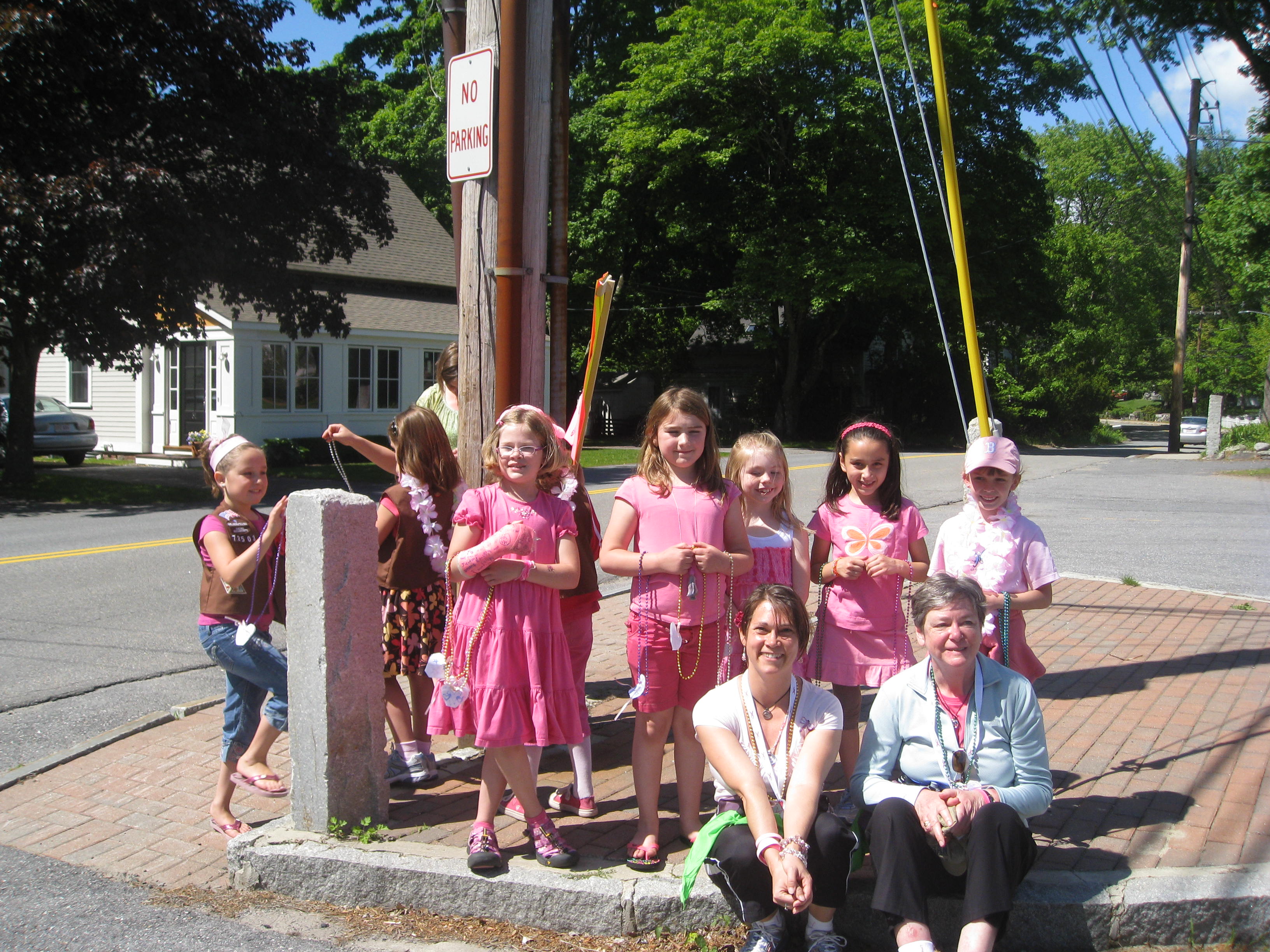
Pretty in Pink

May. What to say about May? For obvious reasons it wasn’t the month for reading. I still haven’t mastered walking and reading without doing both at an excruciatingly slow pace!

  • Endless Love by Scott Spencer ~ apparently this was made into a movie. I am curious how they handled the anal sex scene…
  • You Make Me Feel Like an Unnatural Woman: Diary of a New (Old) Mother by Janet Newman ~ funny, funny, funny (although, an odd choice to honor Mother’s Day)
  • Wobegon Boy by Garrison Keillor ~ my first Keillor book. Now I know what all the fuss is about. Another funny one!
  • Zorba the Greek by Nikos Kazantzakis ~I admit it. I gave up on this after 50 pages. I moved onto a Jillian Michaels book. More on that next month….

For LibraryThing & the Early Review Program:

  • Fundamental Weight Training by David Sandler
  • Fall Asleep Forgetting by Georgeann Packard ~ this should be a movie. It was weird but good!

For the hell of it:

  • Homer’s Odyssey by Gwen Cooper

Fundamental Weight Training

Sandler, David. Fundamental Weight Training: 102 Exercises to Start Training. Champaign: Human Kinetics, 2010.

I had many false starts trying to write a review for this book. My hesitancy directly related to my love-hate relationship with content and how it was arranged. There were many, many things to love about this book…and yet I found a few things to hate.

On the didactic side of things Fundamental Weight Training has it all. Simple weight lifting exercises for beginners that take into consideration using a professional gym, a home gym, or even just a person’s own body weight. There are simple black and white photographs to illustrate each exercise, showing correct form and posture. There is even sections on stretching, warming up and cooling down – all essential elements of working out and avoiding injury. In addition, Sandler goes above and beyond to explain gym etiquette and terminologies with a chapter called, “weight room language and protocol” (p 7). My favorite section was “Give it a Go” which gives the reader the opportunity to put lesson to life and try a series of exercises dedicated to a particular group of muscles like arms, for example.

But, here is where the hate comes in. The “Give it a Go” section assumes a person has every weight machine and accessory at his or her disposal. The exercises are a mix of free weights and machines usually found at the gym. Organization-wise, Fundamental Weight Training would have been easier for me if the “Give it a Go” section was combined with the “Take it to the Gym” and “Train at Home” sections rather than separate section.

A final frustration is, as with any exercise book, a person would need to not only memorize the names of each exercise but the proper way to perform them. Holding a book while trying to flex the a dumbbell is not all that easy. Flipping from the “Give it a Go” page to the section with the exercise can be frustrating.

All in all, I enjoyed reading Fundamental Weight Training. After reorganizing the information on my own I have a great training plan that I can take to the gym or use at home.

Fall Asleep Forgetting

Packard, Georgeann. Fall Asleep Forgetting. New York: Permanent Press, 2010.

I have a love-hate relationship with books like Fall Asleep Forgetting. The problem is Packard’s writing is too good. Like a delicious meal I couldn’t slow down when it came to eating it up; devouring whole chapters at a time. What’s wrong with that? In truth, this is a book meant to be savored slowly. The writing is delectable, deliriously rich and expressive. One minor distraction is character focus is a little out of focus. I would have preferred Claude as the obvious heroine rather than swirled in a mishmash of other incredibly strong personalities. Because Fall Asleep Forgetting really is about Claude and her strange involvement with a married couple, Paul and Sloan, that fact really needs to be teased out. Paul is dying and his wife is bisexual and mentally ill…sort of. Claude is caught up in their relationship until it becomes her relationship, her obsession, but as I mentioned before, she is not the only one. There is nine-year-old Six and her parents Rae and Sonny, Cherry the transvestite owner of the trailer park where most everyone lives and her partner Barton, and elderly Mr. and Mrs. Saugerties. Each one of these characters has a unique and tantalizing story.

Quotes that I really hope are kept: “Once your parents hate you for who you are, the scorn of others in mere child’s play” (p 42), and “I see now that equal parts repulsion and attraction make for the most voracious form of lust” (p 124).

Personal note: I was really excited to see e.e. cummings quoted at the beginning of the chapter called “The Curving Support of Feather Pillows” (p 129). ‘Milly and Maggie and Molly and May’ is a great poem. My only argument would be against calling it a poem about just Maggie because Milly, Molly and May all had important parts.

Man From Saigon

Leimbach, Marti. The Man From Saigon. New York: Doubleday, 2010.

This was an interesting read for me due, in part, to the fact I was reading The Making of a Quagmire by David Halberstam at the same time. Leimbach’s descriptions of Vietnam mirrored Halberstam’s almost perfectly. The rainy, muggy climate, the poverty stricken communities, the brash (trying-to-be-brave) military presence, but above all, the reporters trying to capture the atrocities of politics and war while remaining mentally sound and physically safe. Of course, Leimbach’s story is a bit less intense with the addition of an adulterous romance threaded through the bomb blasts and sniper attacks. Susan Gifford is a green reporter trying her hand at covering the U.S. involvement in Vietnam. When she is taken captive by the Vietnam Communists, the Vietcong, along with her photographer, Hoang Van Son, the plot thickens. Susan is suddenly confronted with a profound and deep relationship that was originally a professional partnership forged out of necessity.

There are, of course, a few lines that became my favorite. The one I hope makes it into the final copy is “It was a feeling of being trapped and desperate, of having been cornered by her own mistakes” (p 6). Been there. Done that.

No Instructions Needed

Hewitt, Robert G. No Instructions Needed: An American Boyhood in the 1050s.

Okay. I have to get this off my chest. I was curious about the publisher for No Instructions Needed so I did a simple Google search. On my first run-through I found an ArbeitenZeit Media website with design and content credit going to Robert G. Hewitt. On my second attempt to find other authors published through ArbeitenZeit Media I found Gail Hewitt and L.G. Hewitt. Did I stumble across a family-run vanity publication? Am I writing a review as a vehicle for marketing purposes? Does that mean no one else would publish their work? That bothers me because when a writer finds someone who is willing to publish his or her words it’s as if that publisher is saying, “I believe in your craft.”

Robert G. Hewitt learned of the demise of his high school and was flooded with memories from his boyhood. As a salute to his youth he wrote No Instructions Needed, a collection of remembrances of the 1950s complete with cute illustrations. Everything from Christmas to Hewitt’s first car is covered with great nostalgic fondness. As mentioned by other reviewers, nothing really happens in No Instructions Needed. The memory lane is not paved with problems and the end result is a simple, yet pleasant read.

Nothing Right

Nelson, Antonya. Nothing Right: short stories. New York: Bloomsbury, 2009.

Antonya Nelson’s humor comes at you in a slow and subtle way, almost like a Mona Lisa sly smirk. The entire collection of short stories is what a peepshow is to an adolescent boy; the reader is allowed in the living rooms and lives of the characters for only so long before the curtain is dropped and the scene goes dark. Nothing Right leaves you wanting more and always asking, “what happened next?” The perfect hook for a sequel. The one drawback to leaving so much to the imagination? The characters didn’t stay long enough for me to truly garner an interest in them personally. I wanted to know what happened next in terms of plot but not character. All of the stories circle around family dynamics; the good, the bad and most certainly, the ugly.

  • “Nothing Right” (title story) starts tongue-in-cheek although the reader is yet to see the irony. Hannah stares at brochures about taking care of babies while her own baby, 15 year old trouble-maker Leo, sees the district attorney  about a bomb threat he made at school. Hannah’s troubles only deepen when Leo goes on to father a child…
  • “Party of One” is a rather bizarre story about a woman trying to convince a married man to end his affair…with her sister.
  • “Obo” bothered me the most. I didn’t understand Abby at all. A pathological liar, she convinces her professor to take her to his wife’s family home for Christmas; all because she has fallen in love with the professor’s wife.
  • “Falsetto” – Michelle tries to cope with her parents’s devastating car accident while caring for her much younger brother and simultaneously re-evaluating her perfect relationship with her boyfriend.
  • “Kansas” is about a family’s drama when 17 year-old niece Kay-Kay disappears with her three year-old cousin.
  • “Biodegradable” is about a married woman who has an affair with a scientist.
  • “DWI” is about a married woman who loses her lover in a drunk-driving accident.
  • “Shauntrelle” is about a married woman who admits to an affair thinking her lover will be happy with taking her in. She is wrong and loses both men.
  • “Or Else” is about a man who misses the life he had with his childhood friend’s family so much that he pretends he is still part of their lives.
  • “We and They” is about a family in competition with their neighbors until they adopt a child who sides with the enemy.
  • People People” is about two sisters who couldn’t be any more different from one another.

Then Came the Evening

Hart, Brian. Then Came the Evening. New York: Bloomsbury USA, 2009.

At first glance I was afraid of this book. The description sounded devastating: Bandy Dorner returns from Vietnam to find his home burned to the ground, his wife having an affair and somehow he is responsible for killing a cop…Yikes.

I took a long time to read Then Came the Evening. I found myself savoring passages, rereading pages. Brian Hart has a way with words and the sentences he forms with them are devastating. In a word Then Came the Evening is grim. It is lips pressed together on the face of reality. It is looking for truth in a shattered mirror. Bandy, once a loser, is always a loser whether he tries to be or not. While his wife, Iona, and son, Tracy, come back  to him, they returned to him broken and ruined. His wife is no longer his wife and his son was never his son. History ties Iona to Bandy and haunts their future. DNA ties Tracy to Bandy and forces a relationship. In the struggle to make sense of their life together Bandy, Iona and Tracy never completely trust one another. They dance around old feelings and new guilt. Their future together looks gray and foreboding. Even the landscape is sullen and unsatisfying.

There was only one instance that bothered me. Bandy and his son are watching television, trying to have a conversation beyond talking about the weather. This is their first night together and are talking about their health problems and physical limitations. Tracy asks Bandy, “What about you? The last time I saw you, you were a beast.” (p 120) What last time? Does he mean he’s seen pictures of his father when he was healthy? When Iona left with her lover she was pregnant. Bandy didn’t even know he had a son until Tracy was 18 years old. When, exactly, was the last time Tracy saw his father?

Edited to add: Someone pointed out to me Tracy saw his father in prison (thanks for catching that). Here’s what bothers me now – why was that scene so forgettable? Why didn’t I remember it? Was it because it made me uncomfortable?

Dec 09 is…

December 2009 is promising to be an interesting month. I’m taking Kisa to the island for Christmas (his first winter visit ever – we’ve already consulted L.L. Bean twice). Doctors are weighing in on serious subjects (yours and mine) and I await every word with caught breath. It’s not always about me, but the waiting is just the same.
For books it is a simple month:

  • Tiepolo’s Hound by Derek Walcott in honor of December being the best time to visit the Caribbean.
  • Tortilla Curtain by T. Coraghessan Boyle in honor of Iowa becoming a state (Boyle was part of the Iowa Writers Workshop. He was also born on December 2nd).
  • Perma Red by Debra Magpie Earling in honor of Native American literature month.
  • Wonderboys by Michael Chabon in honor of Pennsylvania becoming a state.
  • Walls Came Tumbling Down by Babs Deal in honor of Alabama becoming a state.

I don’t think I have any nonfiction for the month. Strictly imaginary but oddly enough, nothing about Christmas this year. For LibraryThing’s Early Review program I found out I am supposed to receive Then Came the Evening a first book by Brian Hart. I snuck a peek at some Library Journal / Amazon reviews and this promises to be a heartbreaking story.

November 09 was…

November was a very up and down, all over the place month. I started the month of November by worrying about breast exams and pap smears and ended it stressing about unanswered tests. I started the month worrying about Thanksgiving and ended it by wishing time with family would never end. In between I gave up my sirsy plate, rewrote an entire assessment plan, made a new friend, walked away from heartache, closed the door on an old chapter, and discovered a guilty pleasure. Speaking of guilty pleasures. For books it was:

  • Just So Stories by Rudyard Kipling ~ childrens book. I read the stories about the alphabet and the first letter. Very cute.
  • Dingley Falls by Michael Malone ~ 560 pages of sexy, funny, soap-opera-like, over the top fun!
  • An Invitation to Indian Cooking by Madhur Jaffrey ~ a great reference tool for those who like Indian cuisine (yum!)
  • Last Lion: Winston Spencer Churchill – Visions of Glory 1874 – 1932 by William Manchester ~ 900+ page biography on part of Winston Churchill’s life.
  • The Plague by Albert Camus ~ in honor of Camus’s birth month (& a reread).
  • Last Best Place: a Montana Anthology edited by William Kittredge and Annick Smith ~ just exactly what it sounds like, an anthology about Montana.

For the fun of it I banged out Caddie Woodlawn by Carol Ryrie Brink in one night, thanks to a Phish show. If Kipling’s book is for children I would call Brink’s book for grade schoolers…

For LibraryThing & the Early Review program I finished Ostrich Feathers by Miriam Romm. There was a lot of heart and soul poured into the writing of this book! I also read and reviewed Penelope Holt’s The Apple. While both Early Review books covered the Holocaust (one nonfiction, one fiction) their styles were incredibly different. I found The Apple to be more soul-piercing, if that makes sense.

Note: Barbara Kingsolver came out with a new book on November 3rd. It has been torture not to run out and buy a copy for myself!