Anatomy of a Murder

img_43561Traver, Robert. Anatomy of a Murder. New York: St. Martin’s Press, 1958.

If you want to get technical about it this was my first book of December – considering the first two were read while it was still November. A technicality, I guess.

Anatomy of a Murder was written in the 1950s by Robert Traver. From the moment I started reading it I couldn’t put it down. 439 pages went by in a blur. I read before bed, when I first woke, on the drive into work, on my lunch break, waiting in line at the grocery store…It had me hooked from the very first sentence. It’s no wonder this novel became a movie. For starters, take the author – Robert Traver was the pen name for John D. Voelker who happened to be a lawyer and a judge in addition to being a fantastic writer. Secondly, Voelker used a real life murder than took place in the Upper Peninsula of Michigan. True stories are always fascinating.

So, here’s the story (now that I’ve set the stage, so to speak): Paul (Polly to his friends) Biegler is an ex-D.A. turned public defender set out to prove his client, Frederic Manion, murdered a bartender in a moment of insanity. Proving the insanity isn’t the only challenge of the case. Biegler must also prove Manion’s wife was raped by the bartender (and thus creating the moment of insanity) when all evidence surrounding Mrs. Manion’s attack is not admissible in her husband’s trial. The entire story is so well written you never want it to end.

Some of the many, many lines and phrases I found great:
“gently drunk” (p 13).
“Juries, in common with women drivers, are apt to do the damndest things” (p 39).
“I consider jealousy the most corrosive and destructive of all emotions and I long time ago made up my mind that I refused to be jealous of anyone or anything. Life is simply too goddam short” (p 73).

One last comment. I always thought that lawyers (of any kind) needed to show judges the utmost respect both in the courtroom and in chambers. Right? Well, someone needs to explain the scene on page 244 where Polly is in Judge Weaver’s chambers. Picture this, the Judge has just lit a pipe and Polly sits, “one leg over the arm of [his] chair.” I don’t even sit that way in my mother-in-law’s house!

BookLust Twist: From Book Lust in the chapter, “What a Trial That Was!” (p 243).
Dangerous Friend

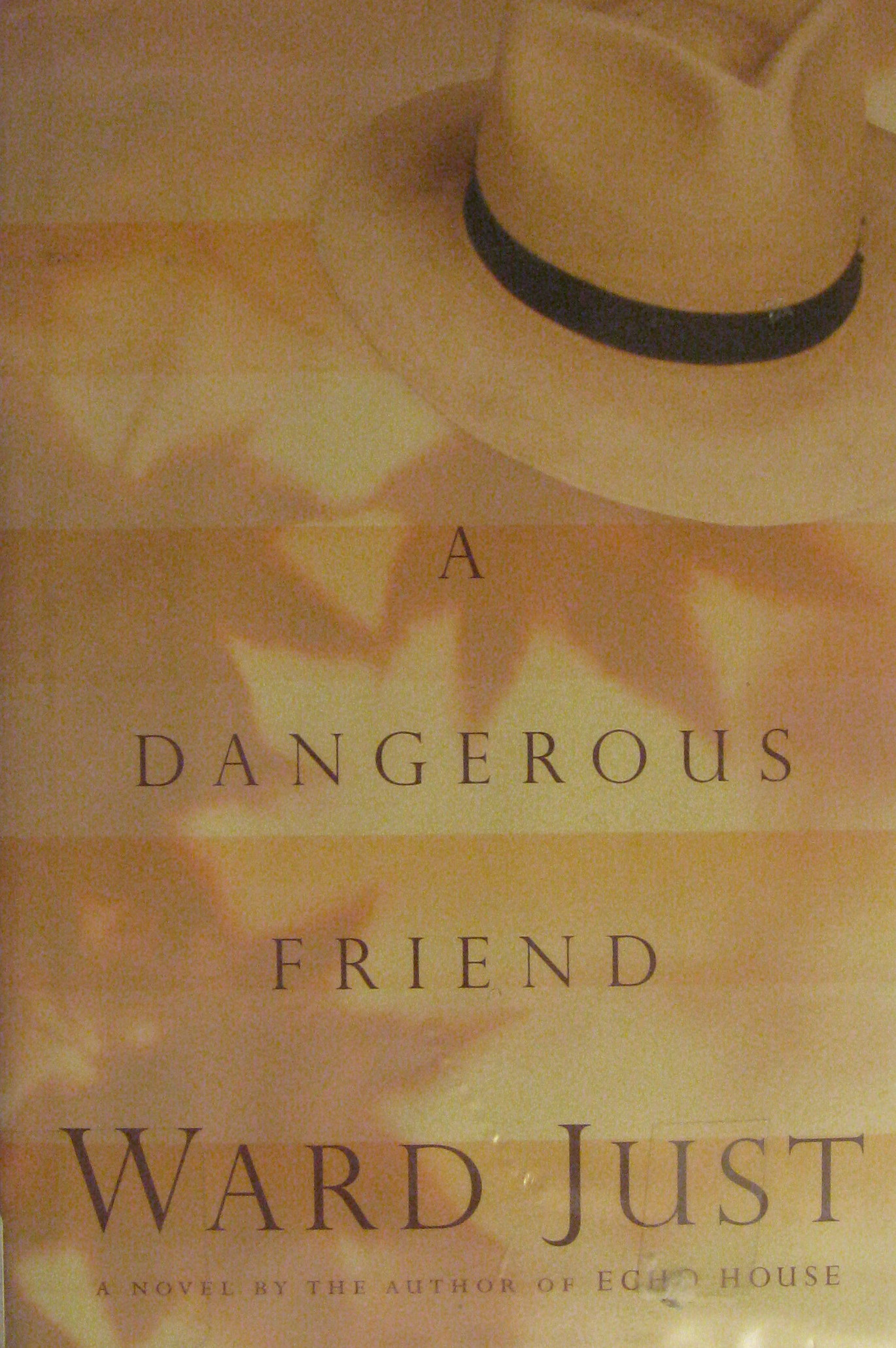
Dangerous FriendJust, Ward. A Dangerous Friend. Boston: Houghton Mifflin, 1999.

This is the companion read to The Quiet American by Graham Greene. I have to say it was interesting to read one man’s book in honor of someone else. But, back to Ward Just. Just was born in December, hence the addition of A Dangerous Friend. If it isn’t clear, I read The Quiet American because it was so similar to A Dangerous Friend. It just made sense to read them together.

A Dangerous Friend takes the reader to Vietnam, 1965. Sydney Parade is a man bored with his Connecticut life. In search of something bigger than himself he leaves his wife and daughter for the jungles of Saigon. While his intention is to be part of a foreign-aid operation building bridges, administering agriculture education, and facilitating supply delivery, Sydney soon discovers war is war no matter which side you are on. The depths of conflict strike his moral heart and leave him struggling to survive any way that he can.

A couple lines that I liked:
“…we were imprisoned in our own language, tone deaf to possibility” (p 4)
“The answer to chaos is repetition” (p 73).

BookLust Twist: From Book Lust in two different chapters: “Companion Reads” (p 64), and “Ward Just: Too Good to Miss” (p 135). Also, mentioned in the introduction (p xi).

Quiet American

Greene, Graham. The Quiet American. New York: Viking Press, 1956.

This has come up twice for my December readings – once because of Ward Just’s birthday (don’t ask), and once because it is a companion read to Ward Just, again don’t ask. I’ll explain all that when I get to Ward Just’s book later this month week.

Like my friend who started decorating for Christmas, I started reading my December picks on 11/23/08. I couldn’t help myself. I had wanted to fit in Just So Stories by Rudyard Kipling but my library’s version was not the complete works. In addition it was missing the two crucial stories Nancy Pearl specifically pointed out. Rather than disrupt the flow of order I moved onto December…a week early!

This was a story of two battles. An English reporter is sent to cover a war-torn Saigon. While there he falls in love with Vietnamese woman. His love is challenged when an American from Boston falls in love with the same woman. There is a real war raging on the periphery, complete with bombings and mass murders, while at the center is a battle over a woman. The interesting twist to this story is how the story makes the reader feel towards the two men and how that changes over time.

Best lines: “I shut my eyes and she was again the same as she used to be: she was the hiss of steam, the clink of a cup; the was a certain hour of the night and the promise of rest” (p 5). That is such an achingly beautiful line!
“You cannot love without intuition” (p 13).
“The possession of a body tonight seemed a very small thing – perhaps that day I had seen too many bodies which belonged to no one, not even to themselves” (p 65-66).
“For a moment I had felt elation as on the instant of waking before one remembers” (p 205).

BookLust Twist: From Book Lust in two different places: in the chapter “Companion Reads” (p 64), and “Ward Just: Too Good To Miss” (p 135).

December is…

img_00281December is one of the longest months in my opinion. But, it is also one of the most festive, thanks in part to the 25th & 31st. December is also the return of the Hot Chocolate Run, the return of the awesomely awesome Rebecca Correia (to the Iron Horse) and for reading books it is:

  • Anatomy of Murder  by Robert Traver in honor of John Jay becoming the first Chief Justice in this month (I’ll explain at review time).
  • Quiet American by Graham Greene in honor of Ward Just’s birthday (I’ll explain that in a second).
  • Dangerous Friend by Ward Just in honor of Ward Just’s birthday. I had always been told to read Quiet American with Dangerous Friend so that’s what I’m doing.
  • Family Affair  by Rex Stout in honor of his birthday.

And if there is time…

  • I’m a Stranger Here Myself  by Bill Bryson in honor of his birthday.

So, I’m celebrating author birthdays more than real life birthdays. What’s up with that? Not really sure I know myself….

November Was…

Death of Spuke
November was an amazing election, the slow death of Spuke, an incredible Thanksgiving meal, a few birthdays missed, more houses than I care to admit to seeing, more paperwork than I care to admit to reading, and last but not least, a little bit of music (Sean!). We didn’t get the house and I had to take a few days to get over that…even though I wasn’t 100% in love with the house. How weird is that? Ah well.

For books read, here’s the list:

  • Behind the Scenes at the Museum by Kate Atkinson ~ I went back and forth about this book…almost as much as the plot did.
  • The Darling by Russell Banks ~ Loved, loved, loved this book – full of suspense and great characters.
  • As I Live & Breathe: notes of a patient-doctor by Jamie Weisman ~ read this in one day!
  • Passionate Nomad: The Life of Freya Stark by Jane Fletcher Geniesse ~ such an amazing biography!
  • A Continent for the Taking: the Tragedy and Hope of Africa by Howard French ~ Very similar to The Darling. Same time period, same “characters” and events.
  • Best Essays of the Century edited by Joyce Carol Oates ~ while I only read a sampling of essays they were all good.
  • The Bronte Myth by Lucasta Miller ~dry and long.

For the Early Review Program (yay!):

  • Beyond Belief: Finding the Strength to Come Back by Josh Hamilton ~ really fast but amazingly good read.

For fun:

  • Bridge to Terabithia by Katherine Paterson ~ a great story from my childhood about friendship. This was on my challenge list. I just decided to read it out of order one day.

Nine books…sort of. I’ll have a confession for next month 😉

Beyond Belief

Hamilton, Josh. Beyond Belief: Finding the Strength to Come Back. New York: Faith Words, 2008.

Do not expect Beyond Belief  to be eloquent or a great literary masterpiece. It is what it is – a straightforward, simple, eyt heartfelt account of one athlete’s fall from grace and subsequent redemption through religion. Drafted right out of high school and given a salary of 3.96 million, one can hardly anticipate fancy prose from Josh Hamilton. Instead, what lies in the 257 pages (with help from ESPN senior writer Tim Keown) is a humble account of his life as an athlete, drug addict, and finally, a man of faith.

Here are the lines I hope they keep, “in the vicious cycle of drug use, crack is the endgame. It eats you up from the inside out” (p 149), and “I understand that, and I expect that. My past invites that” (p225).

Bronte Myth

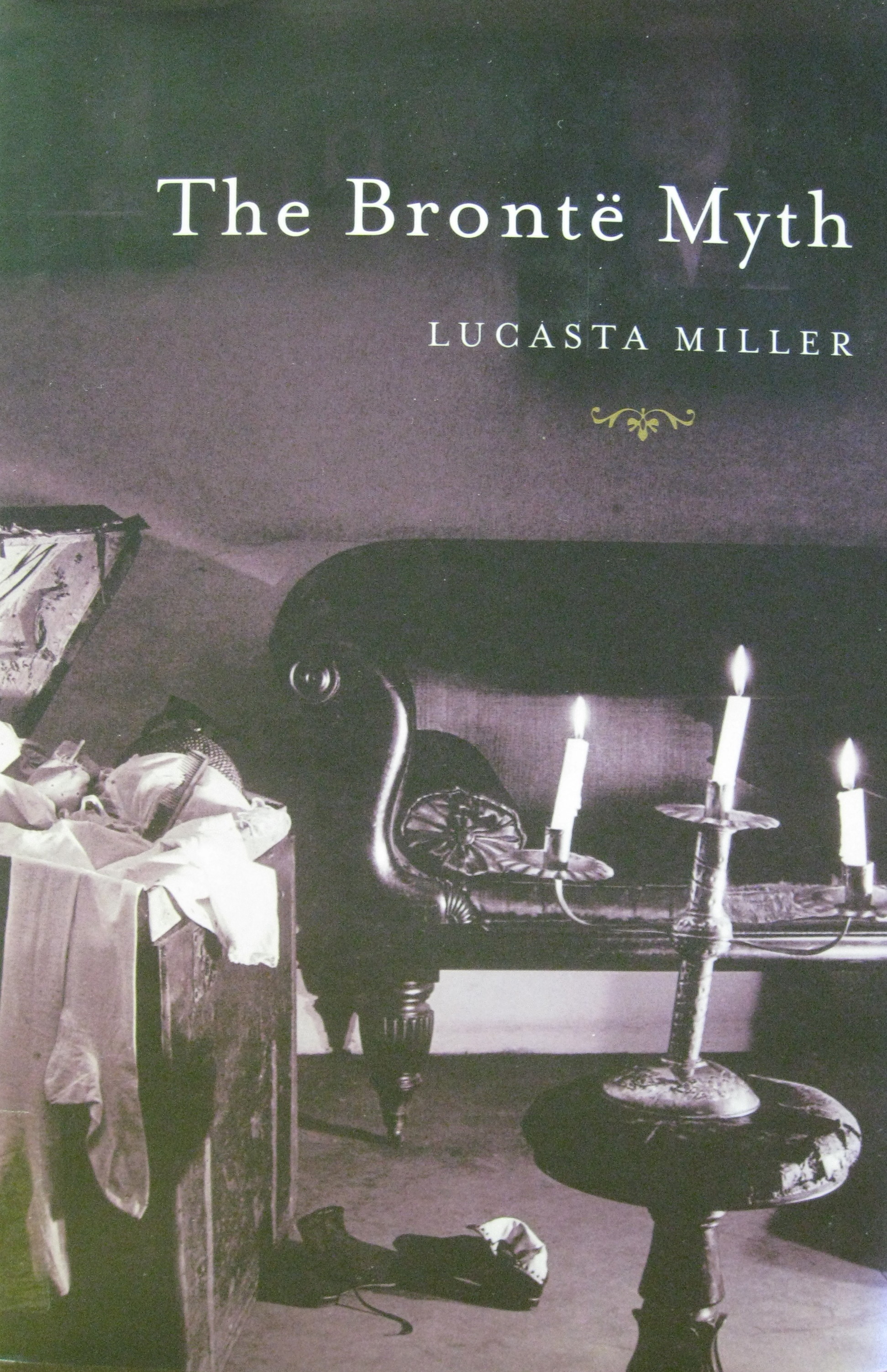
Bronte mythMiller, Lucasta. The Bronte Myth. New York: Alfred A. Knopf, 2004.

In honor of British Literature month I added The Bronte Myth to November’s reading list. From the very beginning I was intrigued about this book; Much like how the Bronte sisters themselves invited an aura of intrigue from the moment they emerged on the literary scene. When they first began writing they, like any other authors out there, wanted desperately to be taken seriously. In an era where women couldn’t so much as travel alone the three sisters took on androgynous pseudonyms to in an attempt to hide their gender. Only these pseudonyms attracted too much attention once the sisters started to publish. The more they tried to hide their identities the more reviewers, critics, and the general public started to speculate on who they really were, not as authors, but as members of their society. Following the speculation came accusations and wild rumors -created to fill in the gaps of each sister’s true personality. Lucasta Miller attempts to unravel the mystery and kill the myths that surrounds the Bronte women. While Miller does an extremely thorough job I found the reading to be both dense and dry as a result.

Passage that made me think: “…Gaskell’s belief that though Currer Bell might be morbid, Miss Bronte was the soul of feminine delicacy” (p 59).

BookLust Twist: From More Book Lust in the chapter, “Literary Lives: the Brits” (p 146).

ps~ sorry about the huge-ness of the pic. It’s just such a beautiful cover that I couldn’t bear to shrink it!

Best American Essays

Oates, Joyce Carol, ed. The Best American Essays of the Century. Boston: Houghton Mifflin, 2000.

As bloggers we cannot help but be reminded that November is National Novel Writing Month. It’s as if there a reminding hope that writing these one-three paragraph diatribes could somehow be transformed into something as concrete, or as interesting, as a full blown novel. I squirm with discomfort every time someone says I should write a book. While my stories are interesting…to a point, I don’t see a need to make them more than what they are: tiny bubbles of thought designed to pop (and ultimately, hopefully) go away when released.

Anyway. This isn’t about me and my nonability to write. This is about the complilation of essays from those who can.
Best American Essays of the Century wraps up the creme de la creme of essay writing from 1901 – 1997. Beginning with Mark Twain (“Corn-pone Opinions”) and ending with Saul Bellow (“Graven Images.”) As part of the Book Lust Challenge I read the following essays:

  • “Stickeen” by John Muir ~ “…for many of Nature’s finest lessons are to be found in her storms” (p 32).
  • “Corn-pone Opinions” by Mark Twain ~ “We are creatures of outside influence; as a rule we do not think, we only imitate” (p 1).
  • “A Law of Acceleration” by Henry Adams
  • “The Devil Baby at Hull-House” by Jane Adams
  • “The Crack-up” by F. Scott Fitzgerald ~ Life was something you dominated if you were any good” (p 139).
  • “The Ethics of Living Jim Crow: an Autobiographical Sketch” by Richard Wright
  • “Sex Ex Machina” by James Thurber ~ “Every person carries in his consciousness the old scar, or the fresh wound of some harrowing misadventure with a contraption of some sort” (p 157).
  • “Letters from a Birmingham Jail” by Martin Luther King, Jr.
  • “The Brown Wasps” by Loren Eisley
  • “A drugstore in Winter” by Cynthia Ozick

BookLust Twist: From Book Lust in the chapter called, “Essaying Essays” (p 80).

The Darling

Banks, Russell. The Darling. New York: Harper Collins, 2004.

I hate using words like “gripping” and “suspense-filled” to describe a book, but this time I can’t help it. The Darling was both of those things and much, much more. Once I started reading it I dropped every other book and concentrated on devouring the words of Russell Banks. While his plots are always over the top I like that hairy edge of reality and suspension of belief.

It’s a political thriller, a sweeping epic spanning the decades of one woman’s life, and a social commentary on Africa, racism and greed. It’s all of these things. Dawn Carrington is Hannah Musgrave who is also “Scout.” Dawn/Hannah/Scout is a woman with a past as complicated as her many names. Brought up by affluent, almost snobby parents as Hannah she is drawn to the underworld of political terrorism as Dawn. On the run after being indicted for a bombing gone bad, Dawn flees to Liberia and, by marrying a government official, becomes Missus Sundiata, her fourth recreation. Told from future to past and back again Dawn/Hannah takes you on her unapologetic journey through deceit, corruption, power and humanity.

Part of the reason why I liked The Darling so well is because it was written by a man. Russell Banks is able to capture the voice of a woman as a wife, mother, and an individual fiercely protective of her independence and individuality. Even if she doesn’t know who she really is. The first person voice is reminiscent of Barbara Kingsolver’s Taylor Greer or Margaret Atwood’s Handmaid.

Favorite lines:
“I was not a natural mother. Was not programmed like most women with a mother’s instincts and abilities…It’s as if I was, and still am, missing the gene” (p 171).
“But how I wished I were invisible. My white skin was a noise, loud and self-proclaiming” (p 177).
“I woke just before dawn with a boulder of rage lodged in the middle of my chest and a desire to break someone’s skull with it” (p 236) – that sounds like something I would say!
“That’s the real American Dream, don’t you think? That you can start over, shape-change, disappear and later reappear as someone else” (p 255).

Another section I had a love-hate relationship with was Hannah/Dawn’s father passing away from a stroke. The detail of his death was almost too painful to read, having watched my father slip away much in the same way.

BookLust Twist: From More Book Lust in the chapter “Men Channeling Women” (p 166).

Passionate Nomad

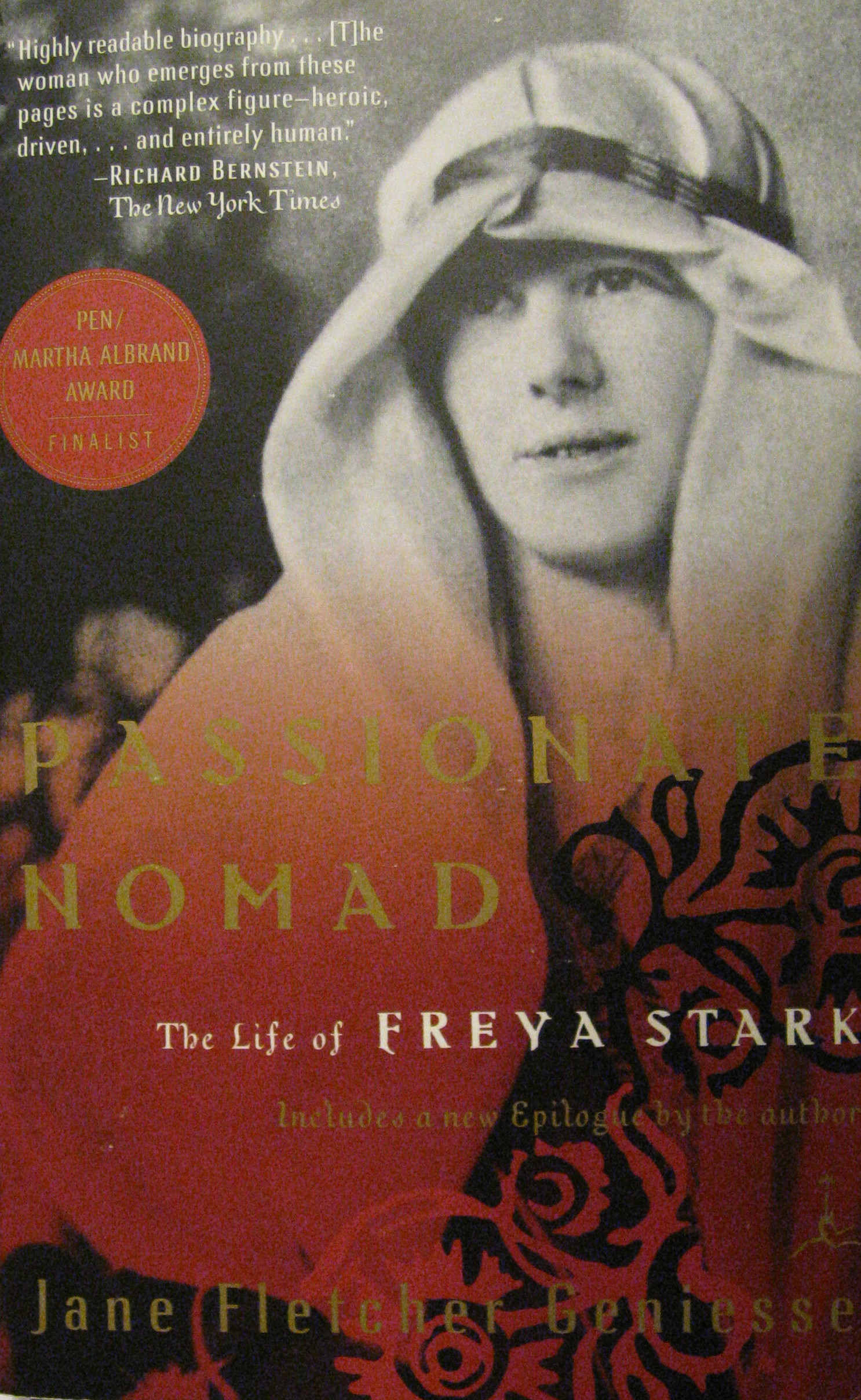
img_4236Geniesse, Jane Fletcher. Passionate Nomad: The Life of Freya Stark. New York: Modern Library, 2001.

This has been hanging around the house for over a year now. I had no idea it was even on “the list” until now. Someone gave me a copy with the recommendation, “read it. It’s good. You’ll like it.” Okay. So, in honor of National Travel Month I put Freya on the list (as soon as I found out it was even on the list).

Freya Stark was an amazing woman. Not because she explored uncharted territories. Not because she dared to go where even the bravest of men hadn’t. Not because she had no regard for her own well being. Not even because she was an expert Arabist. She was an amazing woman because she dared, period. We hear about the glass ceiling and what women even today are tolerating. Freya faced all that and more.
Geniesse weaves a convincing autobiography of Freya Stark using letters to and from Freya, journals, interviews, but mostly from Freya’s own library of books written about her experiences. Freya was a prolific writer and so Geniesse had plenty of material to draw from. The final product is a fascinating account of one woman’s rise to recognition through exploration and encourage, especially during one of the most volatile times of our history – World War II.

A few favorite passages:
“One suspects that all her life Freya carried some degree of rage…” (p 23).
“A telegram from Freya requesting that a tin bath be shipped into the interior of Yemen was not unusual” (p 156). You go girl!
“Wherever she went to find solitude on this great, empty earth, from nowhere emerged some form of life, human or otherwise, to share the loneliness” (p 217).
“in the middle of the night she was awakened by the tinkling of a music box being played close to her ear” (p 250).

BookLust Twist: From Book Lust in the chapter, “Lady Travelers” (p 143). I am excited to think I will be reading some of Freya’s own works (eventually), – from this same chapter. Maybe next year.

Continent for the Taking

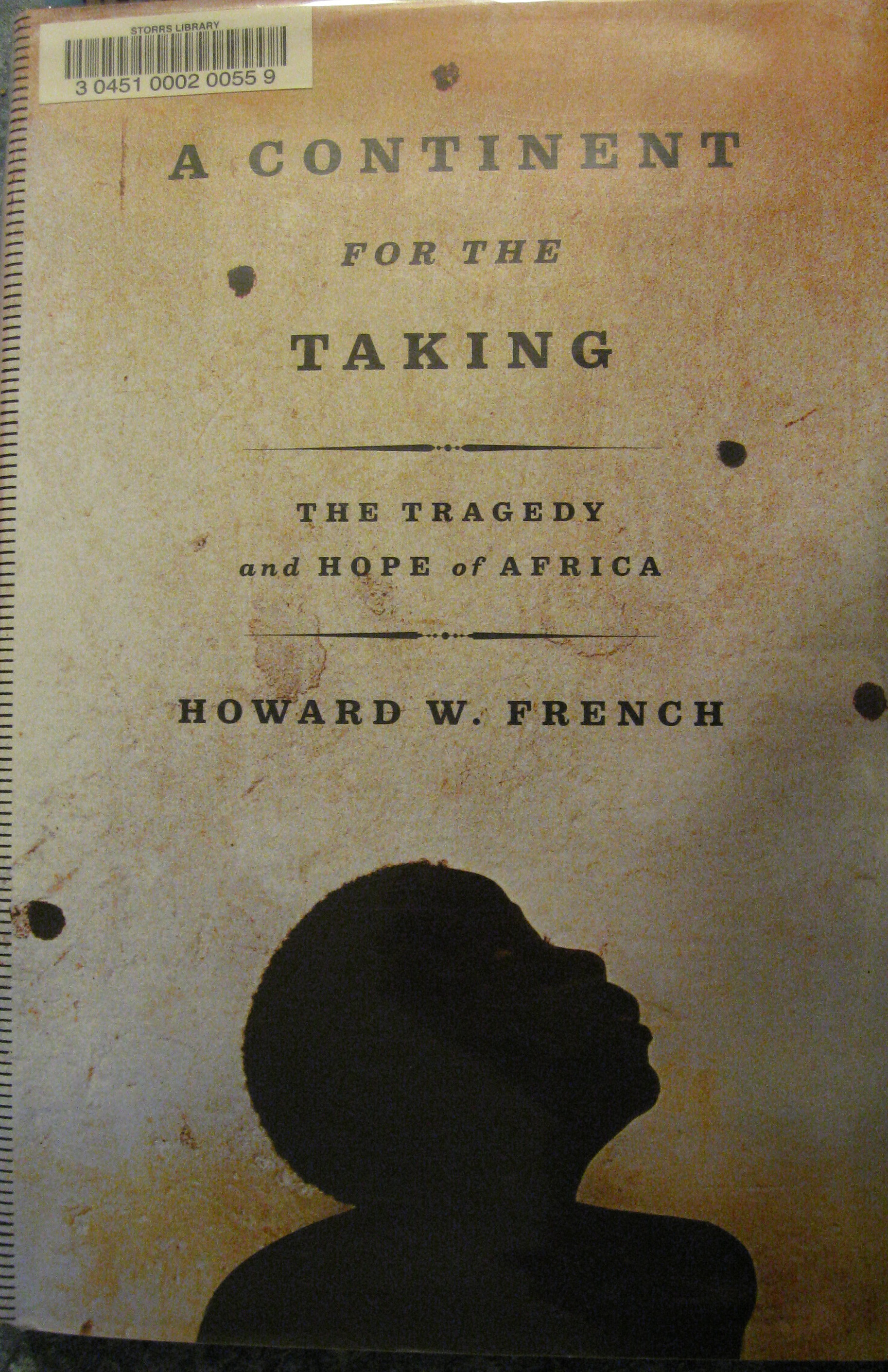
img_4235French, Howard W. A Continent for the Taking: The Tragedy and Hope of Africa. New York: Alfred A Knopf, 2004.

Howard French’s portrayal of Africa is both professional and passionate. He is scholarly and sentimental. There is a deep knowledge about, and an undeniable kinship with, this continent yet French is able to objectively portray it all. He takes the reader through the events of horrific genocide as well as the equally deadly outbreaks of AIDS and Ebola diseases. French skillfully demonstrates how political infrastructures prove to be volatile and fragile yet Africa’s deep seeded cultural roots remain unfailing.

For me, this was a hard read. I simply couldn’t wrap my brain around the threat of senseless violence everyone, regardless of race, age, caste, or sex, had to endure. When these attacks rained down no one was safe. Survival depended on the ability to outwit, outrun, outhide the attacker.

Passages that struck:
“For Mariam, Africa would forever be home, the place where she returned to recharge” (p 5). Despite its unflinching violence, political unrest, and never-ending poverty there is an allure.
“The advantage of a good travel companion goes beyond plain company; his real value is in the kind of moral encouragement he provides…” (p 83).

BookLust Twist: From More Book Lust in the chapter called, “Africa: A Reader’s Itinerary” (p 4).

As I Live & Breathe

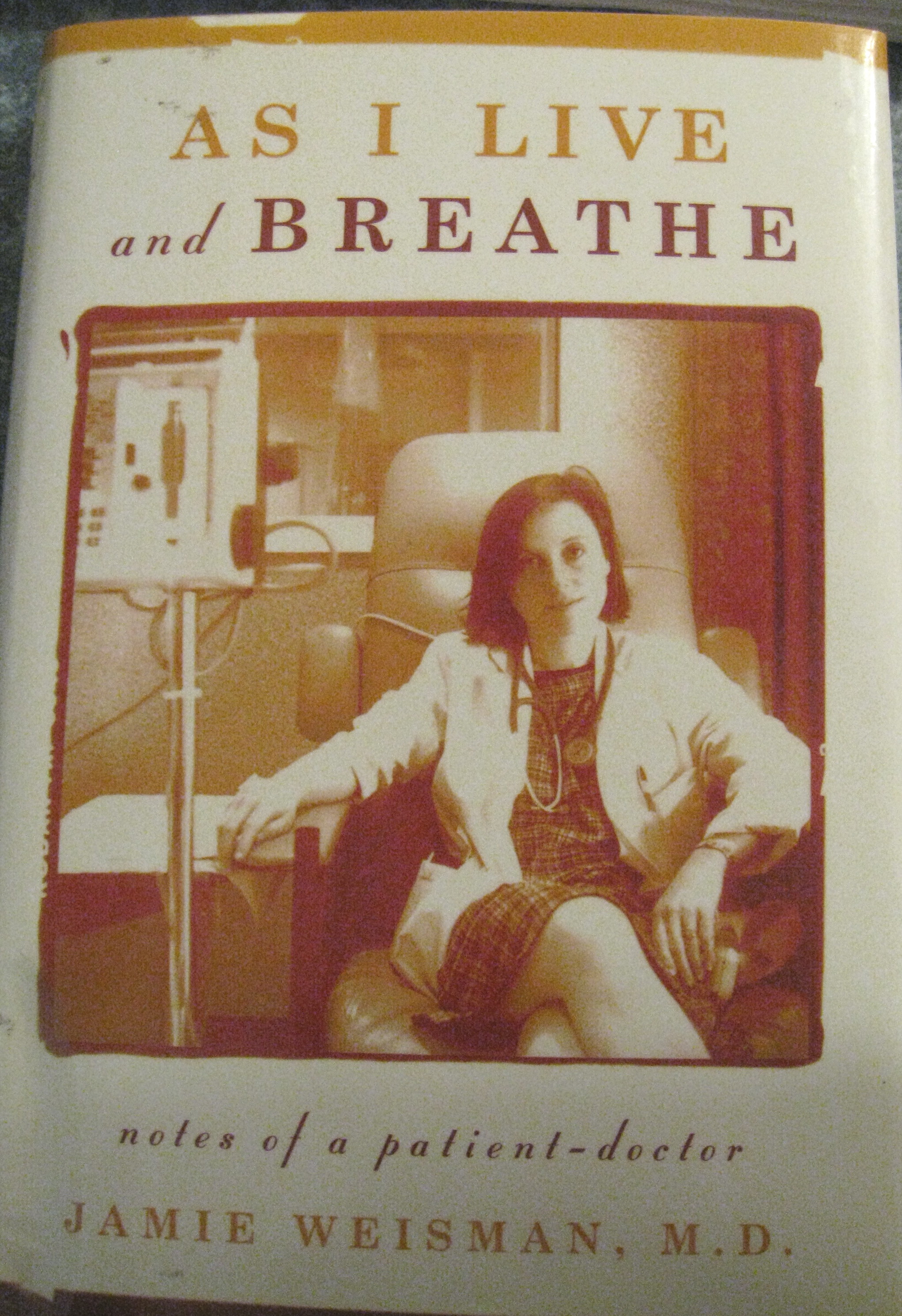
img_4234Weisman, Jamie. As I Live and Breathe, notes of a patient-doctor. New York: North Point Press, 2002.

In honor of National Health Month I decided to read As I Live and Breathe. I always find memoirs interesting when the author is more than your average individual. Who doesn’t? Dr. Weisman also has a talent for words which makes her unique story all that more compelling.

Dr. Jamie Weisman is a unique woman. While living within the confines of her illness she chose to do something about it, she joined the medical profession. As she says in her memoir, “”Now that I’ve finished medical school, I know what all those names mean, what diseases they describe, but you cannot know what they are as an illness until you see them in a patient” (p 15). Not only is her condition (congenital autoimmune deficiency disorder) rare and confusing, but her duality of patient and doctor gives her an interesting perspective- from bedside manner of doctor to bedridden patient. Because she is able to really know what the patient is experiencing she can deliver the empathy necessary for individuals really suffering.
My only real disappointment was the organization of the chapters. Dr. Weisman jumps around, remembering patients and her own childhood at random. I would have prefered a more chronological accounting. The last two chapters of the book, “begotten” and “begetting” are warmer and more personal and as a result seem a departure from the more clinical previous chapters.

Favorite blurbs:
“Our diseases overwhelm us at the strangest times” (p 16).
“I knew no happy lawyers” (p 31).

BookLust Twist: From both Book Lust and More Book Lust. In Book Lust in the chapter called, “Physicians Writing More Than Prescriptions” (p 185), and in More Book Lust in the chapter called, “Other People’s Shoes (p 181).

Bridge to Terabithia

Paterson, Katherine. Bridge to Terabithia. New York: Crowell, 1977.

I remember reading this in grade school. No, I take that back. Someone read it to me as “quiet time” in grade school. Then, the movie came out. When Kisa rented it I discovered I had been mispronouncing “terabithia” for years (tera-beeth-ia instead of tera-bith-ia). Not my fault since someone else read it that way.

One of the problems of seeing a movie and then reading the book is the danger of making comparisons to the visuals on the big screen. Because I couldn’t remember the plot from 32 years ago that’s what happened to me. I kept seeing the movie in my mind as I read the words. Either way, it’s a really cute story.

Jesse Aaron is a loner who lives inside his little world of solitude and art. His family is large and boisterous and often times, Jesse doesn’t feel understood by anyone, especially having three sisters. When Leslie Burke moves in next door Jesse is determined to ignore her, too. Soon he discovers they have more in common than he would like to admit. Leslie is creative, smart and a tomboy who can run faster than he can. Eventually they are inseparable friends. Jesse learns more than he bargains for by befriending Leslie.

What I found most compelling is that Paterson wrote this book for her son after he loses a friend to a lightning strike. On the dedication page she indicates her son insisted her name be included.

BookLust Twist: From More Book Lust in the chapter, “Best for Boys and Girls” (p 22). Note: Pearl indicates Bridge to Terabithia would be more suitable for girls, but I think it would be equaling interesting to boys.

November Is…

Giant
November is completely out of whack – already! I posted a review and then realized I hadn’t even listed out everything I plan to read. Woops! Truth be known, I hadn’t really decided what I wanted to read this month (hence the silly delay). But, this is what November is: November is when I wanted to turn on the heat. It actually came on 10/24 (at 56 degrees), but maybe now I’ll turn it up…to 60. This November marks the first time in my life I am not planning anything for the holidays (watch me cave and change my mind in the next two weeks). November is a marriage forever stuck at 22. November is (hopefully) a month of music. November is also the attempt to get a lot of reading done since it is National Novel Writing Month. Here’s the list:

  • Behind the Scenes at the Museum by Kate Atkinson (in honor of first novels) -already finished and reviewed!
  • A Continent for the Taking by Howard W. French (in honor of the best time to visit Africa).
  • The Darling by Russell Banks (in honor of Transgender month*, but, conveniently, also about Africa).
  • Passionate Nomad by Jane Geniesse (in honor of National Travel Month – or one of them, at least!).

and if there is time:

  • As I Live and Breathe: Notes of a Patient Doctor by Jamie Weisman (in honor of National Healing Month).
  • Battle Cry of Freedom: the Civil War Era by James M. McPherson (in honor of November being the month the Civil War ended).

And a few “goals” such as they were: getting my car fixed & getting life as I know it back on track. Period.

*None of the books I will be reading in honor of Transgender Month actually are about people of transgender. Nancy Pearl has a chapter called “Men Channeling Women” in More Book Lust (p 166), but since National Men Channeling Women month doesn’t exist (yet), I thought this would be a good tongue-in-cheek substitute.

Behind the Scenes at the Museum

Atkinson, Kate. Behind the Scenes at the Museum. London: Black Swan, 1996.

November is writing month and to celebrate I decided to read something from Nancy Pearl’s chapter called “First Novels” (Book Lust p 88)…in two days!
Behind the Scenes at the Museum was honored as a Whitbread Book of the Year and received such words of praise as remarkable, impressive, entertaining, quirky, colorful, humorous, ambitious, unusual, lively, provacative, promising, witty, enchanting, sassy, astounding…I could go on (and on). With reviews using words like those how could I not expect to love it, want to love it?

From the very beginning Behind the Scenes draws the reader in. Told from the point of view of young Ruby Lennox…(before she is even born) there is humor and sarcasm. Her voice reminds me of the wise-alec baby on Family Guy (sorry, the name escapes me). Ruby is omnipresent, giving the reader insight on every thought, feeling, dream, nightmare her family has.
The alternate chapters (told in third person) give the backstory of Ruby’s mother’s life during the second Great War. The writing is not as humorous, nor as witty as when Ruby gets to speak. Over all the reading is a rollercoaster of ups and downs, twisting you through life’s crazy moments.
Favorite lines:
“She walks out, saying nothing, but inside, a silent Scarlett rages…” (p 22).
“…but how can time be reversible when it gallops forward, clippity-clop and nobody ever comes back. Do they?” (p 210).

All and all I wasn’t as wowed as I thought I would be. Maybe it’s because Ruby’s story isn’t the main focus after all. While she tells the story it’s more about her mother, Bunty, and the generations of women before her. It’s interesting to note there is always a war going on in some capacity and Ruby seems to always be walking in on her father having sex with someone other than his wife!

BookLust Twist: From Book Lust in the chapter called “First Novels” (p 88). But, I said that already.