
 Talking at me. Everyone is talking at me. G says let’s negotiate. He has dollar signs for eyeballs and greed is in his back pocket. He thinks he can whore me out for a price. K says I’m outta here and good riddance. Middle finger raised on a gentleman’s fist. Head held proud with a fukc you behind the smile. A is offering advice as a friend yet I cannot hear what she says. My husband is offering strategy as a partner. Take ’em for all they’re worth. Don’t sell yourself short. Where have I heard that before? The head honcho is calling me dude. Am I in his back pocket? What should I do? I can’t even ask what would Jesus do without offending someone…mostly myself. The only religion that can help me now is the one called confidence. The big dog can no longer bite because that dog is me. Bigger than what I planned on, bigger than who I am right now. Big man on campus. This is what you wanted. They say its a marriage. New wife…new life, right? How many things can I go about changing in my big corner office?
He says I’m tough on people. That I expect too much and I’m pushing buttons. Better than pushing you. Did I push you? Did we throw cups of hot, scalding coffee at each other to see who ducks faster? Did we? If we did, did I win? I didn’t feel the sting of boiling brew so I must have. Big dog me. This isn’t how I wanted it to be. Everyone talking at me.
Beloved Death
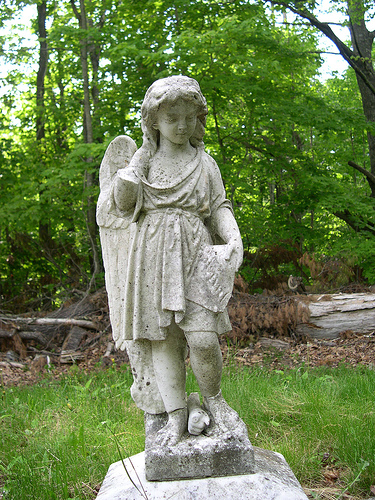
When Natalie Merchant wrote ‘Beloved Wife’ she was criticized for writing from the point of view of a man. People couldn’t accept a character out of norm so suddenly she was either lesbian or just plain nuts. The point was missed; the lyrics completely unheard. What she was saying was far more unacceptable, far more controversial to our social norm. We don’t like people to die.
We marry our soul mates. We spend forever and a day with them. Day in, day out is all about being with them, living and loving til death do you part. Ten years turn into twenty until an anniversary of gold looms. “For 50 years, simply my beloved wife.” He or she is all that we know. For life.
What happens when that bond is broken by death and our partner of forever is gone? How do we hang onto a life we no longer know? How do we accept one half of what used to be us and we? Natalie asks the tricky question – “would it be wrong if I should just turn my face away from the light, go with her tonight?” Dying of a broken heart happens all the time. Can we let it happen? “Surrender all the joy in my life, go with her tonight.” As a family member, can we let someone die because they believe being there is better than being here now?
When someone looks at you with empty eyes and swears they won’t live to see their next birthday are you being selfish by saying “Yes, you will. We love you”? When does love become too selfish? Is it possible to love someone beyond the boundries of enough? When is acceptable to let them go?
a depth so deep
into my grief
without my beloved soul
I renounce my life
as my right
now alone without my beloved wife
my beloved wife
~Natalie Merchant
Athenian Murders
 Somoza, Jose Carlos. The Athenian Murders: a Novel. New York: Fahar, Straus & Giroux, 2002.
I read a review where a critic described this book as Russian dolls, one larger stacked upon another. It is the most accurate description I can think of. The Athenian Murders is indeed a story within a story within a story. The largest doll story takes place in Greece in the time of Plato. In fact, Plato’s Academy is center stage. Athens is plagued by the mysterious murders of several men and before the city can erupt in terror Hercules, the Decipherer of Enigmas, must solve the who-dunnit. Footnoted within the story is the second story – the nameless translator who has his own story to tell as he translates The Athenian Murders. Of course, there is a twist at the end with another story.
It took me a little while to really “get into” this story. I have to admit, I get annoyed by repetition and the word eidetic – let’s put it this way – eidetic or eidesis is used 50 times in the first 100 pages. Talk about repetition!
I have to ask. Is the scar on the right cheek (as mentioned on page 210), or on the left (p 217)?
BookLust Twist: From Book Lust and the chapter titled “The Classical World” (p 60).
Time Tempted
There are so many things crashing around in my head I couldn’t write a straight-up, this-is-my-life blog even if I wanted to. Like a maze of the brain I’m not even sure which way to start and it feels like there is no getting out. No way out.
The stupid things: there is a wasp buzzing in my office and there is a phone guy banging on my window. I don’t want the wasp to sting me, nor the maintenance guy to break the glass. I’m distracted by the worry of either (or both) of these things happening. I realize the wasp is just looking for a way out and the phone guy is just trying to rewire my office. Yet, I worry all the same. Don’t break my skin, nor my window.
The serious stuff: XCP needs registrations. I haven’t called the publics for liason capabilities. I just got the okay. ACE needs library interaction. We’ll set something up for the second week of school but it all takes planning. PALS starts in 3 weeks and I don’t think we are ready to serve our own public never mind theirs. I have a class in two days and I haven’t even looked at the schedule. Should I be worried that security clocked in but lied about where they went? Should I be concerned that I’m ignoring the vacation time I’m supposed to be taking? I don’t like butting heads with the clearly not here.
The other life: We bought a treadmill and I nearly ran 2.5 miles in 35 minutes. That doesn’t seem like much but consider this – warm up AND cool down are included in that 35. I’m getting there but I’ll blog elsewhere about the details. Grandad is giving up the fight. I hope he sees ghosts. My friend is pining for a married someone and she can’t walk away. Won’t let go. I don’t know who is hurting more. Cape Cod seemed a necessary journey if only to call it home. I recognize the damaged goods in myself. Thank you letters are not flowing from the pen like they should. What more can you say beyond simple gratitude? I got your letter. I’m just thinking of something to say beyond HowAreyou?
Time tempted: I made chicken tortilla soup last night. Red peppers and sweet vidalias sauteed with chunks of chicken, salt, pepper, coriander, thyme and cumin. Fresh salsa. Avocado, lime, tomatoes, cilantro, homemade tortilla strips seasoned with chili and cajun spices. Pepper jack cheese. Served with chili-lime corn on the cob and cold beer. Summer fiesta. Tonight I want to smoke pork chops in sweet apple wood chips. Serve them with crispy garlic green beans and chunky apple sauce…or maybe roasted broccoli and spicy apple rings made from Grannies. I don’t have a lot of time to think out meals.
Two nights ago I slept in fear of calf cramps. Last night the dreams were worse. I see you as I want you to be.
The Guardians

I received this book as one of those Early Reviewer books from Librarything.
Four different first-person voices tell the story of The Guardian. Regina (middle-aged, sassy entreprenuer looking after her brother’s son, Gabo), Gabo (Regina’s nephew. Serious, religious, older than his 16 years, heaviest on the Spanish, started running with a tough crowd), Miguel (a teacher and activist, has a laid back way of looking at the world around him, sizes people up accurately, has an interest in Regina), El Abuelo Milton (Miguel’s grandfather. He is described as being blind but can see Regina clear enough to call her a Helen of Troy goddess), The voices are accurate for each character. True to the elderly, Milton is always thinking about the past, Miquel remembers his activism days, Gabo searches for religious expression, and Regina tries to hold everything together.
The premise of this story is these four characters join together to solve the mystery of Gabo’s missing father after he disappears while crossing the Mexican border. Intertwined in the plot are political statements about drugs, the environment, gangs, immigration; as well as humanitarian statements about culture, relationships, families and community.
I find it interesting that Regina & Gabo both mention how avocados are the only thing Regina can’t grow in her garden. They also both mention changing the dog’s name. It’s as if both are trying to make excuses for these things.
Literary references mentioned:
- One Hundred Years of Solitude by Garcia Marquez,
- 1968: The Year That Rocked the World by Mark Kurlinsky,
- Communist Manifesto by Friedrich Engels and Karl Marx,
- The Idiot, Crime and Punishment, The Brothers Karamazov and The Gambler by Dostoyevsky,
- Das Kapital by Karl Marx,
- The Jungle by Upton Sinclair,
- The Underdogs by Mariano Azuela,
- Things Fall Apart by Achebe, and
- The Second Coming by Yeats.
I know I’m not supposed to quote the book until it’s been published, but I can’t help it. I identified with Regina the most because all my favorite quotes came from her. “Not knowing when you are being teased also comes from being alone for inordinate amounts of time” (p 49). “Not being elegant doesn’t mean you don’t have class” (p 138). “No dream is too big when you are that young” (208).
Absent Friends
 Busch, Frederick. Absent Friends: Stories. New York: Alfred A. Knopf, 1989.
“From the New World”
Norman is a man returning to his childhood home after his father’s passing to divy up belongings with his sister, his last surviving family member. I found myself yawning through this short story as it’s a well-known plot. Son is disowned for marrying outside his color (although they blame it on something else). His father leaves him $2,000 while his sister, Anna, gets everything else. Norman feels disconnected from Anna. The clever parts: Norman is a film producer so the story is told in script language, from Norman’s p.o.v. One particular scene is played out like a poker game, with conversation acting as the card values – bluffing and backstabbing. My favorite line: from page 61, Tess (Norman’s wife) is talking about love, “that shows you…how chewed up and spat out and stepped on on the sidewalk that word can be.”
“Ralph the Duck”
You never learn his name. He’s some security / maintenance guy at a college taking classes on the side. He calls himself “the world’s oldest college student” even though he knows he’s not. When he gets a ‘D’ on an assignment (called Ralph the Duck) he lets the disappointment leak out.
“Comrades”
I pictured a tightrope walker when reading this story. The walker carries a pole called “Relationship” and when he waivers to the right he is feeling loving towards his wife. When he teeters to the left, he has animosity. The couple decides to divorce as amicably as possible but the tension and anger is always just below the surface.
“Orbits”
A commentary on getting old. On parenting. On life slipping away, unstoppable. My favorite line, “Her mother limped into the house and they sat in the memory of her tension” (p 100).
“Greetings From a Far-Flung Place”
I could relate to this story. She is a singer in a second rate band. She travels around with a group of men and no one in her family can understand her life. Her sister is married, has a kid, lives the suburban life, and is lonely. Mom is widowed and can understand sis better than singer.
“Naked”
Seen through the eyes of a 13 year old boy. He witnesses adult relationships and experiences changing loyalties. My favorite line, “And I still don’t know if he meant wait for seconds or for years” (p 125).
“In Foreign Tongues”
A group of people in therapy talk their way through their problems outside of sessions. Lonely in the middle of Manhattan.
“Gravity”
The gravity of growing old, getting older. The gravity of weight, of life. The gravity of death. Seriousness and weight.
“Dog Song”
What’s that Harrison Ford movie where he’s a lawyer, gets shot, and has to relearn his life (only to discover he’d been leading the double life of infidelity)? “Dog Song” is like that. Richard is a judge who gets into a horrible car accident (on purpose?). As he slowly remembers the accident, details start to surface. He was in the car with his mistress…
“One More Wave of Fear”
Family life in Brooklyn. One kid’s memory of growing up – from catching squirrels in the attic to going on nature walks with the fam. My favorite line sums up that age, “I didn’t want to be mistaken for someone who cared about birds” (p 201).
“North”
I could mistake “North” for so many things. Kelly divorces her husband because he won’t look North of her female features, She wants to head North – two hours to the Adirondaks – but she doesn’t. “North” is the story of a woman who needs an internal compass.
“Reruns”
“Reruns” was tricky. A doctor’s estranged wife is kidnapped by terrorists in the Middle East. The doctor could care less if she is released but for the sake of his children he plays the part of concerned father. In the end the reader is left wondering how much does he not care?
“Name the Name”
This was actually one of my favorite stories. Told from a traveling teacher’s point of view, he travels to children who can’t be in school for whatever reason. A 12 year old is 7 months pregnant, a girl tries to commit suicide and is on a ventilator, his own son is in jail for nearly two weeks. It’s about commitment and responsibility – owing up to the name.
“To the Hoop”
After his wife commits suicide a father and son struggle to get back on track. Using basketball as for “getting back into the game” both literally and figuratively, both father and son learn to try again. I think this passage sums it up,”He was on the stairs, and something like “good night” trailed his slow and heavy-footed climb. So I was alone, with ham and good intentions, and the usual fears that ranged from drugs to teenage schizophrenia. Jackie had died alone, and in silence. She had left us no word” (p 267).
BookLust Twist: From Book Lust and the chapter “Frederick Busch: Too Good To Miss” (p 48). This is the second collection of short stories I have read from Busch so far.
Are You There? part two
I ride the bus from time to time. I like to leave the driving to Greyhound every so often. It allows me to read uninterupted. Think without stopping. Be without moving… among other things.
The first part of my ride was a lesson in conversations with kids. Bouncing, loud, over-the-top kids. But, after they debarked I was able to open my book and read until Boston. Pure bliss…even it was one of those 1800’s romancy things.
Once in Boston we switched buses. I thought the longer your ride, the nicer the bus. Not so in this state. This particular bus had problems with the overhead lights, the AC, the foot rests and the driver. The lights and AC simply didn’t work. I moved three times and finally gave up. I had bruises from the foot rest snapping back into place and hitting my ankles on the way up. I kept forgetting they didn’t work either until finally I sat with my feet tucked underneath me. I had heart palpitations whenever the driver would blow red lights and drift into other lanes of traffic. He gave new meaning to the phrase Bat Out of Hell. Trying to ignore this, I turned to my mp3 player for distraction and listened to every song at least twice. I couldn’t figure out how to turn the repeat function off. To make matters worse the battery ran down until finally, I couldn’t get the off button to function so, ironically, I listened to These Are Days four times before the player finally quit for good and all I had left was silence.
I think Manda will appreciate where I am going with this story. I am pleased to announce that I love my phone. More specifically, I love the text function on my phone. Somewhere along my journey I found I had a text message from a very smart man. I think he knew that I wouldn’t actually call anyone while on the bus so he wrote, texted me, whatever. I texted him back – is that the right way to say I sent a text reply? A few moments later he wrote again and I discovered we were headed in the same direction. I have no clue how he was responding since he was driving at the same time. It’s hard enough just sitting there, leaving the driving to someone else to text! The conversation turned to updates: where are you now? What are YOU now? Sitting in the dark, clutching the phone I waited for it to vibrate so I could reply again. Are you there? At one point he announced he was only minutes behind me. I dared him to catch up. Despite the impossibility of it, I giggled at the thought and actually watched out the window, half expecting the silver streak of a kayak laden car to go speeding by.
My friend saved my sanity that night. There was a darker reason for taking the bus that day. For me, riding with strangers is the fastest way to feeling lonely. I force myself into crowded solitude to feel the sadness of being by myself. Like an addict cutting himself to feel pain, my invisible knife was 5.5 hours alone with my thoughts. Only, at the end of my journey I wasn’t alone. Someone got me to smile at the idea of being just behind me; at the mere thought of catching up to me.
Are You There? part one
This is a half kid, half conversation story for Sarah.
Kid part:
I was waiting to leave on the 4:15pm bus. Ahead of me I had a 5.5 hour ride that would normally take only 3. True to form I forgot lunch (and breakfast) and was trying to inhale a bad bag of Cool Ranch. I don’t know about you, but I can’t stand people eating stinky food in cramped spaces – there’s no way to escape the smell. Anyway, I was trying to mind my own business while two little girls raced around me. Running, playing on the phones, jumping off the curb, screeching and screaming while their parents were nowhere in sight. Soon enough the older girl spied my bag and asked for a chip. I showed her the emptiness and lamented that the pig in me had emerged. I had nothing to share. That didn’t stop her from striking up a conversation, though. Suddenly deemed safe by some unknown intuition she proceded to question everything about me. Why are you wearing those shoes? Where’s your purse? Are you going home? Have you seen Casper? Did you hear that train? Did you know my mother lets me eat chocolate? I’m going to Worcester. Where are you going?
Soon it was time to board the bus, “Michael’s Teddy” (I came this close to getting on “Princess Tiger Lily”). Out of nowhere mom and dad emerged and herded the two little girls onto “Michael’s Teddy” while carrying a newborn in a carrier. I was a little relieved when dad barked an order for the girls to head to the back of the bus, but equally surprised when one of the little girls burst into tears, crying “I want to stay with the lady!” I looked around for the “lady” only to realize she meant me. I’m the lady. Both girls wanted to sit up front…on my lap.
Five minutes out of the terminal and the younger girl turned out to be a boy. With long, dark, curly hair that hung down his back I could only stare. She had been a sweet girl and suddenly, with the reveal of Superman pull-ups he was a beautiful, dark eyed boy. All of four years old with a fixation on McDonalds. Every time we would pass a sign or restaurant he would scream out “McDonalds!” The older child, definitely still a girl, calling herself Princess, would perk up each and every time and shout “where?!” without fail. Princess taught me a game – something involving singing and clapping about a Miss Merry-Something-Er-Rather. She talked nonstop about school, her friends, her jeans, her homework, her little brother, her mother’s boyfriend, her brother’s dad, her dad (not all the same person), her lost umbrella and hated lunch meat. Every time she would get up to make her way back to see her mom her sneaky brother would bounce into her place beside me and with hungry eyes ask if he could hold my watch, try on my ring, wear my hair ties, look at the book I was reading. He asked me if I liked McDonalds, the Yankees, buses, him. How could I say no?
90 minutes later the children reached their destination and left me without so much as an over-the-shoulder goodbye. I waited for the mother to thank me for entertaining her kids. As she came up the bus aisle I looked up expectantly, prepared to say, “you’re welcome. You have great kids.” Not only did she continue by without a word, she didn’t even look me in the eye. Thanks for nothing. PS~ I hate the Yankees.
To be continued…..
Abandoned Bride
 Layton, Edith. The Disdainful Marquis and The Abandoned Bride. New York: Signet, 2002.
One of the great things about this BookLust challenge is the fact that I get to read so many different and interesting books in order to complete the challenge. The only bad thing is romance novels are included in the list and they certainly are “different”…in other words, not my cup of tea or coffee. I simply don’t read the “bodice rippers” as I call them. They scare me. I can’t get into all that…heaving.
Luckily, out of this double feature paperback I only had to read the Abandoned Bride story, and I did it on another quick trip to Maine this past weekend. Here’s the kicker – this one wasn’t that bad. Okay, so the heroine of the story is stunningly, absolutely, beautiful (I can’t even tell you how many times her beauty was referred to – especially her “moonlight-spun gold hair.”) and the villain (who, of course, turns out to be Mr. Romance) is dashing and “trim.” But, the story really wasn’t that bad. Here’s the premise: Julia (Miss Moonspun Hair, virginal-too-good-to-be-true-at-17-years-old) is set to elope with Robin, a boyishly handsome rich guy. They run away to some lodge where he abruptly leaves her for unknown reasons. Three years later Robin’s uncle, Nick (the dashing, trim, bad guy) “kidnaps” Julia in an effort to get her and Robin together to right past wrongs. Robin is also supposed to take over his father’s inheritance and he can’t do that while he’s running away from the memory of Julia (so he claims). The immediate problem is Robin doesn’t want to be found so Nick must drag Julia, against her will, of course, across the continent looking for Robin.
As you can probably guess, the falling in love of Nick and Julia is predictable and a little silly, but the reason for Robin’s abandonment was an interesting twist. I only figured it out when Robin is finally confronted by Julia.
Here are a few favorite lines: “…the entire stack of books fell open neatly to the middle to reveal that the book covers were false and what lay within them was not pages, but a cleverly designed box containing two decanters and a set of blown crystal glasses. “Ha!” Sir Sidney said with satisfaction. “now this, I think, is what a library is really for.”” (p 102) and “I am leagues in love with you” (p 217).
My only moment of “huh?” was when Julia used a phrase similar to being buttered up and I’d like to know if someone could be flattered in the sense of being “buttered up” in 1815.
BookLust Twist: From Book Lust in the chapter called, “Romance Novels: Our Love is Here to Stay” (p 203).
Accidental Connoisseur
 Osborne, Lawrence. The Accidental Connoisseur: An Irreverent Journey Through the Wine World. New York: Fair Point Press, 2004.
Even though I don’t know much about wine and I probably wouldn’t have picked up this book if it weren’t for the challenge, I had to admit this: ILMAO. Lawrence Osborne has a great deal of fun with the punny, the witty, and the downright funny. Right off the bat, on page four, he had me giggling with “all drinks came under the Arabic word alcohol, essentially reducing them to a level of chemical sin, and none of them could be bought on Sunday.” Especially since we had downed a wine called Evil on vacation, thanks to Stacey. See below for the proof.
Even if you aren’t a wine drinker or even a wine liker, Osborne’s writing will amuse you. He has phrases that are somewhat identifiable as my own, “when the happiness of drinking overwhelms you, you cannot resist it” (p 21) and “Wine is 99% psychological, a creation of where you are and with whom” (p 22). This makes me sound wildly alcoholic, but bear with me a second. Think of any great seduction scene. Who is usually front and center (along with soft music and sexy candlelight)? Partners in crime – a wine bottle and two wine glasses. I found that a glass of wine is definitely more pleasurable when enjoyed in the presence of good friends and equally good scenery.
Seriously, I learned a lot from this short book. For example, how you space the vines in each row determines the complexity of a wine (according to one grower). The theory is plants with less crowding don’t have to compete for sunlight and growth space. They are more relaxed and get this, less stressed out. You see, the more stressed out a plant is, the more psychotic it is. It’s this aggrivated state that develops the complexity of flavor. Got it? I learned a new wine word, too: terroir. Makes me think of ‘terror’ but whatever.
Other favorite parts: “”what do you taste?” “Grapes,” I said. “Good. That’s what’s in it!”” (p 97)
“If wine is sex, ” I said, “this is like yoga.”
“Yoga? You’re saying it’s like yoga?”… I’m not sure I get you there. You mean athletic?”
“Virtuous. Unsexy.”
“Ah, you mean American!” (p 101)
But, probably my favorite line is an obvious one, “Wine summons ghosts out of the cupboard” (p 228).
BookLust Twist: From More Book Lust in the chapter “A Holiday Shopping List” (p 115). It’s true that I would buy this for the wine lover that I know, only I don’t think he drinks and reads. Is that a problem?

RobinElla Rolled with It
 While kisa was rocking out at Fenway to the sounds of Sting & Co., I was at the Iron Horse, enjoying a Wicked Wally and listening to RobinElla with a good friend. I think I had the better deal, if you ask me!
I didn’t write down a setlist. For starters, I didn’t have a pen. I also didn’t know as many of the songs as I thought I would. RobinElla has come out with four albums and I only have the latest, Solace for the Lonely. I decided halfway through her set that I would buy whichever album had “Dress Me Up” because I liked it that last time she was here and I loved it this time. “Man Over” also won me over. Unfortunately, the IH doesn’t take credit cards and I didn’t think ahead to get cash. Getting mugged makes you consider what’s worth carrying.  So, I promised myself I’d go to RobinElla’s website and get whatever I wanted directly from her. But, back to the music.
RobinElla opened with “Down the Mountain” and sang it so differently I almost didn’t recognize it. She entertained us with covers (Alison Kraus) and stories. As S & I sat there, savoring mounds of deep chocolate brownie, creamy vanilla icecream, gooey hot fudge sauce and whipped cream (of course) I couldn’t help thinking about how perfect everything was. I had run earlier (met S with a red face) so I wasn’t feeling guilty about the decadent dessert; We had great seats (in other words not right under Robinella’s nose). I love her voice voice, her humor (who in the world is Hans? Her joke about eye candy was spent on Cruz the last time we saw her), her country grace. When we got her to come back up for an encore I asked for “I Fall in Love (as Much as I Can)” just because it’s my favorite. Robinella added some humorous adlibs and I knew I had yelled out the right request.
ps~ this pic is not from our night out. I was too chicken to take pics!
Monhegan House Lights

This is our last night home. A big dinner with friends and a rainy walk home in the dark. We’re not tourists so we shrug off offers of raincoats and laugh off offers of flashlights. Don’t be ridiculous. We don’t need no stinkin’ flashlights! Laughter all around. Passing darkened houses I can remember feeling nostalgic, romantic on that walk home. The last night home is always like that. Every stone in the road is a well known marker for where we are, where we are going. I relish the soft rain and heavy salt air. Standing before the Monhegan House I remember this is where we got married, where we celebrated well into the night. I can hear the music pounding, the clinking of wine glasses, champagne toasts, tuaca shots, the laughter floating out into the night, the love swirling up to the heavens. I imagine my father, ethereal in the clouds, reaching down to catch my prayers wrapped in bittersweet smiles. I imagine the tourists in their guestrooms. Are they reading dogeared fiction, writing in journals about the day’s hike, examining bird books, touching up paintings created on the backside, or sleeping with the lights on? I try to imagine being a real tourist, here for the first time. What would I think of this place on my first night here? I’m always curious about what brings people here in the first place. Only, it’s not my first night here. It’s my last. Hand in hand we walk back to the cottage. Kisa senses my heavy heart and puts his arm around my shoulder. Glancing back at the MH it’s lit up like a pumpkin. My thoughts turn to fall. I’ll be back.
My Hero
I have to blog about this. It might offend someone. No, it probably will offend someone. The truth is in-your-face dirty.
Years ago when I started the whole blog thing I had decided I would write about the first thing that came to my head – the first and only thing. That has been modified to include what’s important to me and what I simply cannot get off the brain. Writing is an effort to nudge some thoughts out of the head, get out what I can’t stop pondering. Here’s what is sticking right now: I have one prescription and I can bet you know what it’s for. Before Walgreens I would, once a month, TRY to remember to call ahead to get it refilled. Calling ahead meant I could run in, state my name, pay, and run back out. BingBangBoom. Sometimes, I would forget and would have to wait while some pimply teenage receptionist boy scrutinized my medical records and got the pharmacist to fill the prescription. This sit-and-wait episode would cause anxiety because of my overactive imagination. It wasn’t like I could pick up the prescription and go. Sitting and waiting meant they, the behind the counter pharmacy men, could put a face to a name, put a pill to person. Me. I am always painfully aware that this pill is a sex pill. Yes, it’s so I can have sex without having to agonize once a month over Am I? or Am I Not? Yeah. Yeah, it has other benefits like an easier time of the month, clearer skin and all that, but more importantly the pill spares me from peeing on a plastic stick and perspiring while expecting the blue line (or happy face or whatever it is these days). But, having to wait while the prescription is being filled is like wearing a sign. I have sex. I told you – overactive imagination at work here. I guess it’s like this for people with more embarrassing ailments, predicaments that a particular pill gives away. When the guy with an STD comes in I imagine the pharmacist shaking his head, thinking “you poor bastard” as he hands him his topical ointment.
So it comes down to this. Walgreens. I love Walgreens. I can’t believe how simple they have made my life. Instead of me calling them to fill the prescription, they call me. Automatically. No more calling ahead. No more forgetting to call ahead. It’s a beautiful thing.
1968: The Year That Rocked the World
 Kurlansky, Mark. 1968: The Year That Rocked the World. New York: Ballentine Books, 2004.
The year before I came into being. What an amazingly troubled yet vibrant time. There is very little that Kurlansky doesn’t cover. Everything you want to know about what changed world views is here. My favorite chapters were about the civil rights movement and the protesting that went on. From sit-ins and the feminist movement to Freedom Rides and every raised sign in between. Talk about voicing your opinion! Here are my favorite quote on the subject: “The protesters can be nonviolent, but they must evoke a violent reaction. If both sides are nonviolent, there is no story” (p. 38). For this very reason women had a hard time getting their January protest march on Washington documented. They weren’t violent enough.
The harder chapters to read were about politics and the Vietnam war, two very unavoidable subjects for 1968. Both carried the weight of violence and unbridled hatred. The Chicago convention in August…”miraculously, the clubbings in Chicago killed no one…At the same time, Vietnam had its worst week of the summer, with 308 Americans killed, 1,134 wounded, and an estimated 4,755 enemy soldiers killed” (p286).
BookLust Twist: In the chapter “The 1960s in Fact & Fiction” (p 179) from More Book Lust.
Black Blame Game

This. This picture is what I thought about when trying to meditate at Now & Zen Yoga studio last night. It looks like a whole lot nothing, a clear mind…but look carefully. Something is there. Something lurks. Just like in my head, something was on the fringe of calm; just on the edge of quiet. Blame. Ruth called it Wanting vs. Not Wanting. Like a psychobabble tennis match, I bounced between the two. I want to be as confident HERE as when I am THERE. I do not want to worry about this zit mutating on my chin. Why can’t I not worry about it HERE like I didn’t worry about it THERE? As this volleying went on I felt panic set in. I was slipping away from the calm and quiet I had so proudly achieved just moments before. Where was that peaceful easy feeling? Why was I thinking about how awful I am all of a sudden? The blame game was in full swing. Was I completely losing it? Was I stepping off the train and utterly missing the boat?
Fortunately, I was able to grab the bouncing ball and stop the guilt game for the rest of the session. But. but, but here it is again. In my court. Thanks to Ms. Klein. We write parallel blogs. Maybe not on the same days, but sooner or later we talk about similar things. Since I have missed a week of her writings I’m a few blogs behind. Today I read about fault. It took me by surprise because that was the very game that I was playing last night in the middle of a meditation class. Try as she might, Ms. Klein was not able to convince herself it was someone else’s fault. It always came back to her and the question of what she did wrong. Just like how I keep coming back to my split personality problem. I’m like a boater who doesn’t know how to skull, so I keep going around in circles with my one oar. Someone can tell me it’s a question of confidence. I’ve figured that one out on my own. Someone can tell me it’s an issue with comfort. I got that, too. I have all the answers. What I still don’t know is WHY.
Maybe some things aren’t meant to be figured out. Maybe being in the dark with only a hint of the answers is how it has to be. Maybe, in this one case, I need to let the mystery be. Oddly enough, this comforts me. It also brings out the creative thoughts in me. Who says I can’t be there permanently some day?

