Someone unexpected lifted me out of my self-imposed anger today. I had been walking about with this you done me Wrong attitude and she turned it into a Right. Not only unexpected but downright heart stopping shocking. I had written her off a long time ago. Suddenly, I am seeing the faint lines of forgiveness coming through the hate. Am I mad?
I hate being lied to and this lie was self-indulgent and stupid. I could have handled the truth but something chose to make it worse by putting my heart in the mix. The smokescreen was as ridiculous as the lie. Could I not see through it? I couldn’t help but vent. After all, I am allergic to smoke. A sort of blood letting for the hurt, so to speak. The kicker is that I chose to spew my frustration to someone who used to produce just as much irritation as I was trying to release. I couldn’t help it and to make matters worse, there was no stopping me once I got going…you know how it is.
Surprise of all surprises, my rant was met with calm. Understanding. Even a solution of sorts. I couldn’t help but laugh, feel a litte silly. Just how old am I anyway? So, there we are: the barnacle, the newbee, the about face and me. Go figure.
Lessing, Doris. The Diaries of Jane Somers: The Diary of a Good Neighbour and If the Old Could… New York: Vintage, 1984.
Here’s what I find fascinating about Doris Lessing – she wanted to publish something pseudonymously. She chose the name Jane Somers, wrote in a completely different voice and then submitted The Diaries of a Good Neighbour. Her own publishers turned her down. One publisher (who accepted the Somers work) was reminded of Doris Lessing! Can you imagine writing with such personal style that its recognizable without an author name attached? Even after you try to hide your true voice? That, to me, is real fame in the world of writing!
The Diaries of Jane Somers is comprised of two emotional, very telling, sad novels, The Diary of a Good Neighbour and If the Old Could…. In The Diary of a Good Neighbour Jane befriends an elderly woman. What I find fascinating about this story is Jane herself. She is middle-aged, has no children, and is a highly successful, fashionable editor of a woman’s magazine. She comes across as unfeeling and snobbish. She barely mourns the loss of her husband to cancer, is decidedly cold about the death of her mother by the same disease, and is completely disconnected from her sister. With no real friends of her own she even shuns her elderly neighbor desperate for companionship. Oddly enough, Jane meets Maudie, a dirty, ferociously proud woman in her 90’s and instantly feels a connection. The Diary of a Good Neighbour not only details the two women and their remarkable friendship but voices what it means to be vulnerable, to have shame, and, to grow old in a society that prides itself on youthful appearances, vitality and independence. If the Old Could…is a continuation of Jane’s story. Told several years after the death of Maudie (sorry, but you knew she couldn’t live forever, right?) Jane falls in love with a married man. This time her selflessness is poured into helping her nieces as well as finding what it means to truly hurt over another person.
Favorite lines: “She was literally inarticulate with anger” (p 59). This scene is like a chapter out of my own life. Not that my sister and I have ever had the conversation tied to this statement, but I could picture us having it.
“…I don’t know what children are, and I’m not entitled to say a word, because of my selfish childishness…” (p 62).
“Meanwhile I rage with sorrow” (79). Isn’t this just great? Some people imagine sorrow being this quiet, slow-moving, thick and heavy emotion yet Lessing turns it into this live-wire, powerfully explosive, loud and in your face emotion with one word, rage.
BookLust Twist: From Book Lust in the chapter “Aging” (p 17). Very appropriate.
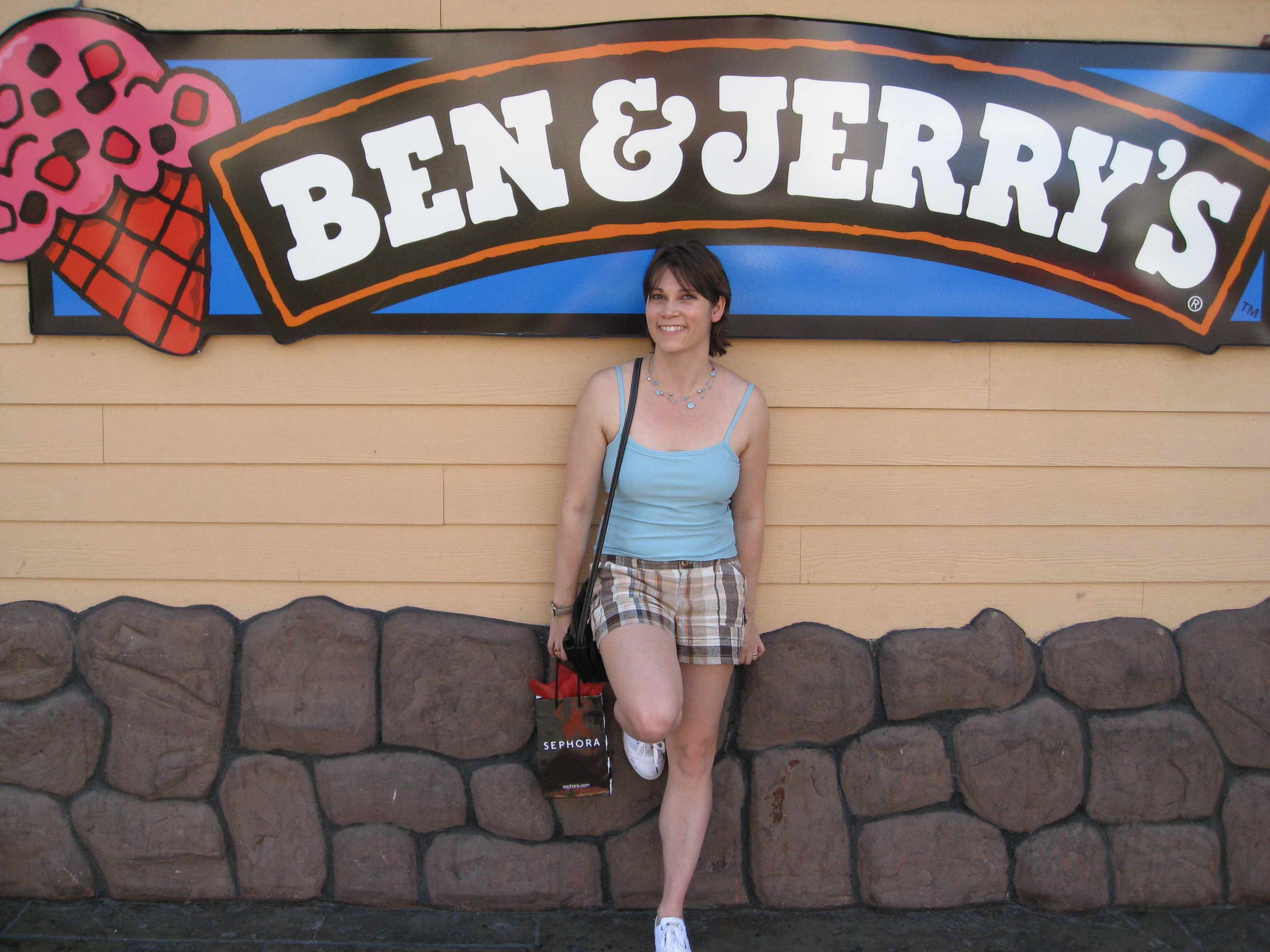
This is my friend Sarah. We started off as coworkers. Even though she has moved onto bigger and better things we have remained friends. She has a huge smile and an even bigger heart. Here’s the proof: she walking a full freakin’ marathon for charity – yup 26.2 miles in one day. Here’s her story:
You are a charity walking machine, but this is your biggest yet! What made you sign on?
Last year I walked the half marathon and I loved it. Even though i was sore for a few days afterwards. I asked my dad to participate with me this year and he really wanted us to walk the whole marathon. I knew I couldn’t get a better walking partner than my dad (who has RUN many marathons) so i agreed to walk the full 26.2 miles!
How are you training for it, besides one foot in front of the other?
My ideas for training started with a book, and a set schedule but I struggled to get into it. Yesterday I walked 6.2 miles, and i am feeling it. my plan is to walk at least twice during the week for 3 miles or more, and then do my long walks on the weekend. my long walks will be 10, 13, 18 and 21 miles. In September I will start to shorten the mileage to get ready for the event.
When and where does this HUGE walk take place?
This is the part that hooked me both last year and this year. The walk is the Boston Marathon route. I have watched my dad run this marathon so its an honor to be able to experience this with him. Especially since neither of us our in running condition to do the real marathon. This is the next best thing.
This is something I asked our friend Rebecca: most athletes I know have a ritual or lucky talisman – something that inspires them before the event. What’s yours?
The things that inspire me most at these events are the volunteers and the photos that remind of us we are participating. The marathon has a mile marker with a photo of a child who is battling cancer. Those kids are fighting for their life, all i have to do is keep walking.
Here’s another question I asked Rebecca: Are you walking in anyones honor or memory, and if so, what is his/her story?
i am not walking for one particular person but for the general cause. I am amazed at the courage of anyone that goes thru cancer. To be honest, I am scared of someone I love or myself having to go thru something like that. I admire the strength of those who have cancer, their loved ones, and the people in the medical field who try to beat the odds and get them through it.
I’m not trying to guilt anyone but if walking a marathon and asking for your help in donating can help the fight against cancer then it is the least I can do. It is what I’d hope someone would do for me or someone I loved.
Speaking of donations, how much $$ do you have to raise? my dad and i need to raise $250 each.
I don’t out and out ask for assistance all that often. I don’t always spell it out and say Help. Me. But, those close to me know when I am searching for support, hunting for help. In so many words I asked and in so many ways they answered. Such was last night.
For reasons unknown I have been feeling silent and still. Like a pond with hardly a ripple. I wanted a wave of life and laughter to wash over me and lift me out of a self-induced torpor. Let’s go out I told my go-to girls. Where? They were surprised when I told them. It’s not like me to not have a plan. It’s not like to me to not know what I’m getting myself into. They only knew I needed their support and they answered the call. Wish we had a rally song because I would be humming it now.
Pouring rain. Little sleep. Too much wine. A borrowed car. Running late. Leaving early. None of it mattered. We converged on Jill like a hurricane and ordered vodka, chocolate, and chilies. We rolled our eyes at the cliches and silently cheered on the gold. Smoke and strobes. Run songs ruined. When the time came my friends rallied around me like a fortress. Not letting a single thing hurt me or help me lose control. When I said I was done I didn’t know it until I was surrounded by support.
Now it’s the morning after. I’m hearing Sublime. I’m hearing something about bitches. Sublime bitches? You betcha. Thanks, ladies.
I wanted to write about spending time with my good, good friend. How we ran together (only 3.5mi but still…), rolled our eyes at family issues (pass me the bottle), caught the Closer bug together…
I wanted to write about how two great people stepped up and came out with me Friday night. I don’t ask for help very often and my requests aren’t always clear, but they answered the call despite weather and wine and one way streets.
I wanted to write about this one particular house we saw yesterday. It’s the perfect marriage of funky and functional (read = moi & kisa). Dare I say perfect?
I wanted to write my apologies for playing phone tag with two very special people. I am sorry I keep missing the ring so much it becomes rang. Don’t ever think I don’t need you.
Instead, I have cancer on the brain. When I got the call I went cold. “Make her some Natalie cds” my mother urged. “You know, the soothing stuff…” She went onto to say things like, “you won’t recognize her… administering her own chemo…needed to be on Monhegan… metal rods because her bones are so brittle… the whole family is here…” After a little while I stopped listening. All I could hear was my heart pounding & breaking. I kept thinking too young. Too fukcing young. When will this disease go after the sour grapes? When will it turn away from the angels on earth and settle a cold eye somewhere else?
I think it goes without saying that all plans have changed.
Schwarz, Christina. All is Vanity. New York: Doubleday, 2002.
This book cracked me up. It’s the story of a friendship between two women and how friendships can be taken advantage of. Margaret is a New York City woman (displaced from California) who gave up her teaching career to write a novel. She has subtle hubris (described as “cynical roilings” p138. ) that she tries to disguise to Letty and anyone else who listens to her (mainly her husband, Ted). Letty is Margaret’s childhood friend who became (Poor Letty!) a stay-at-home mom with four kids and a great kitchen in Los Angeles, California. They keep in touch via email and almost immediately I noticed that between the two friends, despite Margaret being the one trying to write a book, Letty is the better writer. I love Letty’s writing, but I think that’s the point. It’s only a matter of time before Margaret starts using Letty as the subject of her first book. When Letty’s life starts to spiral out of control Margaret does nothing to help thinking it helps her own fictional plot.
Funny line: “Also, as a preteen, I half believed I could do anything, as long as I set my mind to it, but was never actually willing to set my mind to anything that threatened to take up a good portion of the rest of my life” (p 12).
BookLust Twist: From Book Lust in the chapter “Women’s Friendships” (p 247). Pearl calls this book “delightful” and I would have to agree! It’s a really fun read!
I don’t know how to say this. Well, I don’t know how to say this without coming off as a cultural snob, but there is no refinery in my life right now. I wanted to see two nights of Natalie at the symphony. I was willing to pay someone’s way just to have a second night w-i-t-h someone (and not just sharing a table and maybe a bottle of wine with a complete stranger). Call me generous but my motives were selfish. Call me selfish but I would have paid the way. The whole way. The problem was I couldn’t think of a single person who would sit through orchestral music. No offense, but I’m having a culture crisis.
I need people in my life who want to look at art from the back of the room. The kind of person who not only sits and stares at art, but collects it as well. Cherishes it rather than chucks it. Someone who doesn’t get their wall decore from A.C. Moore. I want to know people who hear a cello live and call it an experience to remember. Music that moves them beyond screaming teenage fantasies. I desire people who would rather savor their food than chew, choke and swallow it. Can close their eyes and say, “cilantro…with a hint of lime” rather than, “there’s something funky with this rice…”
Show me someone who reads poetry, watches documentaries, understands fresh basil, and can handle a song without words. Show me someone who reads biographies, goes to the theater, knows a good Alfredo sauce, and hears the protest in folk music. Show me because I’m tired of Cosmopolitan magazine, Dumb & Dumber, dried oregano, and Hannah Montana.
*Edited to add: When I voiced this angst rather than post it, a friend took me to the theater. Another friend said, “I’ll go with ya!” I guess all I had to do was ask. I don’t know if that would have worked for the Boston Symphony Orchestra, but now I know…It doesn’t hurt to ask!*
When it comes to friendship age has no consequence. Color has no connection. Gender shouldn’t be a guiding factor. These are the rules I try to live by when it comes to friends. Simple as that.
Last Friday such a friend came to East Greenbush, N.Y. with me. It was a reckless adventure. No real address. Didn’t know what to expect. No real plan other than to hear great music. We had 90 minutes there and back to talktalktalk and believe me, we did. When we got to the restaurant it looked as though we had found Funky town. Weird mix of bikers, bouncy houses and a bizarre cover band. Definitely not what I bargained for. With a shrug we went inside the restaurant to eat. Clean eating be damned, I was sick of salads and ordered a bad burger and lemonade – unheard of for me. Sometime later I realized we hadn’t seen or heard the music we came for. Confused I sent a text to a friend. A knowledgeable, computer-ready, cool friend who looked up where we were supposed to be…right where we were sitting. How bizarre. Thanks, Bri. Even though you confirmed our confused state, you rock.
In the end we found our music and figured it all out. It was an adventure to remember. We met cool people, heard great music – the music we came for, saw five towns worth of fireworks, and decided “fireworks are a lot like parades…a lot of anticipation with little payoff.” Despite all that, I was glad she was with me for the adventure. Doing this trip alone would have tapped my ability to unhinge my security of self. So, thanks.
ps~ S~ this is the pic that made me think of you…how could I NOT take a pic?!
This is not the blog that was scheduled to leave my mind today. Like a security escorted entourage this one took precedence and took over. I want to stop a moment and thank someone for seeing me so clearly from so many miles away. She wrote a blog that punctured through everything I have been feeling. It’s as if she had been a ghost in my kitchen, hovering over the conversations kisa & I had, but hearing my heart instead.
I am not afraid of change. I am the girl who took charge without knowing the challenge. I’m the girl who said yes to upheaval just to have something different. Hell, I even hacked off 9″ of hair this weekend. I’ve said it before and I’ll say it again, to imagine my life as something someone else can predict means I’m not living up to my potential.
Here’s what scares me. I’m in the crossroads of what next? Should I stay or should I go? Right now, I am unfocused, drifting, shoreless. No direction home. I don’t like planning for something without a game plan. I don’t like the potential for powerless. Here’s an idea: Imagine not knowing which people (if any) will be in your life a year from now. Does it make a difference to you? The same could be said for my sanity.
Maybe it’s the fact I am dressed in black today, ready to mourn the loss of someone’s mother. Maybe it’s the fact I’m in uncharactistically high heels and do not look anything like myself (and it’s not just the haircut). Maybe it’s the weather (what a cold and rainy day) and apathy has set in.
So, I thank my friend for getting it, getting me, and getting to the point. I may be standing on the platform in Indecision City, but I know someone out there has my direction home.
Last Saturday I spent $30 to walk with a friend around a park. 6.2 miles. Seems kind of odd when you look at it that way, but that’s the way it was. I wasn’t there to run in a race and I didn’t think of it as a charity event, even though it was both of those things. Smiley said she was walking by herself and I said that couldn’t be. I wouldn’t let it be and I didn’t. I wouldn’t have wanted it any other way. It turned out to be a beautiful day to talk and walk, walk and talk. It was worth $30. Even better than we didn’t come in dead last.
Last night I got on the gerbil’s wheel and wanted to go nowhere. Not really sure what I was doing except giving in to the guilt. I couldn’t remember the last time I ran. As soon as I started to move I knew I was in trouble. Every song irritated me and I felt tired even moving 11.7 mph. This was going to suck was all I kept saying to myself. I don’t know how I know it but I always know a suck run. I recognize it long before it actually gets to me. Know those commercials about the love/hate relationships with running? I was on the other side of love with this run. It sucked.
But, here’s the beautiful thing. Despite wanting to get the fukc off and quit, despite wanting to make a mad dash to the bathroom and puke, despite my ears revolting against every song ipod could spit out, I did not quit. I did not stop. I kicked it up to a 11 mph run and for 40 long minutes I thought about counting up the demons. I determined I have more than one for every day. I listened for subliminal run songs (Rob Thomas, “I’m running but you’re getting away”). I fast forwarded through the likes of Norah Jones, Corrine Bailey Rae, Billie Holiday and Jewel. Rewound Metalica, AC/DC, Def L, Aersosmith, even Led Z. Confronted the pain of a MotherMe lost. In the end it was 3.64 miles. 3.64 miles further than I thought I could go. But, like the numbers of the walk on Saturday, they don’t matter.
Sometimes I think I appreciate my friends more than I tell them. I love them more I let on. That I know. Today I went shopping with such a friend. She’s the one who loads my arms up with the “try this on” stuff because, as she puts it, “it just might work.” She’s right about most everything. I never did tell her that the fur coat pinched my pits, but she’s right – it was funky. I could have spent all afternoon trying on the suggestions of a friend. I didn’t have one fat moment.
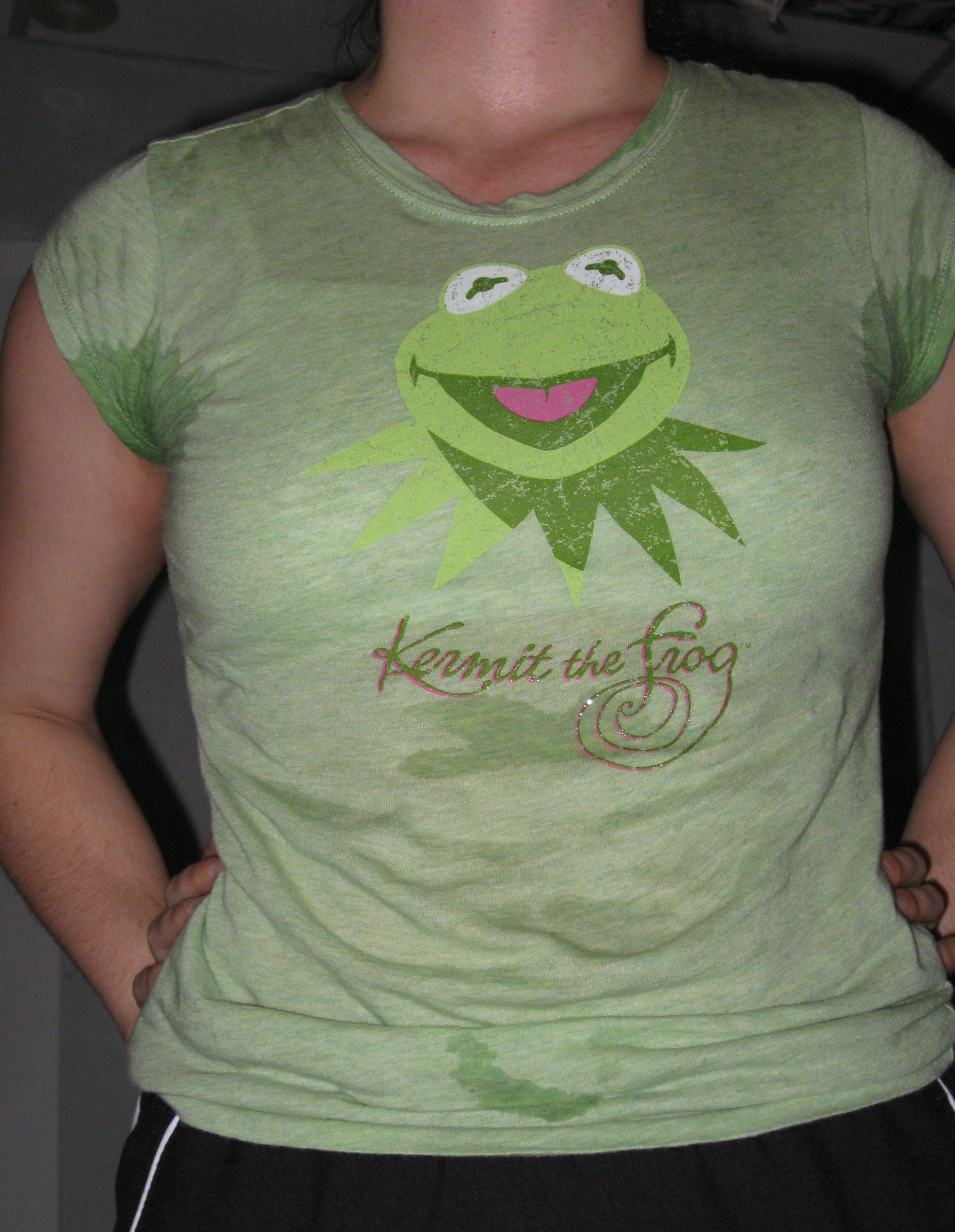
I tell you this because she convinced me I needed Kermit. Kermit, Aerosmith and a sexy dress with sunset colors. But, the bigger news is later that day I ran with Kermit. 5.34 miles in an hour. Yup. One freaking hour. I ran to random and found myself laughing at the more ridiculous moments of the week. One hour is a long time to think about sh!t on a treadmill, especially when you settle in and run at the same pace. With Kermit’s help I came to several conclusions. The best being this: My friend is right. No one, I repeat, no one tells me how to conduct my marriage. No one tells me what is or isn’t appropriate. I’ll let my husband be the judge of what he would or wouldn’t appreciate. I was stupid to be upset. I was stupid to care what someone else thought. Especially that kind of someone.
So, to my friend. Thank you for kicking my mental butt.
We didn’t end up where we haven’t been so I ran. I promised I would. (thanks for messing with me). Truth is, the running thing is seeping back into my blood. I can feel it becoming as natural as time ticking. Except for this – it’s really hard to run on a full belly of burritos! Seriously. There is this small Mexi place right by where I used to work. Everything is authentic and good, good, good. I pity the person who is afraid to bite adventurously because there isn’t a bad thing on the menu. I could stand in front of that menu, drool coming off my chin, taking forever to decide just how hungry I am. I’m always biting off more than I can chew, more than my stomach can hold. In my greed for great food I gorge.
Last night was no different. We ate and ate. Later, I literally waddled up to the gerbil cage and said a prayer before rocking 3.4 miles in 35 minutes with warm-up. I’m proud of the pace. A month ago I was barely hitting 2.5 miles in that same time. I prefered a 12 minute mile over anything faster. Now, I’m comfortable with 10.5. What a scary thought. What a great feeling. So, B~ I didn’t get the 3.5 I promised you, but I came damn close – so damn close!
Someone pissed me off today and made me shut off my phone. The anger is enough to get me running again but I have to be smart. Last night I heard my hip gnash it’s teeth in pain when I climbed the stairs. Last night I ran hard and I ran happy. I never run stupid. I’ll wait a day. The anger will still be there, but the Mexi won’t. I wonder how far I’ll get?
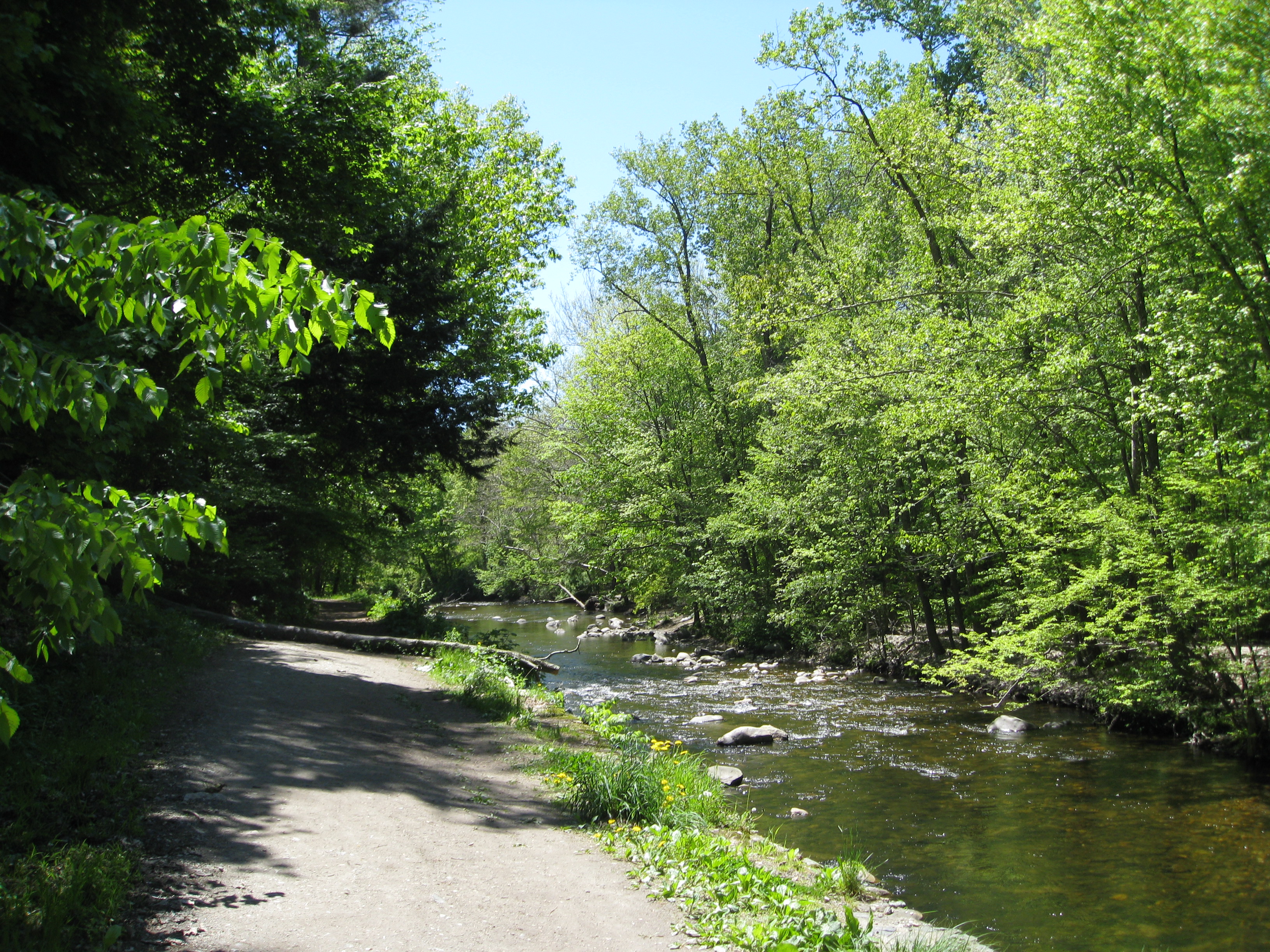
It’s the day before my first BackInTheSaddle race. A little 5k-er…in the snow (at least that’s what the forecast was predicting). I’m a little nervous. It’s o n l y 5k, but still…This marks the beginning of my road back to the run. Mentally, it’s a big, huge, colossal deal for me. Mentally, it’s all that I have. Having said all that, I think conditions are perfect. The race is in the same park where I trained for the half. I know it intimately. I love it well. Friends have gotten married there. I’ve seen Natalie perform there. I have so much history there…it’s also the same place where I first felt my knee give out. It’s where I fell to the ground. I know the exact piece of pavement I crumpled on. Half of me prays we avoid that spot altogether, but other other half wants to run over that exact spot with a fukc you vengeance, stomp on that spot…and keep going.
I asked people for input on favorite songs. I made it obvious that I want to make each list into a special mix just for that person, but what I didn’t make clear is that I want to take certain songs from each list and create my very first race mix. Two people emailed me privately with their choices, someone else sent me a text message…and my husband thought the task too daunting to just rattle off 10 songs. As he says, “I really need to think about that.” So, his choices will come later…much later – something for the next run.
So, here’s the 3/15/08 Bill’s Challenge 5k Run Playlist:
We Didn’t Start the Fire – Billy Joel (Manda)
Higher Ground – Stevie Wonder (Ruth)
We’re Not Gonna Take It – Twisted Sister (Sarah)
The Scientist – Coldplay (Heather)
Paint it Black – Rolling Stones (Greg)
Hotel California – Eagles (Rebecca)
These Are Days – 10,000 Maniacs (ME 🙂 )
My third motive for asking for music was to discover new music. I have some really, really creative people in my life and I am always looking for new stuff to listen to. I love the process of discovery, especially when the education comes from my friends. So, thank you, thank you, thank you for chiming in!
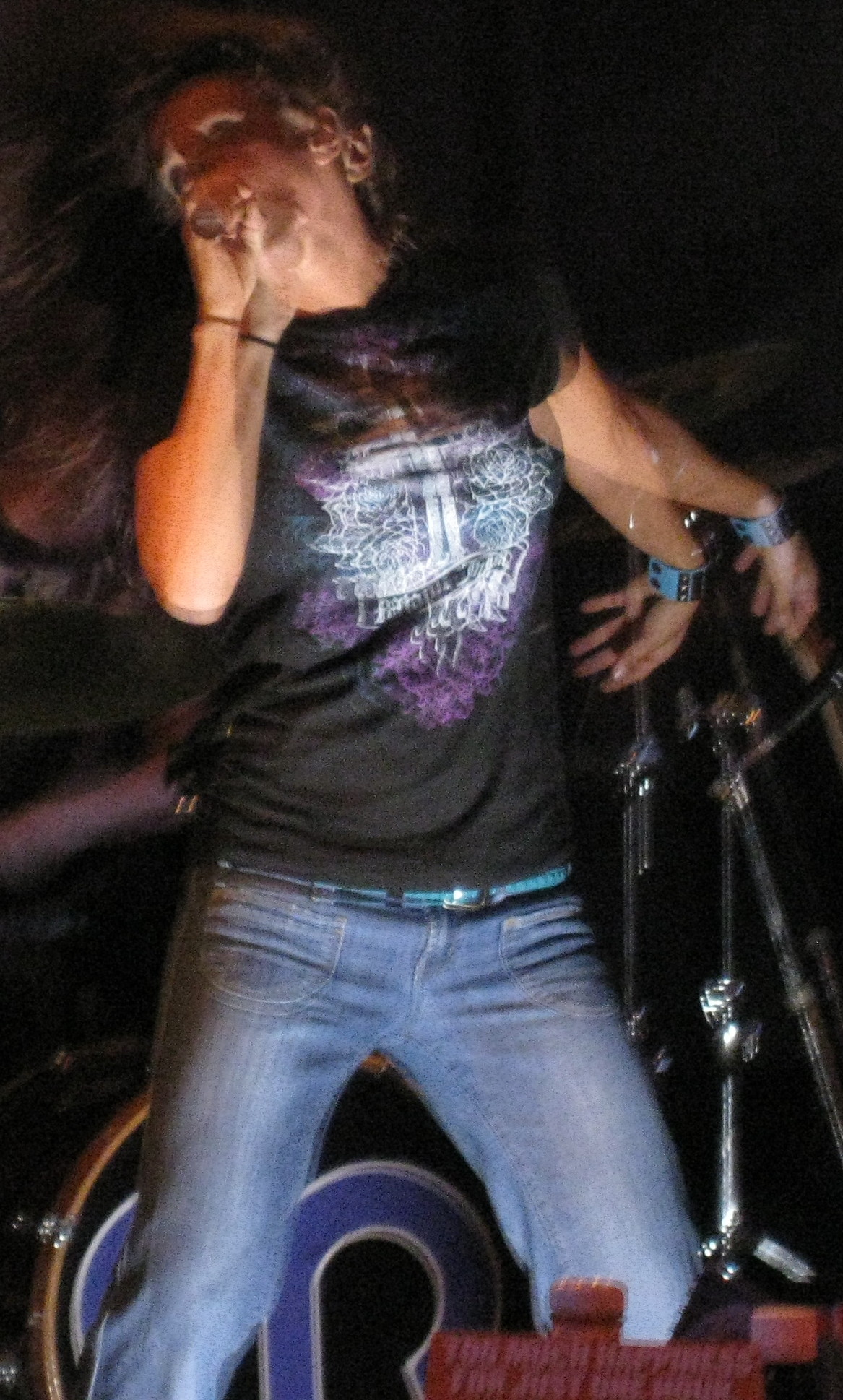
I love it when the answering machine blinks good news. Kisa & I came home last night to the message “Miss You is done and I wanted you to have a copy as soon as possible. I’m in town…” A little while later I had five copies of the long awaited album in my hands. I can’t even begin to explain how excited I am about Miss You. We were given demos no – teases back in 2004 and it’s been nothing but anticipation since. I don’t think I can explain how excited I was to not only get a signed copy of Miss You, but another copy of Live at Turks. But, more on Turks another time. This is all about Rebecca Correia’s newest album, Miss you!
Set list (with comments and favorite lines):
Miami (I love that the first word on the entire album is ‘Kyle’) “It felt damn good to be hit on.” Kisa likes the part about taking off her top…typical.
Miss You – (I’m used to this one because of the demo but I miss Kyle singing backup from the live shows.) “Tracing circles again looking for a good time and a good friend.”
Under – (is there a little laugh at the end? I love the references to the ocean. It reminds me of home.) “Morning comes and I’m further away from myself it seems.”
Yours – (sounds like a choir of backup singers. Love the seduction of the bass.) “I keep running over all the reasons why I miss you.”
Screaming One – (one of my favorite songs – sultry guitar solo – wicked lyrics) “It’s like the things you forget when you forget to be yourself for a while.”
Better Day – (The song I want to call ‘Rain’. Love the mandolin!) “No sleep for the weary, no dreams for the restless.”
Walking Backwards – (with Matt Cusson. Funky keyboards) The song is too short for a favorite line. I would have to quote the entire thing!
Quiet Hands – (what can I say? Rebecca’s voice is really rich and all I can think about is September 18th. This version is just Rebecca and her guitar. It’s perfect.) “Colors fade but I am not afraid this time when love is made between your heart and mine.”
Elizabeth – (My heart breaks whenever I hear this song. Love, love, love the bass but the lyrics get me more.) “In the dark I cry pondering the reasons why. Mother it’s your ghost I live with all the time.”
Nothing Left to Take – (Mozus’s guitar is haunting in this.”Behind these eyes of complacency, decency I give up this skin.”
No Apologies – (Drums! This is my favorite drum song. I couldn’t tell you why. I just hear the drums in perfection.) “You are my legs when I’m running faster towards the edge and I’m falling out.” “Heaven is aware and looks away.”
Wanting – (I love the conversation between cello and piano.) “Haunted by your ghost, your touch so cold…” and “I’ll be the quickest road to love you’ve ever known.”
I spend a lot of time thinking about myself. I don’t think it’s a vanity thing. I think it’s an identity thing. Truthfully, I think it stems from an identity crisis of sorts. Some time ago I wanted to impress someone to the point of oppressing my personality. He liked pancakes at 2am. I was an 8am egg girl, but I learned to make flapjacks his way, and worse, love them. His likes and dislikes became my own through tons of time pretending. I faked so much I forgot who I really was. Was I a girl who loved golf or one who couldn’t stand the game? Was I sweats and tee-shirt, stand at the fridge chugging milk from the carton, or was I white slacks and silk blouse sipping a mimosa? I was in conflict with who I really was but at the time, true to form, oblivious. Blind. Friends tried to warn me as I lost my name, but I was too busy booking my next tee time. Helpless in a sea of Helpfuls.
I do believe that everyone “gets” something from the people they come into contact with. Especially the long-time, intimate contacts. I’m not talking mono or an STD. I’m talking about personality shaped by connection. Particles of personality clinging to the psyche that is undeniably “you.” I have an affinity for grape soda, hot dog and green olive pizza, Enigma, and apples with cheddar cheese because of someone introducing them to me. I’m sure I would have discovered these things on my own because in the grand scheme of things they were destined to be “favorites” (regardless of how I got to them), but I’m grateful the direction that led me there that much sooner. I practice yoga because one of the most important people in my life showed me the way. I dont’ do it for her but I can honestly say it’s because of her. I carry my father’s way of answering mail. I mimic my mother’s mannerisms when meeting strangers. I’ve adopted things and made them my own. I think I can name a particle I’ve acquired from every boyfriend I’ve ever had, even the golf fanatic…despite the fact I’ve definitely dropped the game.

 Advantage for the Taking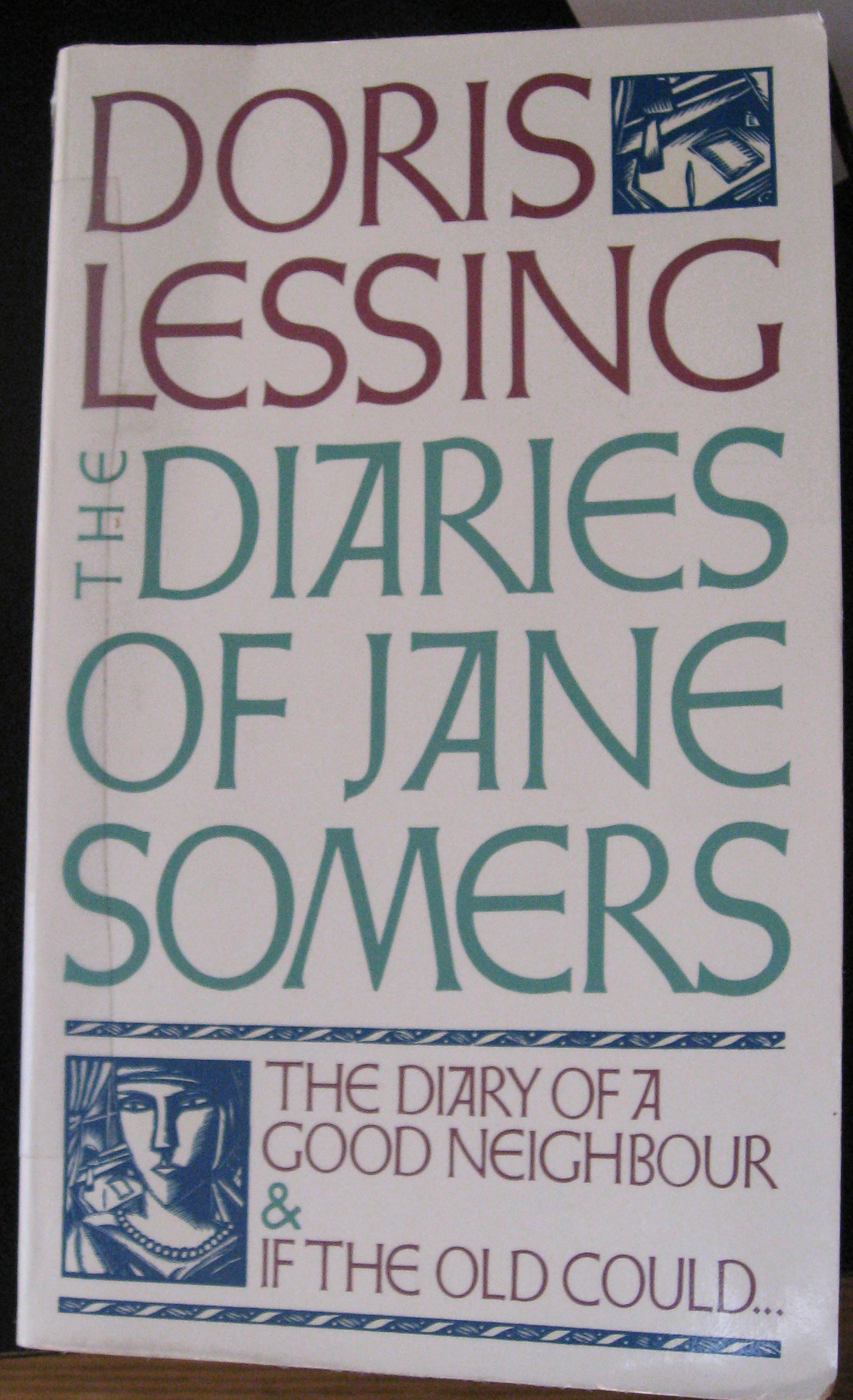




 It’s the day before my first BackInTheSaddle race. A little 5k-er…in the snow (at least that’s what the forecast was predicting). I’m a little nervous. It’s o n l y 5k, but still…This marks the beginning of my road back to the run. Mentally, it’s a big, huge, colossal deal for me. Mentally, it’s all that I have. Having said all that, I think conditions are perfect. The race is in the same park where I trained for the half. I know it intimately. I love it well. Friends have gotten married there. I’ve seen Natalie perform there. I have so much history there…it’s also the same place where I first felt my knee give out. It’s where I fell to the ground. I know the exact piece of pavement I crumpled on. Half of me prays we avoid that spot altogether, but other other half wants to run over that exact spot with a fukc you vengeance, stomp on that spot…and keep going.

 I spend a lot of time thinking about myself. I don’t think it’s a vanity thing. I think it’s an identity thing. Truthfully, I think it stems from an identity crisis of sorts. Some time ago I wanted to impress someone to the point of oppressing my personality. He liked pancakes at 2am. I was an 8am egg girl, but I learned to make flapjacks his way, and worse, love them. His likes and dislikes became my own through tons of time pretending. I faked so much I forgot who I really was. Was I a girl who loved golf or one who couldn’t stand the game? Was I sweats and tee-shirt, stand at the fridge chugging milk from the carton, or was I white slacks and silk blouse sipping a mimosa? I was in conflict with who I really was but at the time, true to form, oblivious. Blind. Friends tried to warn me as I lost my name, but I was too busy booking my next tee time. Helpless in a sea of Helpfuls.
 ~*LunaSea*~