September Was…


September started with a heat wave and the ache of leaving home. School is back in session and I feel like I am trying to rein in wild horses. Here’s what I managed to read in this crazy, crazy month.

  • World’s Fair by E.L. Doctorow ~ yeah, yeah. Not on the original September list. So sue me.
  • The Code Book: The Science of Secrecy from Ancient Egypt to Quantum Cryptography by Simon Singh ~ really wild book. I discovered tow movies I want to see thanks to this book.
  • A Good Enough Parent by Bruno Bettelheim ~ indepth psychobabble (good for all those parents who realllly want to analyze their kids).
  • Far Side of Paradise: a Biography of F. Scott Fitzgerald by Arthur Mizner ~ fascinating and funny.
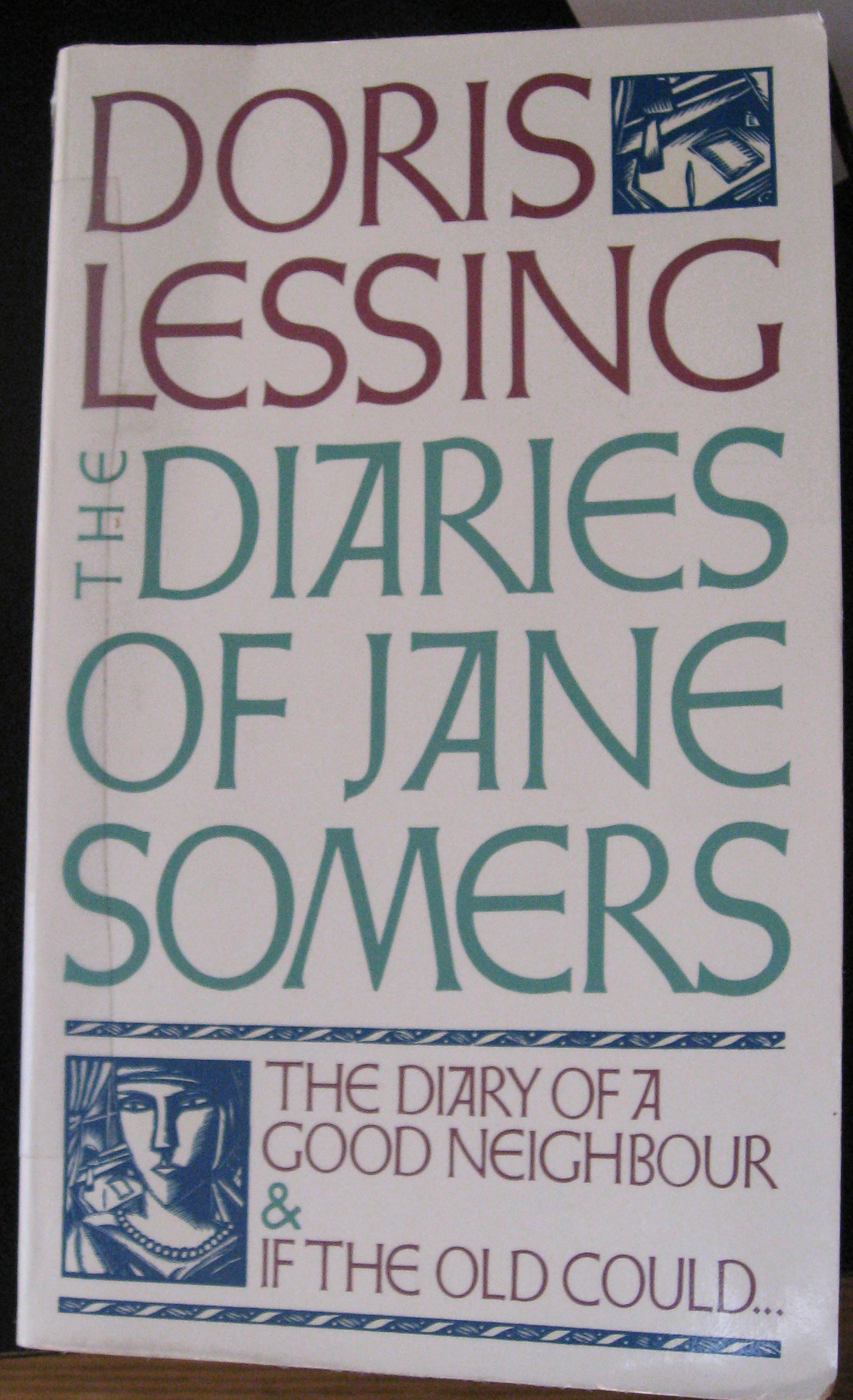
  • The Diaries of Jane Somers by Doris Lessing ~ this one tricked me because when I first picked it up I thought it was going to be biographical nonfiction!
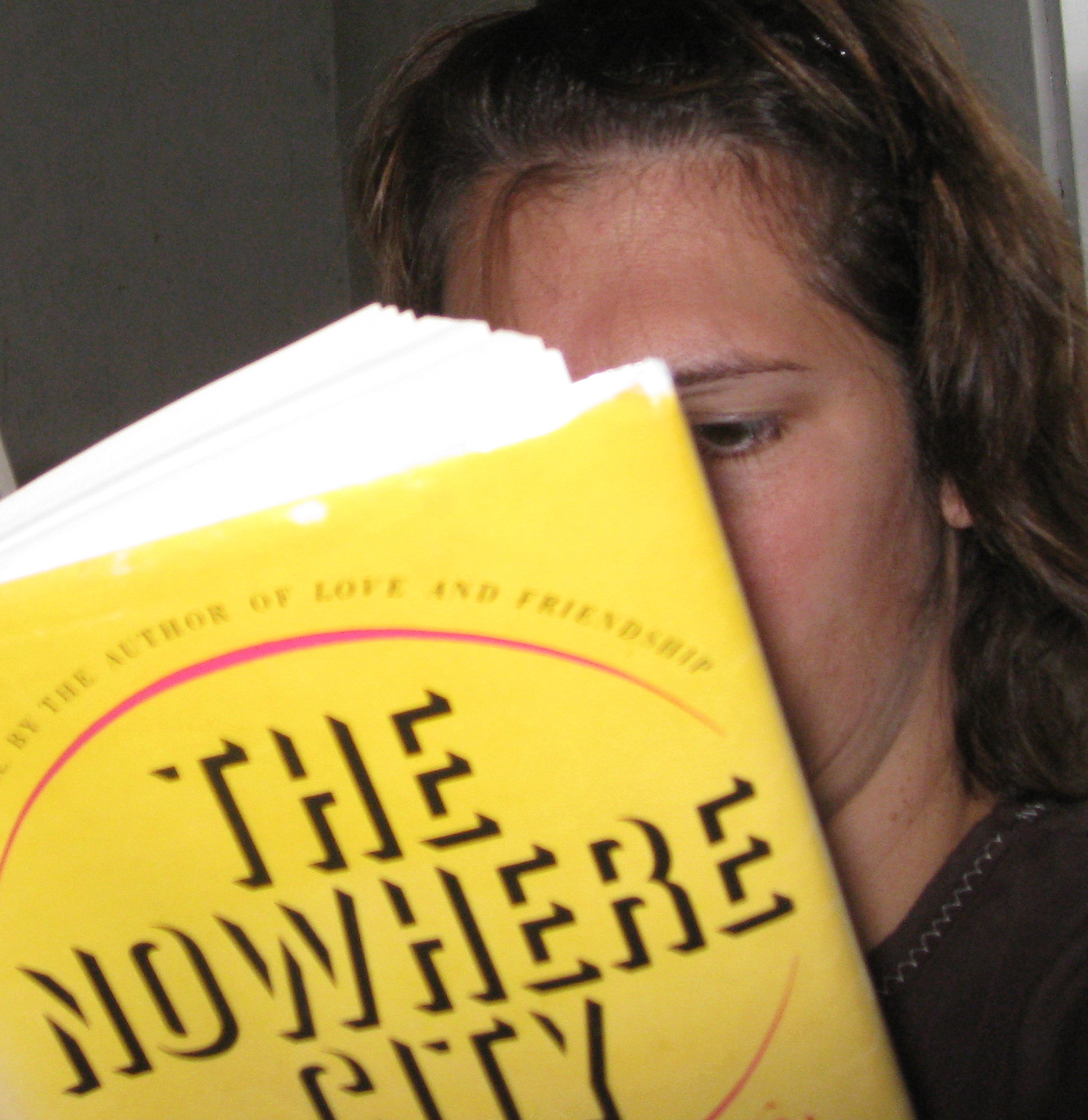
  • The Nowhere City by Alison Lurie ~ this should be a movie!
  • Pictures from an Institution by Randall Jarrell ~ technically I didn’t finish this one in time so it will be on the list again!

For LibraryThing’s Early Review program:

  • Emily Post by Laura Claridge ~ I have to admit, I wasn’t into this as much as I thought I would be.
  • Any Given Doomsday by Lori Handeland ~ I’m still struggling with the review for this one!
  • The Dangerous Joy of Dr. Sex and Other True Stories by Pagan Kennedy ~ Having forgot my last September challenge book, I tore through this one. My original plan was to save it for October but I couldn’t…it was that good.

For the hell of it:

  •  What I Talk About When I Talk About Running: a memoir by Haruki Murakami ~ totally off my Challenge radar, but I had to read it. It came highly, highly recommended so I jumped off the Challenge train and read about running. Totally worth it.
  • Under the Neon ~ a crazy book about the homeless who live in the storm drains underneath Vegas.
  • The Last Lecture by Randy Pausch ~ another book that came highly recommended. Sad, though!

Other than the books, it was a month for seeing good, good friends. Two friends from Colorado (haven’t seen them in four years!), a Rebecca Correia show (and 4.8 mi run with her!), the Big E with Jypsie and traffic, a good long conversation with one of my oldest and bestest friends in the whole wide world, and, and, and, a visit from my elusive, always on the go, friend SPB. I even got to have dinner with him! How lucky am I?
**personal note: thanks to everyone who helped me through this month. I’m out of the woods.

Dangerous Joy of Dr. Sex


Kennedy, Pagan. The Dangerous Joy of Dr. Sex and Other True Stories. Santa Fe: Santa Fe Writers Project, 2008.

When I requested this book from LibraryThing’s Early Review program I had no idea what I was getting myself into. Sure, I had read the paragraph and *thought* I knew. It’s like when you think you know the way, and so for awhile you think you are going in the right direction, until you’re not. Then you realize you didn’t know the way and and still don’t; suddenly, there you aren’t. You are lost.

Pagan Kennedy’s Dangerous Joy is a series of nonfiction essays with two central themes: invention and humanity. You could call them short stories, mini biographies because each chapter focuses on the life of someone creative – ranging from Alex Comfort to Pagan’s own mother. As readers we are drawn into not only the science behind their inventions, but the personality behind the answer to why they did what they did. Every story is peppered with humor and science – an unlikely combination that works.
Kennedy’s first story is about Alex Comfort, the man behind The Joy of Sex. Who knew that Alex was a British biologist hell bent on reinventing orgies as the norm for sex? His story is compelling and completely tragic. Kennedy goes on to introduce us to Amy Smith, recipient of the MacArthur Foundation’s Genius award; Dr Irene Pepperberg, trainer of a brilliant African Grey parrot named Alex; Cheryl Haworth, Olympic weight lifter; and Conor Oberst, a tormented musician…just to name a few.

Good Enough Parent

Bettelheim, Bruno. A Good Enough Parent. New York: Alfred A. Knopf, 1987.

It’s funny that this was written in the year I graduated from high school and went onto college. I consider 1987 one of the biggest “brink” years – standing on the brink of something bigger. However, reading this 21 years later reminds me of something else: homework!

Maybe it’s because I don’t have kids (and the fact I’ll never have kids) that I didn’t find A Good Enough Parent all that interesting. Instead it was rather dry and psychological. Nancy Pearl says this book is a must for any new parent. I honestly do not know when any new parent would have the time! Pearl also goes on to say, “Be forewarned: Bettelheim’s perspective is very psychoanalytical” (Book Lust p 30). He does make the text a little easier (interesting) by including personal anecdotes and compelling stories to punctuate his point.

Lines I like: “None of this holds true for what happens between a parent and child. Anything that occurs in their relationship is heir to a long and complicated history” (p 5).
“I feel that a parent’s most important task is to get a feeling for what things may mean to his child” (p 14).
“Parental anxiety makes life very difficult for parent and child, since the child responds to the anxiety of the parents with even more severe anxiety” (p 41).

BookLust Twist: From Book Lust in the chapter called “Babies: A Readers Guide” (p 30).

Far Side of Paradise

Mizener, Arthur. The Far Side of Paradise: a Biography of F. Scott Fitzgerald. Boston: Houghton Mifflin, 1951.

This was my third nonfiction read for the month of September. I don’t know what got me on this reality kick (as opposed to fiction). But, I’m glad I did. Far Side of Paradise was a very interesting read.

Originally written in 1941, Mizener takes great care to weave an analysis of F. Scott Fitzgerald’s work into the details of his life. The result is a well balanced biography, bringing “Scott” as he is referred to throughout the book, alive on many different levels. Mizener put a great deal of research into writing Far Side but his style is not dry, nor overly academic. The entire biography is peppered with humor and an easy conversational style. “Meanwhile he [Fitzgerald] had begun to write and had become St. Paul Academy’s star debater (no one had found means to shut him up)” (p 18) is just an example of the humor embedded in Mizener’s biography. The only thing I really found missing were pictures. I would have enjoyed seeing the styles of the 1920s and 30s. The stories of the parties the Fitzgeralds used to have are hysterical.

Another favorite line (a quote from Zelda, Fitzgerald’s own wife): “‘It seems to me that on one page I recognize a portion of an old diary of mine which mysteriously disappeared shortly after my marriage, and also scraps of letters which…sound to me vaguely familiar. In fact, Mr Fitzgerald – I believe that is how he spells his name – seems to believe that plagiarism begins at home” (p 125).

BookLust Twist: From More Book Lust in the chapter, “Literary Lives: The Americans” (p 145). Pearl calls Mizener’s biography of Fitzgerald “one of the best” and while I haven’t read that many, I definitely agree this was a great book.

Strange How the Mind Works

I was silent all day yesterday because the mind was in overdrive. Funny how that is. There are some days that are stickier than others. Why is that? Why do I remember everything, every little detail, like it was yesterday? The details are stuck like flies on the fly strips of my mind. Twisting and turning, but never completely shaking loose. I can remember the color of your shirt. The way your boots were left untied. The stillness of the room when it was all over. The heavy door closing with a quiet click. The leaving.

There are four days in September that replay like a movie in my head. Anniversaries of a different kind. They pull me down, wear me out. Curiously, each year my reaction to them is a little different. Some years they are as insane as a Stanley Kubrick film – images and memories too bizarre to handle calmly. I succumb to fits of crying, fits of rage. Other years I am dispassionate and objective, surveying the scenes with a cool eye and a cold heart. It’s not that I don’t care or that I’ve forgotten what these scenes mean to me. I’m just able to turn my head from them a little easier. They can’t touch me.
This year I surrounded myself with distraction. Little Miss Socializer. The Big E with all of its glutinous overloads. Greasy food. Flashing lights. Throngs of people. Crazy carnival music. IM’ing for the first time in three years. TalkTalkTalking on the phone. Sitting down to do nothing. Still, the scenes played out – like a movie half ignored. Something flickering in the background. Even when my past came to visit me I couldn’t admit to the memories. I played dumb and talked about the breakwater, ever repeating ‘you were the only one.’ Because that was what mattered then. Matters still.

Now it’s the day after. The clouds have all blown away. Someone has removed the fly strip, thrown it away for another year. There are other memories to come, but those will be met with predictable ease. I will look them in the eye, recognition comes with a nod and then, then I move on. Strange how the mind works.

Nowhere city


Lurie, Alison. The Nowhere City. New York: Coward-McCain, 1966.

I just literally put this book down minutes ago. All during the reading I stressed aboult what to say about it. It’s not that I hated it. It’s really enjoyable – a short, fun read. What I didn’t care for were the main characters.

New Englanders Paul and Katherine move to Los Angeles so that Paul can write the history of a rather large (and secretive) corporation. Paul has been hired by them (as a historian) to write this book for them, yet there are all sorts of confidentiality issues. Katherine hates LA. From the moment she arrives her sinuses have been acting up and she hates everything and nearly everyone around her…including her husband. Paul is the polar opposite and in his exuberance for the city and culture, finds himself involved with a local bohemian artist/waitress. Soon, Paul’s new life spins out of control while Katherine has a more gradual, precise metamorphosis. It’s no surprise that in the end it’s Katherine who loves L.A. and Paul who can’t wait to leave. It is hard to drum up sympathy for either character. Right from the start Katherine comes across as overly whiny and Paul is eager to have his first Californication affair. Of course there are movie stars and counter-culture characters that make the rest of the plot lively.

Favorite lines: “She had forgotten handbags, suitcases, packages, contracts, and every imaginable  and unimaginable piece of clothing, in every imaginable and unimaginable place. She had also, at one time or another, misplaced a pregnant police dog, a pink Edsel automobile, and two husbands” (p 24).

BookLust Twist: From More Book Lust in the chapter, “Marriage Blues” (p 161).

Diaries of Jane Somers

Lessing, Doris. The Diaries of Jane Somers: The Diary of a Good Neighbour and If the Old Could… New York: Vintage, 1984.

Here’s what I find fascinating about Doris Lessing – she wanted to publish something pseudonymously. She chose the name Jane Somers, wrote in a completely different voice and then submitted  The Diaries of a Good Neighbour. Her own publishers turned her down. One publisher (who accepted the Somers work) was reminded of Doris Lessing! Can you imagine writing with such personal style that its recognizable without an author name attached? Even after you try to hide your true voice? That, to me, is real fame in the world of writing!

The Diaries of Jane Somers is comprised of two emotional, very telling, sad novels, The Diary of a Good Neighbour and If the Old Could…. In The Diary of a Good Neighbour Jane befriends an elderly woman. What I find fascinating about this story is Jane herself. She is middle-aged, has no children, and is a highly successful, fashionable editor of a woman’s magazine. She comes across as unfeeling and snobbish. She barely mourns the loss of her husband to cancer, is decidedly cold about the death of her mother by the same disease, and is completely disconnected from her sister. With no real friends of her own she even shuns her elderly neighbor desperate for companionship. Oddly enough, Jane meets Maudie, a dirty, ferociously proud woman in her 90’s and instantly feels a connection. The Diary of a Good Neighbour not only details the two women and their remarkable friendship but voices what it means to be vulnerable, to have shame, and, to grow old in a society that prides itself on youthful appearances, vitality and independence.
If the Old Could…is a continuation of Jane’s story. Told several years after the death of Maudie (sorry, but you knew she couldn’t live forever, right?) Jane falls in love with a married man. This time her selflessness is poured into helping her nieces as well as finding what it means to truly hurt over another person.

Favorite lines: “She was literally inarticulate with anger” (p 59). This scene is like a chapter out of my own life. Not that my sister and I have ever had the conversation tied to this statement, but I could picture us having it.
“…I don’t know what children are, and I’m not entitled to say a word, because of my selfish childishness…” (p 62).
“Meanwhile I rage with sorrow” (79). Isn’t this just great? Some people imagine sorrow being this quiet, slow-moving, thick and heavy emotion yet Lessing turns it into this live-wire, powerfully explosive, loud and in your face emotion with one word, rage.

BookLust Twist: From Book Lust in the chapter “Aging” (p 17). Very appropriate.

Code Book

Singh, Simon. The Code Book: The Science of Secrecy from Ancient Egypt to Quantum Cryptography. New York: Anchor Books, 1999.

My first September book and I started it a little late. I think it got to me by September 8th.

Much like how Mark Kurlansky makes a subject like salt interesting, Simon Singh makes all things code fascinating. From the very beginning The Code Book was informative and interesting. Peppered with photographs and diagrams, The Code Bookrecounted the events in history where the ability to break a code (or not) meant life or death. Beginning with Queen Mary of Scot’s attempted plot to murder Queen Elizabeth on through the first and second World Wars. The only time I really got bogged down was, of course, when Singh would get a little too detailed with mathematical explanations of more difficult codes and ciphers.

Love love love this line (from the introduction): “The only people who are in a position to point out my errors are also those who are not at liberty to reveal them” (p xvii). Brilliant!
Another good line: “This was clearly a period of history that tolerated a certain lack of urgency” (p 5). This sentence doesn’t make such sense as is. What I need to explain is that during the period of 480 B.C. secret messages were written on the shaved scalps of messengers. To disguise the message there was a waiting period while the messenger’s hair grew back in. I wish I could have told my nephew this story! He would have loved the idea of being a spy (see below)!

Dancing with Wrench

BookLust Twist: More Book Lust in the chapter, “Codes and Ciphers” (p 50), and in the introduction as an off-hand mention (p xi).

September Is…Late

September is…well. That’s a loaded dot-dot-dot if I ever saw one. Where do I start? September is my wedding anniversary and the anniversary of so many other things…and also my adversary of so many different things. I celebrate being alive in this month, but I also celebrate a death in me. Both are equally important to where I am in life, who I am to myself. There is someone across the miles who understands exactly what I’m not talking about. But, but. But! Back to the books. Now that I have cleared the cobwebs and in the name of good BookLust books, here’s what’s on the list:

  • Code Book: Science of Secrecy from Ancient Egypt to Quantum Cryptography by Simon Singh – In honor of the month the National Security Act was signed
  • Diaries of Jane Somers by Doris Lessing – in honor of Healthy Aging Month
  • Far Side of Paradise by Arthur Mizener – in honor of F. Scott Fitzgerald’s birth month
  • Good Enough Parentby Bruno Bettelheim – in honor of National Child Month
  • Nowhere Cityby Alison Lurie – in honor of the month California became a state

For LibraryThing and the Early Review program I have two books:

  • Emily Post: Daughter of the Gilded Age, Mistress of American Mannersby Laura Claridge
  • The Dangerous Joy of Dr. Sex and Other True Stories by Pagan Kennedy

(if you are keeping track, Claridge’s book was supposed to be read month last and I think Kennedy’s book is an August review…)

For the fun of it I want to read What I talk about When I talk about Running by Haruki Murakami because everyone says it’s the book to read. So, I will read.

 September is also a Rebecca show! My mother might be coming down for it. Dare I hope? That would be cool. I want to see if Sean is around…

September is a Confession

Golden Days End
Golden Days End

I am all messed up. Turned inside out and tired. Really, really tired. Here’s the deal. I went home with a reading plan in place. I knew everything I wanted to read and even the order in which I would do all this reading. I even made a big deal about lugging all that stuff home. It didn’t happen. I got to Maine and everything fell apart.

In a stream of excuses here’s what happened: I didn’t bring the right books. I didn’t bring enough to books. I chased my nephews around instead of turning pages. I scoped out the neighbor’s new porch. I gorged on blackberries and crab apples. I couldn’t make time for the library let alone the internet. I held hands with my husband. Hiked huge hills with great friends. Watched sunsets with a glass of pino between my knees. Ate savory and sweet scones from Sweet Bob. When I did pick up a book it wasn’t one on my list (Islands by Anne Rivers Siddon comes to mind).

So, here’s the deal. I just escaped paradise. I’m just back and I’m just out of sorts. I don’t want to take a shower for fear of washing away my island residue. Last night I slept with the light on because the silence on the street was not the silence of the ocean. For once, the cat wasn’t the compatible companion. I have no clue what books I am supposed to be reading for September. I have no clue and right now I don’t care.

So, September is: slogging through tons and tons of email. (Yahoo = 234, Google = 565, LibraryThing = 3, work = 199, RealEstate = 66). September is Rebecca Correia on the 12th. September is Sean Rowe’s new album. Otherwise, September is slow to start.

A Map of the World

map of the worldHamilton, Jane. A Map of the World. New York: Anchor Books, 1995.

National bestseller. Oprah book. A movie. All that should tell you something. Normally, I don’t try to read reviews before I myself have read the very last page. This one was a little different. Praise for A Map of the World was on the inside cover and I couldn’t resist. One line really said it all for me, “the story of how a single mistake can forever change the lives of everyone involved.” If you read my blogs you know I am fascinated by the what could have been, fate and serendipity. The path less taken, the path not known to take at all. This is the story of a mistake, an err in judgment, and the time and effort it takes to get back to good.

Told in first person from both Alice & Howard, husband and wife. Alice begins and ends the tale with Howard interjecting in the middle. Details that overlap her story and his tie the couple and their voices together. It’s their marriage talking. Yet, their views on life are very different. There is a moment when Howard is driving by the library and he thinks of the librarian, a man with a hook for one hand. Howard remembers that his wife thinks of the librarian as Captain Hook, not only because of the hook, but because the librarian was supposedly “cranky and unhelpful” to her. Howard recalls learning from the librarian and how he “never even noticed his hand.” Walking down the road of life Alice and Howard see the scenery differently, despite being hand in hand.

Favorite lines:
“I used to think if you fell from grace it was more likely than not the result of one stupendous error, or else an unfortunate accident” (p 3).
“She was all nerve, so energized by rage she had a hard time sorting out what she most hated” (p 291).
“It is one thing to be in a car with someone who is quiet, and another to be with someone who is silent” (p 364).

BookLust Twist: From More Book Lust and the chapter “Big Ten Country: The Literary Midwest (Wisconsin)” (p 25). I started reading A Map of the Worldbefore I double-checked what Pearl had to say about it. I had just finished the part about a major tragedy. I have to say it was a shock to read there was another one in store for me. I almost wished I hadn’t known that.

Divine Secrets of The Ya-Ya Sisterhood

Wells, Rebecca. The Divine Secrets of the Ya-Ya Sisterhood. New York: Penguin, 1996.Divine Secrets

This is Rebecca Well’s second novel, a follow up to Little Alters Everywhere. Divine Secrets of the Ya-Ya Sisterhood continues the story of Vivi Abbott Walker and her friends (known as the Ya-yas), this time through the eyes of her adult, engaged-to-be-married, daughter, Siddalee Walker. Siddalee is a flourishing theater director who falls victim to the ever-famous, word-twisting interview. A reporter from the New York Times gets Siddalee to open up her childhood box of memories and reveal dark secrets about her upbringing. Ultimately, her mother’s alcoholism and abuse are exposed and Siddalee must spend the rest of the book apologizing to her mother for the scandal. When Siddalee calls off her engagement the Ya-Yas brazenly step in. In an effort to make her daughter understand who she is, Vivi mails her daughter a scrapbook and we are taken into the wonderous, playful yet dark world of the Ya-Ya Sisterhood.
Ultimately, I identified with this story. It’s the classic yet complex struggle between mother and daughter. Secrets revealed, hearts broken, lives changed. In the end, happiness and love prevail. I know you’ve seen the movie.

BookLust Twist: Divine Secrets comes up a couple of times in Book Lust. First, on page 83 in the chapter “Family Trouble” then in the chapter called “Women’s Friendships” (p 248).

Amsterdam

AmsterdamMcEwan, Ian. Amsterdam. New York: Anchor Books, 1999.

Another book that starts with a funeral. Of course, I’m thinking of Charming Billy. But, the comparisons stop there. How to describe Amsterdam? It is a short (193 page) novel that takes place in London, England. Two men share a bond of friendship as well as a romantic past with the same woman. Vernon is an editor of a newspaper and Clive is a modern composer. While they are friends they are not above rivalies and each, through his friendship tests the bounds of morality.

I see this story as a movie. There is one particular scene where Vernon feels dead. He is about to hit himself upside the head in order to feel pain when his secretary interrupts him, “He had raised the ruler several inches above his right ear when there was a knock on his open door and Jean, his secretary, entered and he was obliged to convert the blow into pensive scratching” (p 34). Can’t you just see it?

BookLust Twist: From Book Lust. Ian McEwan has his own chapter called, “Ian McEwan: Too Good To Miss” (p 149).

Reading Lolita in Tehran

Reading lolitaNafisi, Azar. Reading Lolita in Tehran: A Memoir in Books. New York: Random House, 2004.

The first thing I think as I am 13 chapters into Reading Lolita in Tehran is maybe, just maybe I should have read Lolita first. Yet, it is not just about Lolita. It’s also about Gatsby, Daisy Miller and Pride & Prejudice. Those, I have read. But, these four books are not the only ones Nafisi recommends. There is a whole list of them. I am tempted to start another challenge and add them to my “must read” list.

But, back to Reading Lolita in Tehran. Where do I start? Blanketing the entire story (nonfiction) is the outrage I felt. Professor Azar Nafisi must secretly meet with seven students to study Western classics, books that are forbidden in the Islamic Republic of Iran. I don’t know how they dared. Morality squads roamed the streets, raiding homes and shops whenever they wanted, fundamentalists took over the university where Nafisi formally taught, women are arrested for not wearing the veil, being seen in public with men other than their husbands, brothers or fathers, for wearing makeup…It just reminds me I am a spoiled Westerner who can paint my eyes black as night, show the curve of my neck, and most importantly, read any book I want.
Think of a braid. One strand is politics, another literature, the last society. This is Reading Lolita in Tehran. Woven over and under and throughout is Azar Nafisi’s life. Her personal views on relationships, society and of course, the books she loves. Because it’s her point of view and hers alone we have to trust that she is telling us the truth. Her truth. Here are my favorite quotes – some with my commentary after.

Reality has become so intolerable, she said, so bleak, that all can paint now are the colors of my dreams” (p 11).
“I think I somehow felt that as long as I was conscious, nothing bad could happen, that bad things would come in the middle of my dreams” (p 45).
“Some people take up alcohol during periods of stress. I took up Jeff” (106).
“In the midst of gunshots and chants we hugged and chatted about the almost two decades since we had last seen each other” (p 148).
“The administration wanted us to stop working and at the same time pretend that nothing has changed” (p 151). ** I’m reminded of a relationship I once had when the entrapment was the same. **
If I turned towards books, it was because they were the only sanctuary I knew, one I needed in order to survive, to protect some aspect of myself that was now in constant retreat” (p 170).
I became more anxious. Until then I had worried for the safety of my parents, husband, brother and friends, but my anxiety for my children overshadowed all” (170). ** I thought of my sister when I read this line. I think she would agree. **

Random comments~ I want someone to explain these things to me. How someone can be pompous and meek at the same time; how someone can speak precisely and leisurely; and how someone can murmur a defiant no. Just odd descriptors in my opinion.

BookLust Twist: From More Book Lust and the chapter called “Me, Me, Me: Autobiographies and Memoirs” (p 162). I would say Nafisi’s story is a chapter of a memoir; a partial snapshot of a life.

Middlesex

MiddlesexEugenides, Jeffrey. Middlesex. New York: Picador, 2002.

First the cover. Before I even read a word it frightens me. Inky black (my cancer) smoke swirls from a cigarrette-bearing person lounging with a friend. That same smoke meets up with the smoke stack of an ocean-going vessel and encircles the skyline of a city. I instantly recoil from the seductive swirls and think, “I’m gonna hate this book.”

But I don’t. It’s long (529 pages), but I’ve enjoyed every page. I can see why it won a Pulitzer Prize. It’s the story of Calliope Stephanides and the two generations that brought her into this world. It’s Greece and Germany and Grosse Point. It’s the science of genetics meeting the mother of all family secrets. Calliope is also Cal, one and the same. Girl meets Boy. Girl is Boy. Boy is Girl. Sound confusing? It isn’t. It’s poetic and sad, funny and smart. Something you just have to read for yourself. Cal will tell you the story. His story. Her story. My favorite lines:

“…German wasn’t good for conversation because you had to wait to the end of the sentence for the verb, and so couldn’t interrupt” (p 7).
“Filling her head with music, she escaped her body” (p 115).
“The only thing that roused her was her daily lineup of soap operas. She watched the cheating husbands and scheming wives as faithfully as ever, but she didn’t reprimand them anymore, as if she’d given up correcting the errors of the world” (p 271).
“…her application to join her husband in heaven was still working its was through a vast, celestial bureaucracy” (p 286).

BookLust Twist: From More Book Lust. Pearl mentions this book several times. First, on page 97 in the chapter “Gender Bending” then on page 141 in the chapter “Lines That Linger, Sentences That Stick.” She is referring to Middlesex‘s opening line. It’s a doozy. Finally, on page 166 in “Men Channeling Women” Middlesex is listed one last time. As you can see Jeffrey Eugenides hit a homerun with this one.

ps~ The cover makes perfect sense to me now.