Finding Caruso

Barnes, Kim. Finding Caruso. New York: Peguin Putnam, 2003.

Within the first two chapters of Finding Caruso I found myself calling Kim Barnes a favorite author. Despite the fact that the first chapter started off raw and violent; as shocking as a bucket of ice cold language, I loved the way she described the landscape, the emotion, the family structure. A mother timid and protective, a father despairing and drunken, brothers bound by love and loyalty. After a tragedy the brothers make their way to Idaho. Music is what keeps them going, but brotherly blood is what saves them.
It’s also the bittersweet tale of sibling rivalry. One brother being the older, better looking, the more talented, the one used to getting everything while the other looks on, burning with jealousy, brimming with pride. But, what happens when the tides turn and baby brother gets a stroke of luck, wins out?

I could have quoted the entire book for the wonderful lines that jumped off the pages at me, but here are a few of my favorites:
“The ballads were my mother’s favorite, and we let her lead, our boys’ voices blending in a harmony that had been in us since the moment our parents came together and planted the music in our bones” (p 7).
“Those nights my father disappeared down the road, I felt the house itself let loose its breath” (p 11).
“‘It’s not that I’m thirsty. It’s the memory that tastes good'” (p 50).
“‘Don’t ever think you know something of me without asking'” (p 111).

This book was definitely a favorite. The writing was sparse yet as fluid as the mountain streams Barnes describes in Finding Caruso.

BookLust Twist: From More Book Lust in the chapter “Idaho: And Nary a Potato To Be Seen” (p 122).
Blackwater

Ekman, Kerstin. Blackwater. New York: Doubleday, 1993.

Ekman’s Blackwater is possessive. It grabs you and you can’t put it down. It’s dark and gritty – peppered with angry scenes of violence and meaningless, lust driven sex. Like a maze with many twisting passages Blackwater has a community of dark stories to tell. Each tale is tangled with another and at the center, common to all, is a double murder. While everyone knows about it and is touched by it, no one can solve it for twenty years.
In the beginning Annie Raft follows a lover to Blackwater to his out-of-the-way commune. On her first day in town Annie stumbles across the murdered bodies of two tourists camping in the backwoods of Blackwater. For twenty years she is haunted by the face of the man she thinks did it until one day that face comes back in the form of her daughter’s newest boyfriend. The mystery, along with a whole host of secrets, start to unravel.
The landscape is such an important element in the novel I would have enjoyed a map, something that illustrates Annie getting lost in the forest, how far away from town the commune was, where the well was that Johan was tossed into in relation to where the murders took place, etc.

These are the really great lines: “The silence was violent after the noise of the cars” (p 10).
“He felt strangely empty inside, a green jumble of oblivion, and his skin felt licked by eyes” (p 136).
“You cannot live in the world without living off it” (p 177).
“She had lived a cautious and parched life” (p255).
“It had been an open question between them, whether you can see into your own darkness and whether it actually is your responsibility to do so. Or whether you evoke the darkness and make it into your own by toying with it” (p 422).


BookLust Twist: From More Book Lust in the chapter “Crime is a Globetrotter: Sweden” (p 59).

Bildgewater

Gardam, Jane. Bilgewater. New York: Greenwillow Books, 1977.

Marigold Green is a wonderful name. Not so wonderful when your father’s name is Bill. Marigold adopts the unavoidable nickname of Bilgewater as a result (Bill’s + daughter = Bilgewater). As so begins Gardam’s story about teenage angst from the point of view of Marigold Green. Because her father is the housemaster to the boys of a boarding school, Marigold has a lot to be anxious about. Having lost her mother at birth, Marigold is naive when it comes to friendships, fashion, relationships with the opposite sex, and even alcohol. She had never seen drunk people before the age of 18. The one thing she does know is literature and many different works are reference throughout the story.

The quotes that grabbed me: “love had always made him sad” (p 9)
“Flowers in classrooms are as depressing as flowers in hospitals – they just emphasize the fact that you can’t get out and see them growing. Classrooms break your heart” (p 44).
“The frightful, pitiless games of hockey with me always running the wrong way” (p 201).

BookLust Twist: From More Book Lust in the chapter “Jane Gardam: Too Good To Miss” (97). Pearl says of this coming-of-age tale, “…wonderful for adults who want to look back, from a safe distance, at the ups and downs of adolescence” (p 97).

American Ambassador

Just, Ward. The American Ambassador. Boston: Houghton Mifflin, 1987.

I think this novel is a dark example of fatherhood failed and an odd choice for celebrating Father’s Day. Oh well. Quite literally this is a story of father against son. Bill North is a Foreign Service Officer with strong loyalty to his job and marriage. His son, Bill Jr., sees his father as all things corrupt and sets himself apart from first his family, then his country in the ultimate betrayal of his father. After abandoning his family Bill Jr. joins a German terrorist group. Ward Just’s story takes the reader from Boston & Washington D.C. to France, Germany, and Africa as the hunt goes from father to son and back again. I was fascinated with this falling out of family and couldn’t put it down until the devastating end. I almost want to say what happens, but you really should read it for yourself.

Favorite quotes: “His favorite word, injustice, applied equally to underdone hamburgers, a Red Sox loss in extra innings, a quarrel with the houseboy, a missed airplane connection, or a death” (p 55).
“The son is always the shadow of the thatther, is that not true?” (p 153).

BookLust Twist: From Book Lust”  in the chapter “Fathers and Sons” (p 85) and “Ward Just: Too Good To Miss” (p 135).

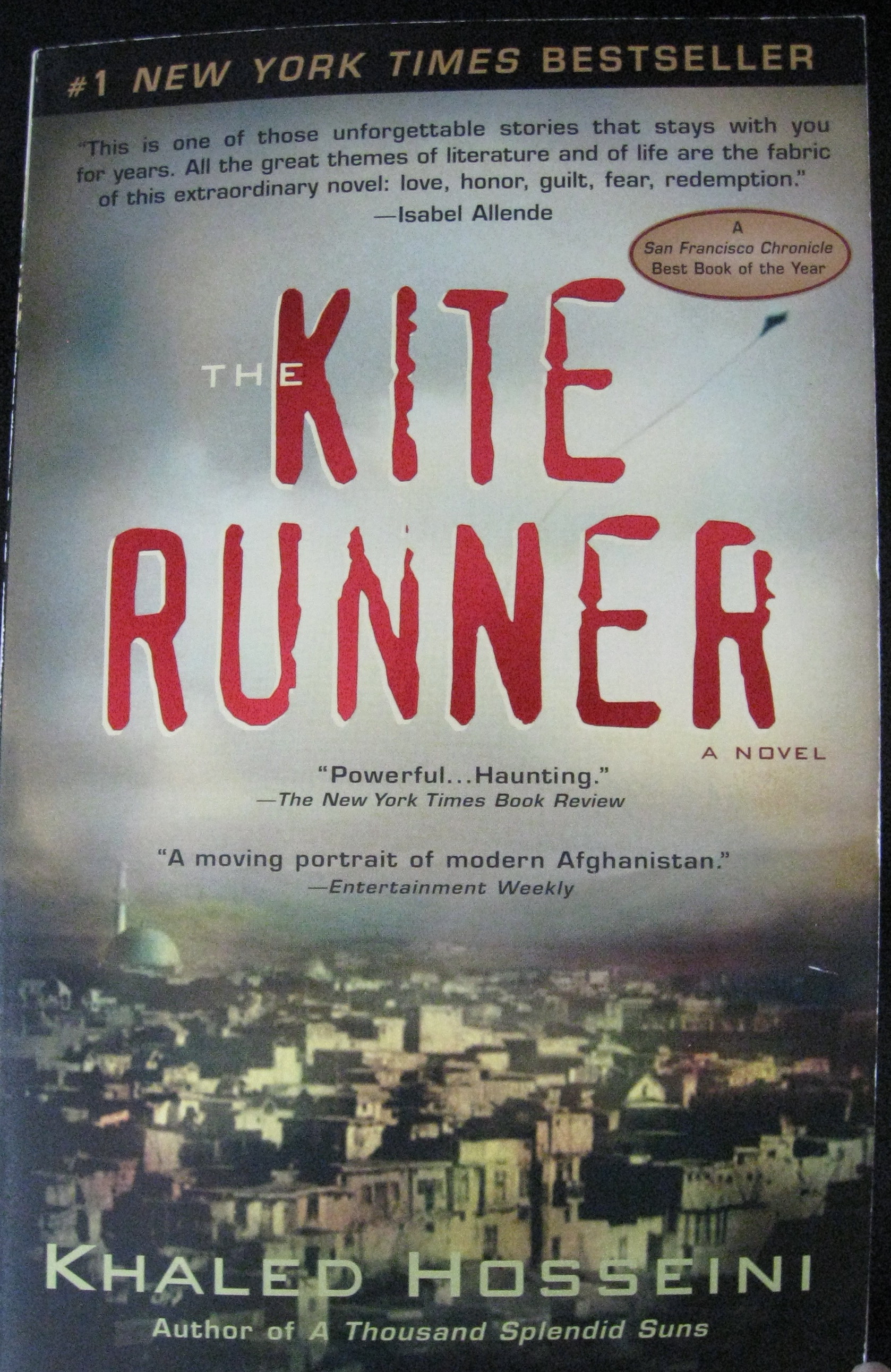
Kite Runner

Hosseini, Khaled. The Kite Runner. New York: Riverhead, 2003.

It is hard to believe The Kite Runner is Khaled Hosseini’s first novel. I am reminded of a favored race horse, one that is described as “strong out of the gate.” I couldn’t put it down (read it from start to finish on the flight back from California). The Kite Runner is a powerful story of friendship and family in a time of political and cultural upheaval. Amir tells the story of his childhood in Kabul, Afghanistan. As a privileged son, Amir grows up in the shadow of his Baba, his father’s affection, constantly looking for ways to win his father’s love and admiration. Occasionally Amir finds the sunshine and basks in the approval, but those moments are fleeting, overshadowed by Baba’s obvious and puzzling devotion to Hassan, a servant’s son. Amir spends his childhood balancing a friendship with Hassan while enduring blinding bouts of jealousy. Amir’s personal turmoil forces him to make regrettable choices and soon his life parallels his country’s dramatic revolution. For both boy and country, life as they knew it is over in a dramatic upheaval.

BookLust Twist: In More Book Lust twice:  First in the chapter called, “Central Asia: Crossroads of Empires, Cauldron of War” (p 40), and again in “Maiden Voyages” (p 159), for being Hosseini’s first book. 

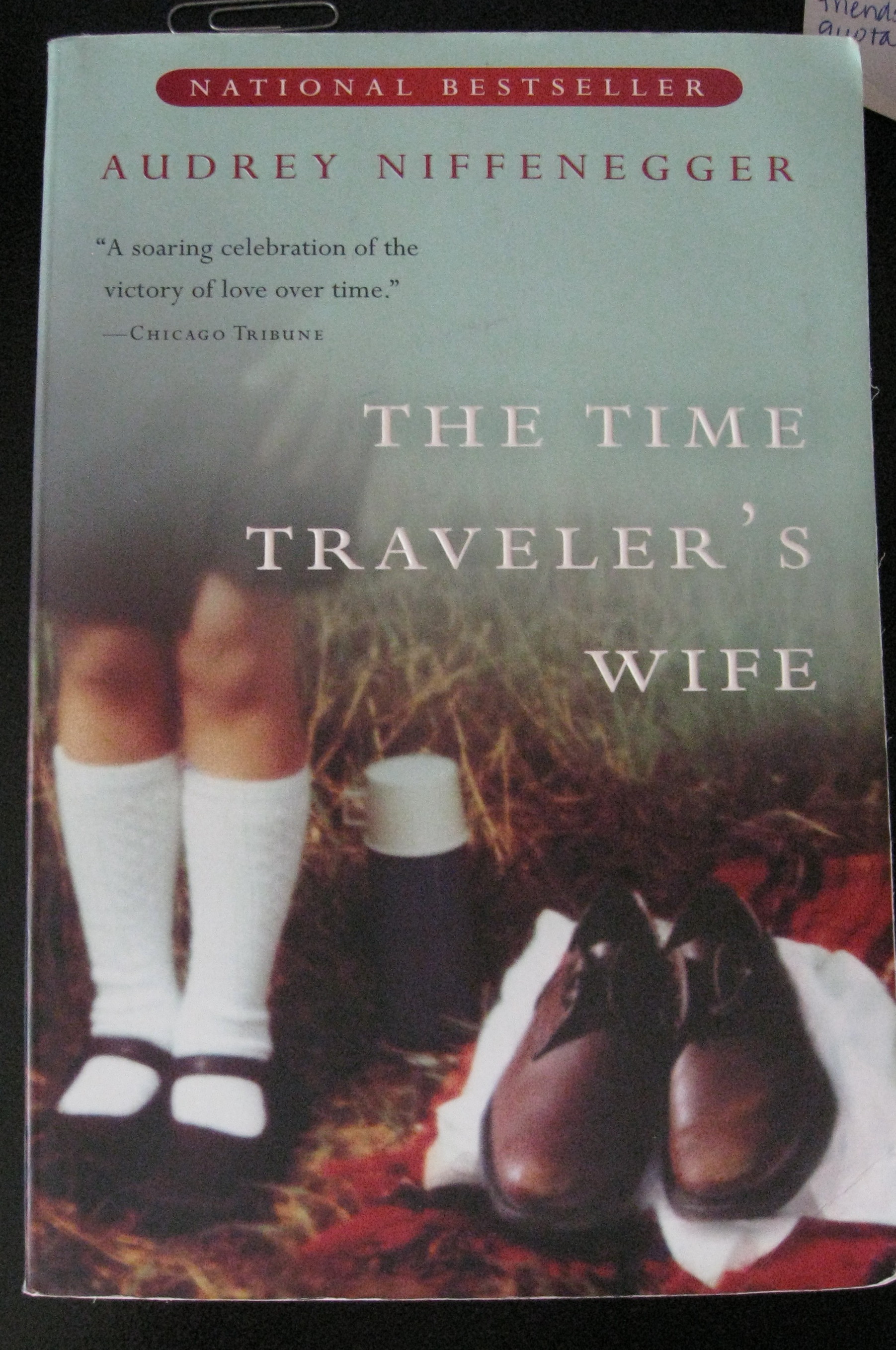
Time Traveler’s Wife

Niffenegger, Audrey. The Time Traveler’s Wife. Orlando: Harcourt: 2003.

This was a reread for me. I first read it on a cruise and it seemed only fitting to reread it on my vacation in California. The first time I read The Time Traveler’s Wife I ached to map out a time line for the story. I wanted to chart Henry’s comings and goings. Reading it a second time was no different.
The Time Traveler’s Wife is the intricate love story of Henry DeTamble and Clare Abshire. Henry is a Chicago librarian who visits the opera, beats people up, and just happens to have a genetic disorder that not only causes him to involuntarily time travel, but gives him the ability to duplicate and visit himself at various stages of his life.
Clare Abshire is an artist and the object of Henry’s affection. Henry’s ability to time travel brings the couple together when young Clare is as young as six years old. As a result, Clare must endure waiting for Henry to time travel back to her. Her wait is made easier by a list of dates of when Henry will return.
While the main story focusses on Henry and Clare’s unusual romance life and world events go on around them. Sex, drugs and rock and roll give way to the aids epidemic and advances in science. Soon doctors are looking for a cure for Henry’s genetic disorder. Because Henry cannot control his time travel he seems to disappear during times of stress or some other great emotion. For example, haunted by the memory of his mother’s tragic death, Henry visits the scene of the accident again and again. Throughout it all, Clare stays by his side as best as she can given the unusual circumstances.

BookLust Twist: In More Book Lust twice. First, in the chapter called “Maiden Voyages” (p 158), and again in the chapter called “Time Travel” (p 221). How appropriate!

July Is…

July is a ton of things. Musically, it is Sean Rowe & Mickey Hart. It’s also the theater. It’s Kisa’s birthday (yay yay yay). It’s a few anniversaries as well (past and present).
For the BookLust Challenge it’s:

  • Bilgewater by Jane Garam (to celebrate Jane’s birth month)
  • Blackwater by Kerstin Ekman (to celebrate the best time to visit Sweden)
  • Citizen of the Galaxy by Robert Heinlein (to celebrate Robert’s birth month)
  • Finding Caruso by Kim Barnes (to celebrate Idaho becomming a state)
  • Friend of My Youth: Stories by Alice Munro (to celebrate Alice’s birth month)

I’m not planning any huge get-aways so I should be able to finish this list…

June Was…

June was a night of Sean Rowe music with some great women. June was one hell of a trip. June was the kick in the pants I needed. June was the “get off the pot” month. For BookLust Challenge it was:

  • Ninety-Two in the Shade by Thomas McGuane (fishing month)
  • An Academic Question by Barbara Pym (Ms. Pym’s birthday)
  • Act of the Damned by Antonio Lobo Antunes (family month)
  • The Amateur Marriage by Anne Tyler (best month to get married)
  • The Time Traveler’s Wife by Audrey Niffennegger (Ms. Niffennegger’s birth month)
  • The Kite Runner by Khaled Hosseini (Father’s Day)
  • The American Ambassador by Ward Just (Anti-Father’s Day)

One review for LibraryThing:

  • Tomato Girl by Jayne Pupek (one word: tragic, tragic, tragic!)

Both Ninety-two in the Shade and Tomato Girl  were described as “gritty” and yes, were both gritty, but in two very different ways. I have to say The Kite Runner was my favorite June book.

Amateur Marriage

Tyler, Anne. The Amateur Marriage: a Novel. New York: Ballantine, 2004.

It’s weird to say I finished this book poolside in Las Vegas, Nevada. Who would have predicted that? Certainly not me.

This is a book I will definitely read again someday. When thinking about this review I wanted to box this story into a corner and call it a sad book, but I couldn’t. It’s such an accurate portrait of how a marriage (and ultimately, a life) can end up that I can’t just call it “sad.” How can I when it’s beautiful, funny, tragic, infuriating, intelligent, frightening and honest all at the same time?
Michael and Pauline are two teenagers whose lives collide at the start of World War II. Their romance is the result of a marriage between a fear of the future and the desire to be someone else at that very instant. Michael wants a girlfriend, any girlfriend. Sensing Pauline’s fascination with the war effort he spontaneously enlists. Pauline wants a soldier for a boyfriend. Any soldier. The culture and uncertainly of the times have thrown these two people together in such a way that neither of them can back out, despite the growing realization they were never meant to be together.
One things leads to another and soon thirty years have gone by. Pauline and Michael divorce and life goes on. And on. While the marriage didn’t survive more than halfway through the novel, Michael and Pauline go on. Their relationship from beginning to end and beyond is captured beautifully.

Favorite quotes: “You know how men are about wearing ties on a Saturday” (p 31).
“I’ve reached the stage where I got so hungry that I’ve gone beyond  hunger” (p 71) …and Kisa didn’t think that was possible!
“Sometimes, Pauline got a feeling like a terrible itch, like a kind of all-over vibration, and she thought that any moment she might jump clear out of her skin” (p 71).

BookLust Twist: From More Book Lust in the chapter “Marriage Blues” (p 161). 

Act of the Damned

Antunes, Antonio Lobo. Act of the Damned. New York: Grove Press, 1995.

I have to admit this was not one of my favorite books this month. Maybe something was lost in the translation (literally from Portuguese to English), but there were too many layers of storytelling going on. Dr. Nuno Souza, a dentist, tells his story in first person, but his imagination works overtime to include an Edward G. Robinson, a cigar smoking, gun toting tough guy. Nuno is married to Ana, but has a drug addicted girlfriend on the side.
Even though Nuno is telling the story in the first part, it’s Ana’s family that is the center of the story. Her family is beyond corrupt. Incest and greed come second nature to these people. Ana’s mother is the voice in part two. I think what makes the story so confusing is that no one really uses names. When Ana’s mother tells the story she uses family connections, “my brother-in-law, sister-in-law, my husband, his father, her brother…” Later, Ana herself tells the story…then someone else who uses the same technique…

These are the quotes that caught my attention:
“I opened the drawer to take out a shirt and tie, and was met by enough sicks for an army of ankles” (p 5).
“I laid down the receiver while the two voices tussled, scratched and bit each other in an electric desert of screws and wires” (p 17).
“‘I want her out by the thirtieth at the latest. She can go to tell and listen to conversations down there'” (p 42).
“I wiped the smile off my mouth with a napkin” (p 71).

BookLust Twist: From Book Lust from the chapter “Families in Trouble” (p 83).

Tomato Girl

Pupek, Jayne. Tomato Girl. Chapel Hill: Algonquin Books, 2008.

What a beautifully written, tragic first book! The characters are so true to life and so compelling I was picturing them in a movie. It’s told in first person from the point of view of 11 year old Ellie. With the help of a series of seamless recollections Ellie recounts her life with a mentally ill mother and a cheating father. Ellie’s father is taken with, and soon overcome by, a teenage girl who delivers tomatoes to the store he manages. From the moment the “tomato girl” comes into Ellie’s life every day is stacked with another unbelievable tragedy, a level of sadness leading to horror much deeper than the one before. It is hard to imagine the amount of pain this child has to endure at such a tender age. Pupek writes with sentences full of foreshadowing. They hang heavy like dark clouds, bloated with the storm that will erupt any minute.
My only complaint is absence of addressing molestation. Ellie is “grabbed” by boy hard enough to leave a bruise. At the same time her period has started (her first). When Sherrif Rhodes discovers the blood, and Ellie tells him of the rough boy, the Sheriff doesn’t take Ellie to a hospital to be examined by a real doctor. She is brought to a black woman who practices witchcraft. Because the story is set in the late 60’s and racism is hinted at I was surprised Sherriff Rhodes would bring a child to her rather than the local hospital. This is the only part I wish was explained better.

ps~ there are a ton of those “gotcha” sentences that I love so much. Too many to mention.


An Academic Question

Pym, Barbara. An Academic Question. New York: E.P. Dutton, 1986.

When this book landed on my desk I nearly laughed. It’s only 182 pages long with a decidedly easy-to-read large font. Needless to say I read it in a day!
Here are some things that intrigued me about the book before I read it: Barbara Pym died of breast cancer when she was only 66 years old. Her last book, An Academic Question was published six years after her passing and is actually a blend of two different manuscripts.
Here’s what I put on LibraryThing: An Academic Question at first read appears to be about a lonely, bored, mother of one, who is feels neglected her professor husband. Her friends are bland, her hobbies even moreso. It’s only after she agrees to help her husband find information to support an article he is drafting do things really start to get interesting. As with any academic, there is competition to get published and for Caro’s husband the pressure is on. Human emotion is played out in subtle detail as Caro deals with jealousy, betrayal, and the need for approval from everyone around her.

One of my favorite scenes is when Caro is in the audience, listening to a young professor give a lecture. Bored with the beautiful lecturer’s topic, Caro starts to focus in on how the striking woman is dressed. Upon noticing a pale pink rose pinned between her breasts Caro decides the color matches the roses she has in her own garden. Soon she is imagining her own husband placing the rose…and speculation and imagination create jealousy which becomes an accusation later on…It truly is a classic way jealousy manifests itself.

BookLust Twist: From Book Lust in the chapter, “Barbara Pym: Too Good To Miss” (p 196).


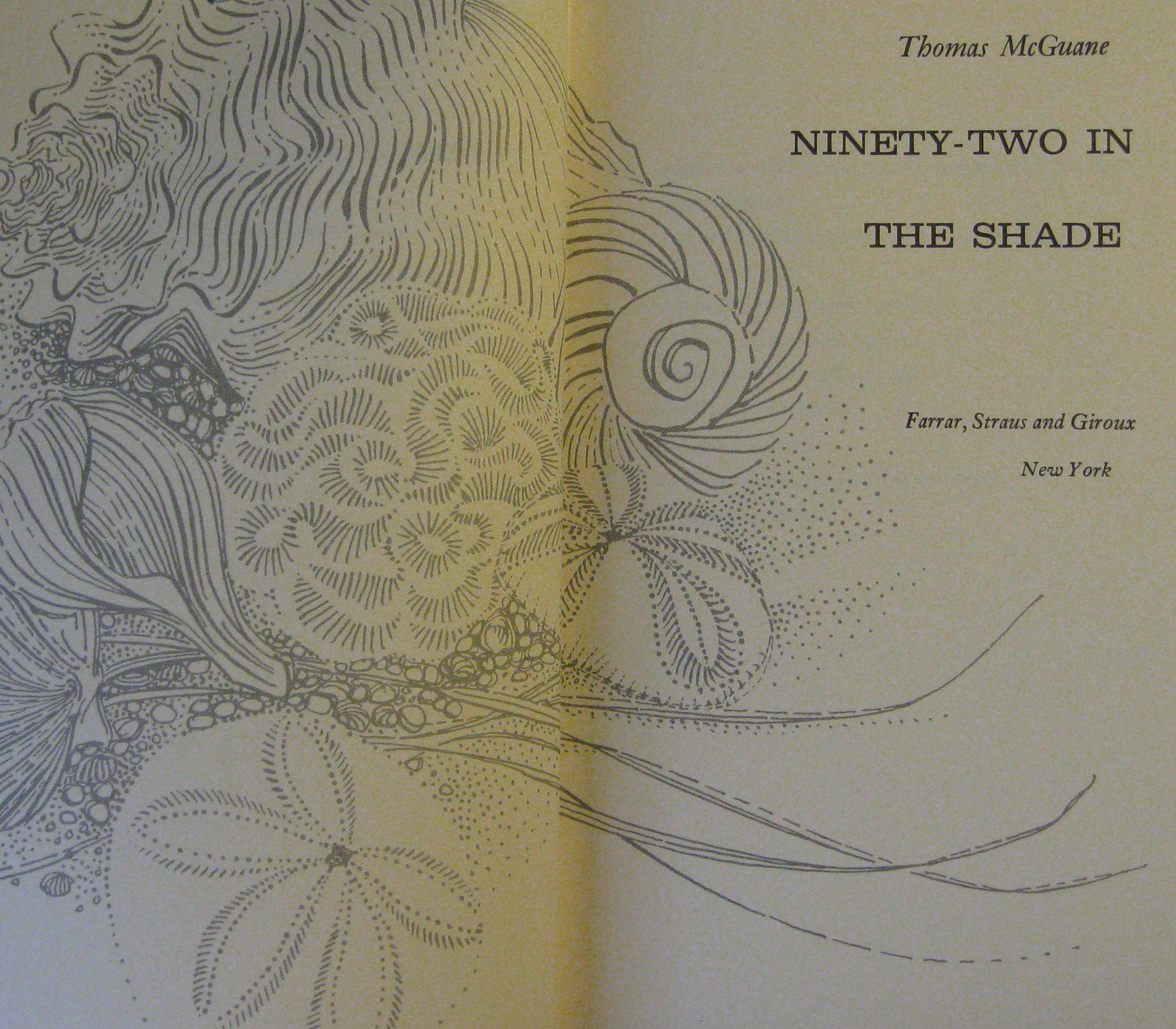
92 in the Shade


McGuane, Thomas. Ninety-Two in the Shade. New York: Farrar, Straus & Giroux, 1972.

June is fishing month. Go figure. Ninety-Two in the Shade is about a man (Thomas Skelton) who has always wanted to run a guided fishing tour off the Florida Keys. Not the fishing I had pictured for the month of June, but a form of it, I guess. Thomas is new to the business and even newer to competition. He is not without his share of problems. The opening “scene” is Thomas waking up in a hotel and finding four people standing naked in a tub. Right away you know this isn’t your typical River Runs Through It fishing story! Other quirks: violence that does (or doesn’t) happen, relationships that are (or aren’t) good, and the entire book is absent of chapters. I may have come across other books like this but never noticed this chapterlessness before. The only reason why this seems odd is because not having chapters makes it difficult to know where to stop!

I did a little extra research and found out that Ninety-Two in the Shade was made into a movie not long after it was written and while it’s Thomas McGuane’s third work of fiction many critics consider it his best.

I never did get used to McGuane’s “gritty” style of writing, but here are some quotes (and scenes) that caught me: “He walked to Homestead, then right on through town, tripping his brains out in the emptiness of 5 a.m.” (p 4).
A conversation between Skelton and “his girl.” May it confuse you as much as it did me:
Miranda~ “Tom, I had this incredible orgasm.”
Tom~ “Do I have to hear about your organism too?”
M ~ “Just this one. It was like a whole dream of sweet things to eat…Spun sugar, meringue, whipped egg whites…”
T ~ “How about when your chum shot off? Was it a blintz or an omelet?”
M~ “Ask him.”

To say that Ninety-Two in the Shade isn’t without humor would be a lie: “You should never kill somebody if it isn’t funny” ( 34).

BookLust Twist: In both Book Lust and More Book Lust. Book Lust: in the chapter “Montana: In Big Sky Country” (p 156) because Thomas McGuane is from Montana. This, by the way, takes care of a November read because that’s when Montana became a state and Ninety-Two in the Shade was on the November list. More Book Lust: in the chapter “Gone Fishin'” (p 101).

Things They Carried

O’Brien, Tim. The Things They Carried. New York: Broadway Books, 1998.

I admit it. I have picked this book up three different times now. Technically, I should have read it in March to celebrate the day U.S. troops pulled out of Vietnam (March 1975), but as you can tell, there were plenty of other things to reach for in March…
Nope, I cracked this book open for no other reason than sheer boredom. I finished Peter Pan and The Ground Beneath Her Feet and decided I wasn’t up for The Joy Luck Club…at least not right now. The Things They Carried has been hanging around my office for months now. It just seemed to say “read me” and the time was right. I am so very glad.

This was an amazingly moving book. I had a hard time getting into it the first two times I picked it up, but the third time was a charm because after that I couldn’t put it down. Tim O’Brien writes with such ferocious honesty. He calls it a fiction but it easily could have been the truth. The shocking violence, the depths of sadness, the urgency to survive, the humble efforts to maintain sanity and the humor that survives it all…each chapter is a short story of all of these things. Each story stands alone, complete as it is, yet connects beautifully to the story before it as well as the one after it. Peter S. Prescott from Newsweek said the stories “bounce off each other…” and I would agree.
I could quote nearly each story, but here are my favorites:
“They carried all they could bear, and then some, including a silent awe for the terible power of the things they carried” (p 7). The reason why this quote stuck with me is because O’Brien spends the opening chapter listing everything a soldier carried in the Vietnam war. Both the physical and mental, the essential and the sentimental. This quote sums up how they never forgot why they were carrying everything else.
“The problem, though, was that a draft board did not let you choose your war” (p 44). I found this to be one of the most humanitarian statements of the book. O’Brien had just finished explaining that some wars were justified, like stopping Hitler, but in this case he was drafted to fight a war he didn’t understand.

BookLust Twist: From Book Lust in the chapter “Vietnam” (p 239).
ps~ one of the reasons for starting the Book Lust challenge was to find writers I could fall in love with. I wanted one book that would spark an obsession. Much like Margaret Atwood’s The Handmaid’s Tale or Barbara Kingsolver’s Animal Dreams or Katherine Weber’s Objects in the Mirror are Closer than They Appear. All of these books created a rabid need to read anything else written by the authors. I found such an obsession with The Things they Carried. I will go on to get my hands on any and everything Tim O’Brien has written before and since.

June is…

June is:

  • Fishing Month (92 in the Shade by Thomas Mcguane)
  • Barbara Pym’s birth month (An Academic Question)
  • National Family Month (Act of the Damned by Antonio Lobo Antunes)
  • The most common month to get married in (Amateur Marriage by Anne Tyler)

If there is time I’ll also reread Time Traveler’s Wife by Audrey Niffenegger

June is also another LibraryThing Early Review:

  • Tomato Girl by Jayne Pupek

Personally, I ended May on a crappy note so June is ME month. It’s also vacation month! Hello Vegas! Hello San Diego! I’m hoping to see some very special people. June is also house-hunting month (like we haven’t been doing that already!). The farm starts up this month and I started a new blog about the fantastic four which I am really, really excited about, too! Like I said, ME month! 8)